 27
27
 27
27
 27
27
Raymond Mill Applicable Materials: Comprehensive Guide from Common Minerals to Specialty Processing
The Raymond Mill from Mascot Heavy Industry, refined through continuous technological upgrades, has evolved into a universal grinding solution spanning non-metallic minerals, building materials, chemicals, metallurgy, and beyond. Its core competitive edge lies in exceptional material versatility — capable of processing over 100 types of non-flammable and non-explosive minerals with Mohs hardness below 6, delivering finished powder ranging from 80 to 400 mesh to meet diverse production requirements from coarse to fine powder.

1. Common Applicable Materials (Detailed)
1.1 Limestone & Calcite
Limestone and calcite represent the largest application segment for Raymond Mill in the non-metallic mineral grinding market. Both are primarily composed of calcium carbonate and, after grinding, are widely used in:
When processing limestone, a single Raymond Mill unit delivers 3–20 t/h, with finished powder consistently in the 200–325 mesh range. Energy consumption per ton is approximately 30% lower than conventional ball mills.
1.2 Dolomite
Dolomite is a critical auxiliary material for steelmaking and glass manufacturing. After grinding to 80–200 mesh with Raymond Mill, it primarily serves:
With moderate hardness (Mohs 3.5–4), dolomite causes low wear on grinding rollers and rings, making it one of the most cost-effective materials for Raymond Mill processing.
1.3 Barite
As a high-density non-metallic mineral (specific gravity 4.2–4.5), barite is irreplaceable as a weighting agent in oil drilling mud. The Raymond Mill grinds barite to 200–325 mesh, meeting API (American Petroleum Institute) fineness standards for drilling-grade barite powder. Additional applications include:
1.4 Gypsum
Gypsum grinding is a classic Raymond Mill application. After grinding and calcination of natural or FGD gypsum, the primary destinations are:
The Raymond Mill system's integrated hot air furnace simultaneously dries and grinds, processing gypsum with feed moisture below 10% directly to a final product with moisture content below 1%.
1.5 Talc
Talc is the softest known mineral (Mohs hardness 1). Raymond Mill achieves very high grinding efficiency with excellent whiteness and narrow particle size distribution. Key applications:
1.6 Kaolin
Kaolin grinding demands strict whiteness retention and equipment cleanliness. The Raymond Mill, paired with a high-efficiency classifier, processes kaolin to 325–400 mesh for:
1.7 Feldspar (Potash Feldspar, Soda Feldspar)
As one of the three primary raw materials for ceramics and glass, feldspar is ground to 200–325 mesh by Raymond Mill for:
1.8 Marble
After Raymond Mill grinding, marble is primarily used to produce ground calcium carbonate (GCC) powder, with end uses including:
2. Other Applicable Materials
| Material | Typical Application |
|---|---|
| Bentonite | Drilling mud, foundry binders, cat litter |
| Mica | Insulation materials, pearlescent pigment substrates, fire-retardant coatings |
| Graphite | Lithium battery anode material precursors, refractory crucibles |
| Bauxite | High-alumina refractories, alumina smelting feedstock |
| Fluorite | Hydrofluoric acid feedstock, steelmaking flux |
| Quartz | Glass raw material, ceramic glazes, precision casting sand |
| Silicon Carbide | Wear-resistant materials, cutting abrasives |
| Manganese Ore / Iron Ore | Pre-processing before beneficiation |
| Garnet | Waterjet cutting abrasives, sandblasting media |
| Cement Clinker | Pre-grinding in cement production |
3. Key Technical Features Enabling Broad Material Compatibility
The Raymond Mill's ability to cover such an extensive material range is supported by the following technical foundations:
| Feature | Description |
|---|---|
| Four Model Tiers | 3R / 4R / 5R / 6R series cover 1–20 t/h capacity range; users select based on material hardness and output requirements |
| Wear Part Material Options | High-chromium cast iron or wear-resistant alloy available for highly abrasive materials (e.g., quartz, silicon carbide) |
| Dynamic Classifier Adjustment | Stepless switching from 80 to 400 mesh via VFD speed control; one machine accommodates varying fineness requirements across materials |
| PLC Intelligent Control | One-touch start/stop, interlock protection, remote monitoring — reducing operational complexity during material changeovers |

4. Application Case
A building materials enterprise in Central Asia required a calcite powder grinding line. After evaluation, the company selected a Mascot 5R Raymond Mill system. The entire line was installed and commissioned within 35 days. Since operation, the system has maintained a stable processing capacity of 12 t/h, with finished product fineness of 200 mesh — fully meeting the client's specifications. Energy consumption per ton of material was reduced by 30% compared to the previous grinding system, and dust emissions comply with local environmental standards (below 30 mg/m3). The PLC intelligent control system reduced labor costs by 18% and cut annual maintenance costs by 15%, demonstrating the Raymond Mill's reliability, efficiency, and cost-saving advantages.

5. Material Processing Quick Reference
| Parameter | Specification |
|---|---|
| Maximum Feed Size | ≤20 mm |
| Feed Moisture | <10% |
| Finished Powder Moisture | ≤1% |
| Finished Product Fineness | 80–400 mesh (180–38 μm) |
| Mohs Hardness Range | ≤6 (recommended) |
| Material Requirement | Non-flammable, non-explosive |
| Processing Capacity | 1–20 t/h (model dependent) |
| Models | 3R / 4R / 5R / 6R |
| Motor Power | 55 / 75 / 110 / 132 kW |
6. Summary
With material versatility spanning from bulk minerals like limestone and calcite to specialty materials such as graphite and fluorite — coupled with flexible 80–400 mesh output capability and energy-efficient, high-reliability operation — the Raymond Mill has become a mainstream solution in the global non-metallic mineral powder processing industry. For mining and building materials enterprises seeking to reduce operational costs, simplify workflows, and ensure consistent product quality, the Raymond Mill represents a reliable, market-proven choice.

About of Mascot
Zhengzhou Mascot Industry is a high-tech mining equipment company integrating R&D, manufacturing, sales, and after-sales service. Focusing on crushing, grinding, and mineral processing equipment, we provide professional solutions to our customers. We are ISO9001:2015、certified, and our products include mobile crushing palnts, crawler crushing plant,construction waste crushing plants, jaw crushers, sand making machines, cone crushers, fine crushers,grinding mills, ball mills, etc., all with reliable performance to meet diverse project needs.
• Professional pre-sales support: Free project design and comprehensive solutions to help you accurately select the right equipment;
• Comprehensive on-site service: Providing installation guidance and worker training to ensure smooth equipment commissioning;
• Reliable after-sales guarantee: A complete after-sales system, timely response to technical inquiries and equipment maintenance, ensuring long-term stable operation.
To protect your rights, please contact us through the following official channels for professional service:
WhatsApp: 0086-16650273865
Email: mascot@mascotenv.com
We are committed to providing high-quality equipment and full-cycle services to deliver comprehensive intelligent solutions for the global mining industry!

The high-pressure grinding mill production line is a project specially designed for efficient grinding operations. It is widely used in metallurgy, building materials, the chemical industry, highways, water conservancy hydropower, and other industries. It is a suspended roller mill that uses springs to increase pressure. It can achieve efficient grinding processing of various non-metallic raw materials. It has high efficiency, stability, and environmental protection characteristics.

The Raymond mill production line is a highly efficient system designed for grinding operations, with a focus on energy efficiency, durability, and productivity. It caters to the needs of users by offering fine powder products in non-metallic ores, coal powder, and slag processing, aiding enterprises in achieving sustainable growth.
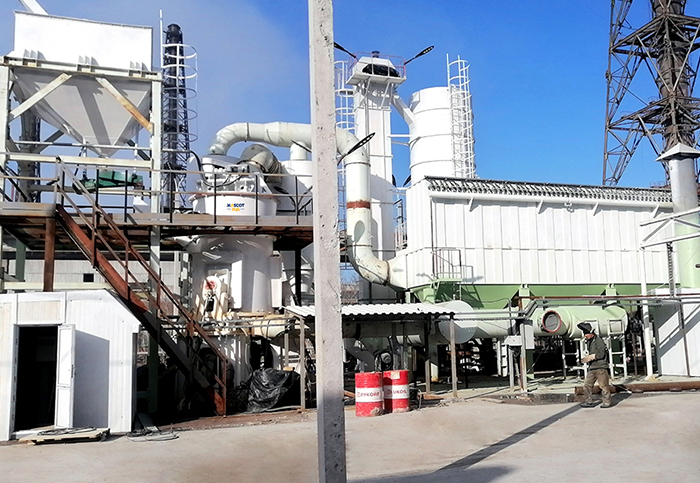
The production line of the vertical roller mill is a cost-effective and energy-efficient solution for processing powder, which is widely used in many industries, such as metallurgy, building materials, industrial solid waste treatment, thermal power plants, cement plants, and environmental protection fields. The primary purpose of this project is to finely grind raw materials through a vertical roller mill to meet the requirements of different industries for particle size, purity, and output of powder products.

The ball mill production line is a comprehensive production line that integrates material crushing, grinding, grading, and collection. This production line is mainly used to process various materials, including sand and gravel, cement, new building materials, silicates, refractory materials, fertilizers, ferrous metal beneficiation, non-ferrous metals, glass ceramics, etc.

The gypsum grinding production line is an efficient, stable, and environmentally friendly production solution, which is widely used in construction, decoration, the chemical industry, and other fields. In addition, the grinding process is particularly critical, which directly affects the quality and particle size of the final product. With the continuous development of science and technology, the technical level and production efficiency of gypsum grinding production lines will be further improved, providing strong support for the development of the gypsum processing industry.
Green and Intelligent Mining Machinery
Manufacturing and Export Base
Based on high quality and perfect after-sales service, our products have been
exported to more than 120 countries and regions.
Copyright © 2023 Zhengzhou Mascot Environmental Technology Co., Ltd Record number: Yu ICP No. 13021523-4





 WhatsApp