 23
23
 27
27
 27
27
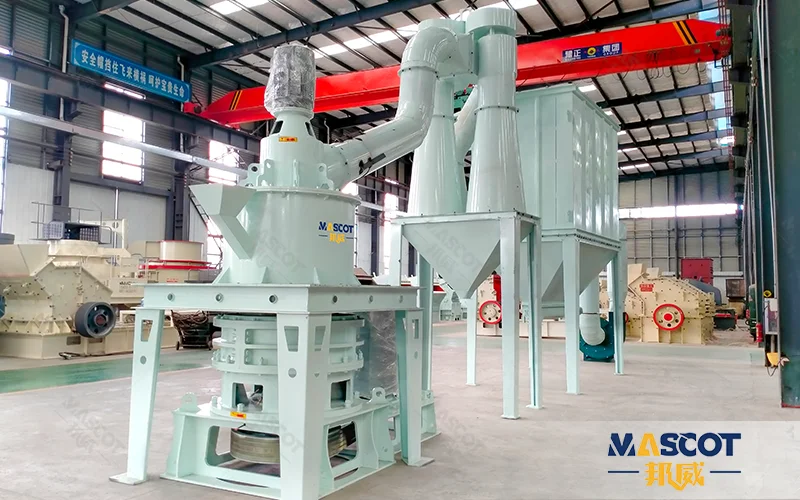
The fastest-moving segment of the mineral powder industry is not the coarsest tonnage — it is the finest. While 200-325 mesh powder serves bulk construction markets, the 800-2500 mesh band feeds the industries that pay premium prices: paints and coatings, plastics masterbatch, rubber, paper coating and ceramics. Producing that band profitably requires a different machine class than bulk grinding, and the HGM Series Micro-Powder Grinding Mill from Zhengzhou Mascot Industry is built for exactly this segment. This article maps the ultra-fine market, explains what ultra-fine grinding demands, and introduces the machine and models behind it.
Demand for ultra-fine powder follows the products that use it. Paints and coatings need fine, bright extenders that improve hiding power and gloss. Plastics and rubber fillers need particles fine enough to reinforce without weakening the polymer. Paper coating needs a smooth, bright surface. Ceramics and glass need controlled fine fractions for consistent firing. Across these industries the requirement converges: powder finer than conventional grinding reaches, with uniform particle size — and the producers who supply it earn margins that bulk powder cannot match.
The market structure rewards the fineness step. A plant that upgrades its product from 325 mesh to 1250 mesh moves from a commodity price band to a specification product band, because the buyers are different: formulators and coating plants, not bulk mixers. The same mineral, ground finer and controlled better, is worth more per ton — which is why powder producers invest in the ultra-fine machine class rather than stretching their existing mills.

Grinding from 325 mesh (about 45 microns) down to 2500 mesh (about 5 microns) is not a matter of running a bulk mill longer. Energy per ton rises steeply as particle size falls, because most of the energy creates new surface area. Classification becomes the bottleneck: at 5-10 microns, separating the qualified fraction from the coarse fraction demands a high-precision classifier, and the finished powder specification is written in D97 — the size below which 97% of the powder falls — rather than in simple mesh.
The machine that meets these demands must combine three capabilities: powerful fine grinding, precise classification, and clean collection. A bulk mill pressed into ultra-fine duty wastes energy, drifts off specification and loses product to dust. The HGM series was designed as one integrated system — crushing feed, grinding, classifying and collecting in a single process — precisely because the ultra-fine market punishes piecemeal designs.

The HGM Series Micro-Powder Grinding Mill processes non-metallic minerals with Mohs hardness below 7 and humidity under 6% — calcite, kaolin, talc, barite, limestone, dolomite, feldspar, gypsum, quartz, wollastonite and more. Its multi-layer grinding rollers press against the ring under centrifugal force, squeezing and impacting the material into ultra-fine powder with minimal heat generation, while the variable-speed turbo classifier cuts the output precisely across 325-2500 mesh with a D97 pass rate above 98%.
Against a traditional ball mill classification line at the same fineness, the HGM delivers 30-40% higher output and 40%+ lower energy consumption, in a fraction of the floor space — one integrated machine replaces the whole ball mill plus classifier plus conveying train. For producers entering the ultra-fine market, the comparison is not marginal; it decides whether the premium price band is actually profitable.
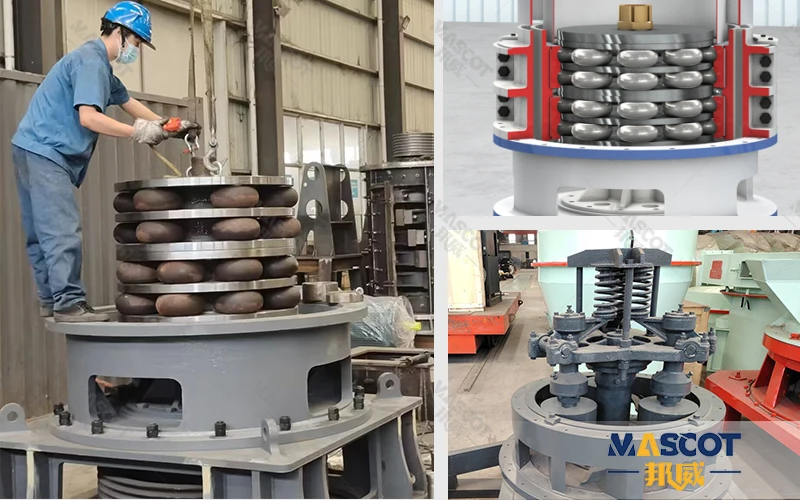
Four models cover the market from pilot lines to industrial systems:
| Model | Rollers | Feed (mm) | Output (micron) | Main Motor (kw) | Capacity (t/h) |
|---|---|---|---|---|---|
| HGM80 | 15 | ≤10 | 5-47 | 37 | 0.35-2.5 |
| HGM1028 | 21 | ≤10 | 5-47 | 75 | 0.6-4 |
| HGM1036 | 27 | ≤20 | 5-47 | 110 | 0.9-6 |
| HGM1250 | 36 | ≤20 | 5-47 | 132 | 1.2-10 |
All four models adjust output across the same 5-47 micron band through the turbo classifier; the model choice follows the tonnage — from the HGM80 pilot unit through the HGM1250 industrial system. Classifier, blower and feeder power scale with the main motor, and each model ships with its matched auxiliary set.
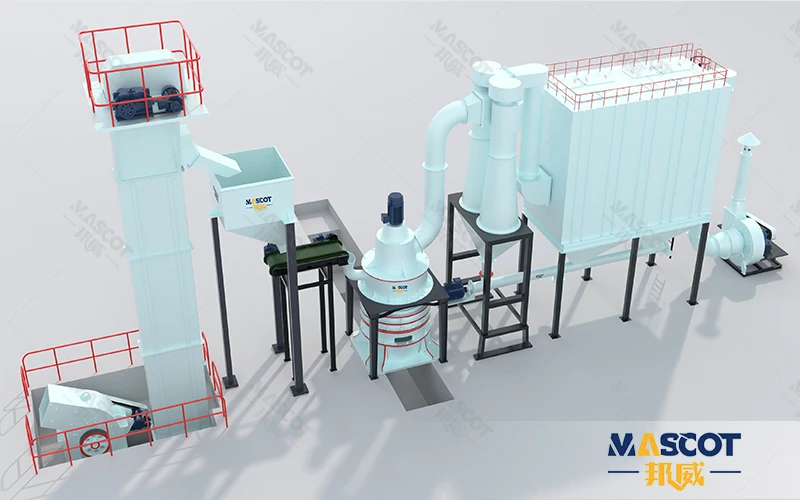
The ultra-fine market is multi-product, and the HGM answers with changeover speed: one machine switches between minerals in 30-60 minutes, making it viable for plants that supply several filler grades. The Jakarta case shows the model in operation: an HGM1036 line at a diversified Indonesian filler plant produces 1250-mesh calcite at 2 t/h, 1250-mesh talc at 3 t/h and 800-mesh kaolin at 2.5 t/h, switching products in 40-60 minutes — three markets from one investment, with D97 pass rate above 98% on all three products.
The same line replaced two ball mill lines the customer had planned, cutting capital cost by over 50% and power cost by more than 40%. That is the ultra-fine market's economics in one case: one integrated machine, several products, and a cost structure that makes the premium price band profitable.
Ultra-fine powder commands a better price only if the cost per ton stays controlled. At 1250-mesh (D97) duty at 2 t/h, the HGM consumes roughly 45-55 kWh per ton against 75-90 for a ball mill system — an annual power cost about 40% lower. Wear parts run low: the high-chrome alloy rollers and ring (HRC 58-62) are rated for Mohs 1-6.5 minerals and last 2-5 times longer than standard steel, against the regular ball reloading and liner replacement of a media mill. D97 stability holds at ±2% versus ±5%, noise at about 85dB versus above 100dB, and the integrated footprint cuts civil works.
Summed over a 2 t/h line running 6,000 hours a year, the total cost per ton is 30-45% lower than a ball mill system — an advantage that typically recovers the investment difference within 1-2 years. For a producer deciding whether to enter the 800-2500 mesh market, these are the numbers that turn a market opportunity into a business case.

Q1: Which minerals can the HGM process?
A: Non-metallic minerals below Mohs 7 and 6% humidity — calcite, kaolin, talc, barite, limestone, dolomite, feldspar, gypsum, quartz, wollastonite. One machine switches between minerals in 30-60 minutes.
Q2: What fineness and capacity are available?
A: 325-2500 mesh (5-47 microns) via the variable-speed turbo classifier, with D97 pass rate above 98%. Models HGM80 to HGM1250 cover 0.35-10 t/h.
Q3: How does the HGM compare with a ball mill system?
A: At the same fineness it delivers 30-40% higher output and 40%+ lower energy, with less floor space and 30-45% lower total cost per ton.
Q4: What is the warranty?
A: A 12-month warranty covers the whole machine and core components — rollers, rings and classifier — with online support available around the clock.
The 800-2500 mesh market is where mineral powder stops being a commodity and becomes a specification product — and the machine class behind it must grind finer, classify more precisely and collect more cleanly than bulk mills can. The HGM Series Micro-Powder Grinding Mill answers with one integrated system: multi-layer rollers for 30-40% higher output, a turbo classifier holding D97 above 98%, four models from 0.35 to 10 t/h, and a cost per ton 30-45% below ball mill lines. For a powder producer ready to move up the fineness ladder, Mascot's free project design will size the line for your material and target grade.

About of Mascot
Zhengzhou Mascot Industry is a high-tech mining equipment company integrating R&D, manufacturing, sales, and after-sales service. Focusing on crushing, grinding, and mineral processing equipment, we provide professional solutions to our customers. We are ISO9001:2015 certified, and our products include mobile crushing plants, crawler crushing plant, construction waste crushing plants, jaw crushers, sand making machines, cone crushers, fine crushers, grinding mills, ball mills, etc., all with reliable performance to meet diverse project needs.
• Professional pre-sales support: Free project design and comprehensive solutions to help you accurately select the right equipment;
• Comprehensive on-site service: Providing installation guidance and worker training to ensure smooth equipment commissioning;
• Reliable after-sales guarantee: A complete after-sales system, timely response to technical inquiries and equipment maintenance, ensuring long-term stable operation.
To protect your rights, please contact us through the following official channels for professional service:
WhatsApp: 0086-16650273865
Email: mascot@mascotenv.com
We are committed to providing high-quality equipment and full-cycle services to deliver comprehensive intelligent solutions for the global mining industry!

This production line utilizes a three-ring medium-speed micro-grinding mill as the central equipment, complemented by other auxiliary equipment like hammer crushers, bucket elevators, and storage silos to establish a comprehensive grinding operation system. It has demonstrated strong potential for application and market competitiveness in industries such as construction, chemical industry, and new materials.

The Raymond mill production line is a highly efficient system designed for grinding operations, with a focus on energy efficiency, durability, and productivity. It caters to the needs of users by offering fine powder products in non-metallic ores, coal powder, and slag processing, aiding enterprises in achieving sustainable growth.

YGMX Enhanced High-Pressure Mill is a new type of high-performance grinding equipment, and the biggest improvement of this milling equipment lies in the increase of the high-pressure spring system in the grinding roller part. Compared with the traditional high-pressure roller mill, it has a wider scope of application and excellent performance to meet the production needs of a variety of powder fineness. It is widely used in non-metallic minerals, chemicals, building materials, metallurgy, environmental protection, etc. Multiple areas.

The gypsum grinding production line is an efficient, stable, and environmentally friendly production solution, which is widely used in construction, decoration, the chemical industry, and other fields. In addition, the grinding process is particularly critical, which directly affects the quality and particle size of the final product. With the continuous development of science and technology, the technical level and production efficiency of gypsum grinding production lines will be further improved, providing strong support for the development of the gypsum processing industry.

The MTW series European grinding mill production line includes high-efficiency crushers, elevators, electromagnetic vibration feeders, milling machines, classifiers, and collectors. These pieces of equipment work together to achieve efficient crushing, grinding, and classification of various non-metallic ores, coal powder, slag, and other materials. It can meet the diverse needs of various industries for powder particle size, uniformity, shape, etc., and offer enterprises high-quality grinding products.
Green and Intelligent Mining Machinery
Manufacturing and Export Base
Based on high quality and perfect after-sales service, our products have been
exported to more than 120 countries and regions.
Copyright © 2023 Zhengzhou Mascot Environmental Technology Co., Ltd Record number: Yu ICP No. 13021523-4





 WhatsApp