
Electricity is the largest recurring cost of a grinding line — larger than labor, and often larger than the wear parts. So when a Southeast Asian limestone plant measured 22% lower energy per ton after switching from traditional mills to an MTW Trapezium Grinding Mill, it was not a footnote in the case report; it was the number that decided the payback. This article shows where that saving comes from and the five methods that produce it — three of them are built into the machine, two are operating discipline you control.
Before cutting a cost, map it. In a grinding line, energy leaves in four directions: the drivetrain, which transmits power from the motor to the grinding zone; the grinding process itself, where energy becomes new surface area on the material; the air system, which moves powder through the mill and the dust collector; and losses — heat, noise, friction, idle running and overload waste. Traditional mills leak in all four directions; the MTW series was designed to close the leaks it can, and the operating methods in this article close the rest.
The field result gives the target: 22% lower energy per ton of finished powder, measured against the plant's previous traditional equipment on the same material and fineness. Reaching a similar number at your plant means applying all five methods — the three design methods are already in the machine, and the two operating methods are within your control from the first shift.

The trapezoidal roller and grinding ring enlarge the effective grinding area, so each revolution does more work at the same motor power. This is the single largest energy lever in the series: 20%-30% higher grinding efficiency means fewer kilowatt-hours per ton of powder, because the same energy is producing more finished material. The geometry is fixed at the factory — your part is simply to not work against it by keeping the wear surfaces healthy, as Method 5 describes.
The efficiency gain compounds at fine fineness. At 250-325 mesh, where recirculation loads are heavy, a mill that grinds more per revolution spends less energy per pass and fewer passes per ton. The field plant's 22% figure was measured at exactly this kind of fine-mesh duty, which is where the trapezoidal advantage shows most.
Power that never reaches the grinding zone is pure waste. Traditional split transmission loses roughly 15% of input energy through intermediate gears, couplings and alignment errors — energy that appears as heat and noise. The MTW series replaces this with an integral bevel gear: a single, compact drive that carries power from motor to grinding disc with minimal intermediate stages, recovering most of that 15%.
The saving is invisible and permanent. It shows up in the electricity meter, not in the operating panel, and it applies on every shift for the life of the machine. This is a design method: you do not operate it, you simply benefit from it — which is why the comparison between the old mills and the MTW line measured the full 22% including this component.

This is the first operating method, and it is free. A grinding mill is most energy-efficient near its design point: overloading makes the grinding zone churn without producing proportionally more powder, and underloading wastes the fixed energy of the drivetrain and air system on a half-full mill. Both conditions raise kilowatt-hours per ton.
Run the mill at a stable feed rate matched to the model — the GZ2 vibrating feeder, coordinated with the PLC, holds that rate automatically. Avoid surge feeding, which alternates between the two wasteful extremes. And size the model with the margin described in the sizing guides: a mill running at 70% of its design point consumes nearly the same fixed energy while producing less powder, which silently raises cost per ton.
The air system is the second operating method. Clogged bags in the pulse dust collector raise backpressure, and the blower works harder to move the same volume of air — consuming more energy while delivering less airflow to the mill. A leaking duct or a worn blower has the same double effect: energy up, output down.
Monitor the LQM72-7 collector's pressure differential and pulse frequency weekly, clean or replace bags on schedule, and keep the curved air duct clear of buildup. The energy saving is immediate when the restriction is removed: the blower returns to its design load, and the mill gets the airflow it needs to maintain output. Plants that treat the dust collector as an environmental accessory pay twice; plants that treat it as part of the energy system save twice.

Worn rollers and ring shrink the effective grinding area, so the mill does less work per revolution and consumes more energy per ton. The trapezoidal design distributes wear evenly, giving 8-12 months of life on limestone and calcite, but the surface must be inspected monthly and replaced when grooves appear. A mill running on worn parts quietly consumes its efficiency gain.
Lubrication is the second half: the dilute oil system with its four-month change cycle keeps bearing friction low. Low oil or contaminated oil raises bearing temperature, adds friction and drags energy efficiency down. The discipline is cheap — an oil level check a week — and the energy it protects is not. Together, wear maintenance and lubrication maintenance keep the design methods in Method 1-3 working at full strength.
All five methods came together in the reference case. A Southeast Asian building materials plant replaced its traditional mills with an MTW175 complete line — trapezoidal geometry, integral bevel gear, PLC-controlled feeding, matched LQM72-7 dust collection — and operated it with the discipline described here. The measured result over more than ten months: 31 t/h at 250 mesh, 22% lower energy per ton, 99.6% pass rate and 20% lower maintenance cost, with a second line ordered in April 2026.
The 22% belongs to the plant's cost ledger every month it runs. At the plant's scale, that saving recurs on every ton of roughly 220,000 tons of annual production — a figure that dwarfs the difference between competing quotations, and the real reason the customer ordered a second line.

Q1: How was the 22% measured?
A: The plant compared total line electricity consumption against tons of finished powder — kilowatt-hours per ton — against the same basis on its previous traditional mills. The 22% is the improvement on that basis.
Q2: Will my plant achieve the same 22%?
A: The percentage depends on your previous equipment's efficiency, your material and your operating discipline. Mascot's free project design provides energy estimates for your specific case.
Q3: Do the energy savings apply at fine fineness?
A: Yes — the 22% figure was measured at 250-mesh duty, where the trapezoidal geometry's efficiency advantage is largest. At coarser fineness the absolute energy per ton is lower but the relative advantage remains.
Q4: What is the cheapest energy measure to start with?
A: Operating discipline: stable feed near the design point, weekly collector checks and the oil level check. All three cost nothing and protect the design savings immediately.
Cutting grinding energy cost by 22% is the combination of five methods: the trapezoidal geometry and the bevel gear, which are built in; the design-point operation and clean air system, which are free discipline; and the wear and lubrication maintenance, which protects all the rest. The field case proves the sum — 31 t/h, 22% lower energy, 20% lower maintenance — and the second order proves the economics. Apply the five methods, and the energy meter becomes a management tool instead of a monthly surprise.

About of Mascot
Zhengzhou Mascot Industry is a high-tech mining equipment company integrating R&D, manufacturing, sales, and after-sales service. Focusing on crushing, grinding, and mineral processing equipment, we provide professional solutions to our customers. We are ISO9001:2015 certified, and our products include mobile crushing plants, crawler crushing plant, construction waste crushing plants, jaw crushers, sand making machines, cone crushers, fine crushers, grinding mills, ball mills, etc., all with reliable performance to meet diverse project needs.
• Professional pre-sales support: Free project design and comprehensive solutions to help you accurately select the right equipment;
• Comprehensive on-site service: Providing installation guidance and worker training to ensure smooth equipment commissioning;
• Reliable after-sales guarantee: A complete after-sales system, timely response to technical inquiries and equipment maintenance, ensuring long-term stable operation.
To protect your rights, please contact us through the following official channels for professional service:
WhatsApp: 0086-16650273865
Email: mascot@mascotenv.com
We are committed to providing high-quality equipment and full-cycle services to deliver comprehensive intelligent solutions for the global mining industry!

The high-pressure grinding mill production line is a project specially designed for efficient grinding operations. It is widely used in metallurgy, building materials, the chemical industry, highways, water conservancy hydropower, and other industries. It is a suspended roller mill that uses springs to increase pressure. It can achieve efficient grinding processing of various non-metallic raw materials. It has high efficiency, stability, and environmental protection characteristics.

YGMX Enhanced High-Pressure Mill is a new type of high-performance grinding equipment, and the biggest improvement of this milling equipment lies in the increase of the high-pressure spring system in the grinding roller part. Compared with the traditional high-pressure roller mill, it has a wider scope of application and excellent performance to meet the production needs of a variety of powder fineness. It is widely used in non-metallic minerals, chemicals, building materials, metallurgy, environmental protection, etc. Multiple areas.

The Raymond mill production line is a highly efficient system designed for grinding operations, with a focus on energy efficiency, durability, and productivity. It caters to the needs of users by offering fine powder products in non-metallic ores, coal powder, and slag processing, aiding enterprises in achieving sustainable growth.

The gypsum grinding production line is an efficient, stable, and environmentally friendly production solution, which is widely used in construction, decoration, the chemical industry, and other fields. In addition, the grinding process is particularly critical, which directly affects the quality and particle size of the final product. With the continuous development of science and technology, the technical level and production efficiency of gypsum grinding production lines will be further improved, providing strong support for the development of the gypsum processing industry.
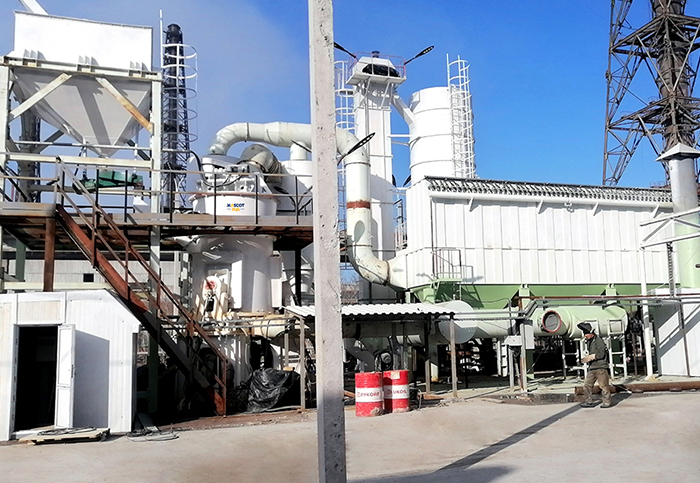
The production line of the vertical roller mill is a cost-effective and energy-efficient solution for processing powder, which is widely used in many industries, such as metallurgy, building materials, industrial solid waste treatment, thermal power plants, cement plants, and environmental protection fields. The primary purpose of this project is to finely grind raw materials through a vertical roller mill to meet the requirements of different industries for particle size, purity, and output of powder products.
Green and Intelligent Mining Machinery
Manufacturing and Export Base
Based on high quality and perfect after-sales service, our products have been
exported to more than 120 countries and regions.
Copyright © 2023 Zhengzhou Mascot Environmental Technology Co., Ltd Record number: Yu ICP No. 13021523-4





 WhatsApp