
1. Overview of Dry Ball Mill: Purpose and Working Principle
The Dry Ball Mill is a grinding system that pulverizes materials through the impact and attrition of steel balls inside a rotating cylindrical drum —without the addition of water or any liquid medium. It is widely deployed in mining, metallurgy, building materials, and chemical processing for grinding ores, coal, cement clinker, ceramics, and other bulk materials into fine powder suitable for downstream processing or direct industrial application.
The fundamental distinction from wet ball mills is the absence of a liquid grinding medium. In dry grinding, the material is fed into the rotating drum where cascading steel balls crush and grind it through repeated impact and attrition. The finished powder is discharged through a grate or carried out by an air stream, depending on the mill configuration. This water-free operation eliminates material agglomeration issues that affect moisture-sensitive materials such as gypsum and certain limestones, and it makes the dry ball mill the preferred choice for mining operations in arid regions where water resources are scarce or expensive.
Mascot's Dry Ball Mill incorporates advanced structural engineering: the cylinder and lining plates are manufactured from high-quality wear-resistant materials selected for each application's abrasion characteristics, extending equipment service life. The system supports full customization —capacity from 0.65 to 90 t/h, discharge size from 45 microns to 200 mesh, and power configurations matched to site electrical infrastructure —ensuring each installation is optimized for its specific project requirements.

2. Dry Ball Mill Quick Specifications
| Product | Dry Ball Mill (Water-Free Grinding System) |
|---|---|
| Grinding Type | Dry grinding (no water or liquid medium required) |
| Feed Size | ≤ 25 mm |
| Motor Power | 18.5-800 kW |
| Capacity | 0.65-90 t/h (customizable up to 200 tph for large-scale projects) |
| Discharge Fineness | 45 micron - 200 mesh (flexibly adjustable) |
| Applicable Materials | Metal ores (gold, copper, iron, manganese) and non-metal minerals (limestone, gypsum, quartz, barite, cement clinker, ceramics, coal) |
| Core Functions | Dry grinding, pulverizing, and particle size reduction without water addition |
| Brand | Zhengzhou Mascot Industry |
| Certification | ISO 9001:2015 |
| Packing | Standard containers, Nude Packing, Wooden boxes, etc. |
| Installation | Engineer-guided installation, commissioning, and operator training |
| Factory Visit | Warmly Welcomed |
| Export Countries | Southeast Asia, Central Asia, South America, North America, Africa, Middle East |
| Payment Terms | T/T, L/C, PayPal, etc. |
| Note: Specifications are for reference. Contact Mascot for a customized configuration based on material properties and production targets. | |
3. Core Advantages of Mascot Dry Ball Mill
Compared with wet ball mills and traditional dry grinding equipment, the Mascot Dry Ball Mill delivers measurable advantages in water conservation, energy efficiency, material versatility, and operational stability —directly translating to lower operating costs and greater production flexibility for mining enterprises.
3.1 Water-Saving and Environmentally Compliant: Zero Process Water, Zero Wastewater
The defining advantage of the dry ball mill is its complete independence from water as a grinding medium. For mining operations in arid and water-scarce regions —common across Africa, the Middle East, Central Asia, and parts of South America —this eliminates the single largest process water consumer in the beneficiation circuit. Beyond water conservation, dry grinding generates zero process wastewater, eliminating the capital and operating costs of wastewater treatment infrastructure and ensuring compliance with environmental regulations that increasingly restrict industrial water discharge. The closed grinding system with integrated dust collection captures particulate emissions, maintaining a clean working environment without the slurry handling and dewatering equipment that wet grinding circuits require.
3.2 High Grinding Efficiency with Optimized Energy Consumption
Mascot's Dry Ball Mill employs an optimized grinding media size ratio and advanced transmission structure that maximize the conversion of motor power into productive grinding work. The cylinder geometry has been engineered to promote optimal cascading of the grinding media, ensuring uniform material comminution throughout the drum length. Unit energy consumption is 10-15% lower than conventional dry ball mills, directly reducing the largest operating cost in any grinding operation. The equipment operates with low noise and vibration, and the failure rate is substantially below that of traditional grinding equipment, minimizing both planned and unplanned downtime.
3.3 Wide Application Range: Metal Ores and Non-Metallic Minerals
The Dry Ball Mill accommodates virtually the entire spectrum of mining grinding applications. For metal ores —gold, copper, iron, manganese, and others —it provides the fine grinding required for downstream flotation, leaching, or magnetic separation. For non-metallic minerals —limestone, gypsum, quartz, barite, cement clinker, and ceramics —it produces powders meeting the specifications of construction materials, chemical processing, and industrial manufacturing. This versatility allows a single dry ball mill installation to serve multiple material streams or to be repurposed as the mine's ore characteristics evolve over its operational life.
3.4 Flexible Fineness Control: 45 Micron to 200 Mesh
Finished product fineness is adjustable from 45 microns (approximately 325 mesh) to 200 mesh through control of grinding media size distribution, mill rotational speed, and residence time. This flexibility enables a single mill to produce different product grades for different downstream processes —for example, coarser output for gravity separation followed by finer output for flotation —without equipment modifications. For operations where product specifications change with market demand, this adjustability eliminates the need for multiple dedicated grinding circuits.

4. Application Case Study: Tanzania Gold Mine — ф2400×4500 Dry Ball Mill
This case study documents a Mascot Dry Ball Mill deployment at a gold mining operation in Tanzania, demonstrating the equipment's performance in a demanding mineral processing application.
4.1 Project Background and Challenge
| Customer | Gold mining and processing company, Tanzania |
| Daily Processing | 25 tph gold ore |
| Feed / Target | Ore crushed to < 25 mm; target grind 45 micron for downstream flotation |
| Problem | Existing traditional grinding equipment exhibited low efficiency, high energy consumption, and unstable operation. Finished product fineness was inconsistent, reducing flotation recovery rates. |
4.2 Mascot Solution
After analyzing the customer's process requirements and site conditions, Mascot designed and delivered a customized ф2400×4500 Dry Ball Mill with:
4.3 Operational Results (Commissioned 2024, 6+ Months of Production Data)
Based on the dry ball mill's performance, the customer signed a long-term cooperation agreement with Mascot, and has recommended the equipment to partner mining operations in the region. The Tanzania installation demonstrates the dry ball mill's suitability for gold processing applications where consistent fine grinding directly impacts downstream metallurgical recovery.

5. Dry Ball Mill Technical Specifications
| Model | Cylinder (mm) | Capacity (t/h) | Motor (kW) | Feed (mm) | Fineness | Grinding Media | Best For |
|---|---|---|---|---|---|---|---|
| ф1200×2400 | 1200×2400 | 0.65-2 | 18.5-30 | ≤25 | 45μm-200目 | Steel balls | Small-scale / pilot operations |
| ф1500×3000 | 1500×3000 | 2-5 | 45-75 | ≤25 | 45μm-200目 | Steel balls | Small production lines |
| ф1800×3600 | 1800×3600 | 5-12 | 90-132 | ≤25 | 45μm-200目 | Steel balls | Medium-scale mineral processing |
| ф2400×4500 | 2400×4500 | 12-30 | 200-630 | ≤25 | 45μm-200目 | Steel balls | Industrial gold/copper/iron ore |
| ф2700×4500 | 2700×4500 | 20-45 | 400-800 | ≤25 | 45μm-200目 | Steel balls | Large-scale mining operations |
| ф3200×4500 | 3200×4500 | 40-90 | 630-800 | ≤25 | 45μm-200目 | Steel balls | High-volume production bases |
Table: Dry Ball Mill model specifications. Highlighted rows (ф1800×3600 and ф2400×4500) represent the most commonly deployed configurations. Actual throughput varies by material hardness, feed size, and target fineness.
6. Complete Production Line: Related Equipment
The Dry Ball Mill integrates into a complete mining production chain. Mascot provides all complementary equipment with single-source procurement and unified warranty coverage.
6.1 Jaw Crusher — Primary Crushing for Mill Feed Preparation
Mascot jaw crushers serve as the primary crushing stage, reducing large run-of-mine ore (gold, copper, limestone, etc.) to below 25 mm to meet the Dry Ball Mill's feed specification. Simple structure, high crushing efficiency, and strong wear resistance make the jaw crusher the standard front-end unit. Proper pre-crushing improves mill throughput and extends grinding media service life by ensuring uniform feed particle size.
6.2 Vibrating Screen — Feed and Product Classification
Vibrating screens serve dual roles in the dry grinding circuit: pre-classifying crushed material to ensure only specification-compliant particles enter the mill, and post-classifying ground product to separate finished powder into different size fractions. This classification improves both grinding efficiency and final product quality by preventing oversize material from consuming mill capacity and enabling multi-grade product output from a single grinding circuit.
6.3 Dust Collection Equipment — Environmental Compliance and Product Recovery
High-efficiency dust collection systems are integrated with the Dry Ball Mill to capture process-generated particulate matter, preventing environmental emissions and protecting operator health. The collected dust represents recoverable product, improving overall material yield. Mascot sizes the dust collection system to match the mill's air volume, ensuring effective particulate capture without excessive energy consumption.

7. Frequently Asked Questions About Dry Ball Mill
Q1: What is the difference between a dry ball mill and a wet ball mill? Which is more suitable for mining projects?
The fundamental difference is the grinding medium: dry ball mills operate without water, while wet ball mills use water or chemical solution as a carrier. This distinction drives the selection decision. Choose a dry ball mill when: the mine is in an arid or water-scarce region; the material tends to absorb water and agglomerate (gypsum, certain limestones); or wastewater treatment infrastructure is unavailable or cost-prohibitive. Dry ball mills eliminate water procurement, slurry pumping, and dewatering costs. Choose a wet ball mill when: the downstream process is wet beneficiation (flotation, wet magnetic separation); the material requires dust suppression; or ultra-fine grinding below 45 microns is required. For most mining projects in arid regions or processing moisture-sensitive materials, the dry ball mill offers superior cost-effectiveness and environmental compliance.
Q2: How do I select the correct Dry Ball Mill capacity for my mining project?
Capacity selection depends on four interdependent factors: daily processing volume (tons per day), feed particle size distribution, target finished product fineness, and material hardness/work index. Mascot's engineering team conducts a comprehensive analysis using these parameters to recommend the optimal capacity —from 0.65 to 90 t/h standard, with custom configurations available for larger projects. As a practical example: a gold mine processing 25 tph with feed below 25 mm targeting 45-micron output would typically require a ф2400×4500 model with a 630 kW motor. Mascot provides free grinding test services using customer material samples to validate model selection before procurement.
Q3: What after-sales services does Mascot provide for Dry Ball Mill installations?
Mascot provides a comprehensive after-sales package: (1) Free on-site installation and commissioning by experienced engineers who guide the customer's operators through correct equipment startup, operation, and shutdown procedures. (2) Comprehensive technical training covering daily operation, routine maintenance, wear-part replacement, and troubleshooting. (3) 24-hour remote technical support with multi-language capability for urgent issue resolution. (4) Centralized spare parts warehousing with express international shipping to all major export regions. (5) Standard 12-month warranty with extended coverage options available. This complete support framework ensures that every Dry Ball Mill installation achieves its designed performance from commissioning through its full operational life.

About of Mascot
Zhengzhou Mascot Industry is a high-tech mining equipment company integrating R&D, manufacturing, sales, and after-sales service. Focusing on crushing, grinding, and mineral processing equipment, we provide professional solutions to our customers. We are ISO9001:2015、certified, and our products include mobile crushing palnts, crawler crushing plant,construction waste crushing plants, jaw crushers, sand making machines, cone crushers, fine crushers,grinding mills, ball mills, etc., all with reliable performance to meet diverse project needs.
• Professional pre-sales support: Free project design and comprehensive solutions to help you accurately select the right equipment;
• Comprehensive on-site service: Providing installation guidance and worker training to ensure smooth equipment commissioning;
• Reliable after-sales guarantee: A complete after-sales system, timely response to technical inquiries and equipment maintenance, ensuring long-term stable operation.
To protect your rights, please contact us through the following official channels for professional service:
WhatsApp: 0086-16650273865
Email: mascot@mascotenv.com
We are committed to providing high-quality equipment and full-cycle services to deliver comprehensive intelligent solutions for the global mining industry!

The high-pressure grinding mill production line is a project specially designed for efficient grinding operations. It is widely used in metallurgy, building materials, the chemical industry, highways, water conservancy hydropower, and other industries. It is a suspended roller mill that uses springs to increase pressure. It can achieve efficient grinding processing of various non-metallic raw materials. It has high efficiency, stability, and environmental protection characteristics.

The Raymond mill production line is a highly efficient system designed for grinding operations, with a focus on energy efficiency, durability, and productivity. It caters to the needs of users by offering fine powder products in non-metallic ores, coal powder, and slag processing, aiding enterprises in achieving sustainable growth.
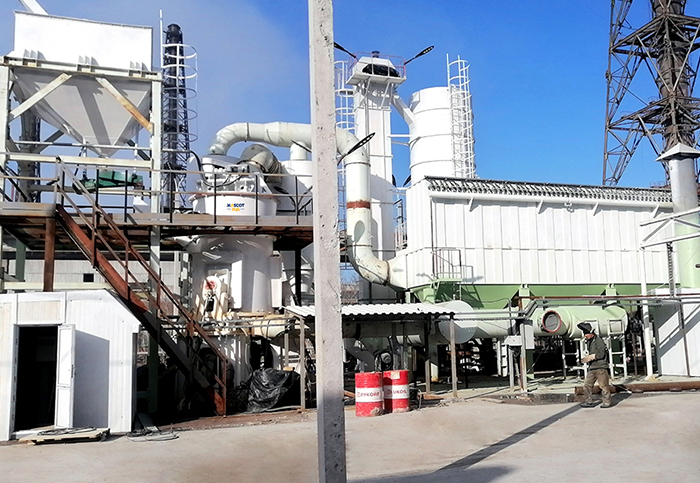
The production line of the vertical roller mill is a cost-effective and energy-efficient solution for processing powder, which is widely used in many industries, such as metallurgy, building materials, industrial solid waste treatment, thermal power plants, cement plants, and environmental protection fields. The primary purpose of this project is to finely grind raw materials through a vertical roller mill to meet the requirements of different industries for particle size, purity, and output of powder products.

YGMX Enhanced High-Pressure Mill is a new type of high-performance grinding equipment, and the biggest improvement of this milling equipment lies in the increase of the high-pressure spring system in the grinding roller part. Compared with the traditional high-pressure roller mill, it has a wider scope of application and excellent performance to meet the production needs of a variety of powder fineness. It is widely used in non-metallic minerals, chemicals, building materials, metallurgy, environmental protection, etc. Multiple areas.

The ball mill production line is a comprehensive production line that integrates material crushing, grinding, grading, and collection. This production line is mainly used to process various materials, including sand and gravel, cement, new building materials, silicates, refractory materials, fertilizers, ferrous metal beneficiation, non-ferrous metals, glass ceramics, etc.
Green and Intelligent Mining Machinery
Manufacturing and Export Base
Based on high quality and perfect after-sales service, our products have been
exported to more than 120 countries and regions.
Copyright © 2023 Zhengzhou Mascot Environmental Technology Co., Ltd Record number: Yu ICP No. 13021523-4





 WhatsApp