 25
25
 27
27
 27
27

Brief Introduction
Heavy calcium carbonate — also known as ground calcium carbonate (GCC) — is produced by mechanically grinding natural calcite, limestone, or marble into fine powder. The global GCC market reached USD 14.44 billion in 2025 and is projected to grow at a CAGR of 9.7% through 2035, driven by demand from plastics, paints, paper, rubber, and construction materials. Yet the gap between a low-margin 200-mesh filler and a high-value 800-mesh coating-grade product is not the raw stone — it is the grinding process itself. The YGM High-pressure Grinding Mill provides a processing platform that addresses the three non-negotiable demands of GCC production: consistent particle size distribution, whiteness preservation through low-iron contamination, and energy cost per ton that keeps the operation profitable across market cycles. This article examines how high-pressure grinding technology processes heavy calcium carbonate — from raw calcite to graded finished powder.
What Makes Heavy Calcium Carbonate Processing Different
Unlike precipitated calcium carbonate (PCC), which is chemically synthesized, GCC is a purely mechanical product. Its market value is determined by four processing-dependent characteristics:
1. Particle Size Distribution (PSD) — Customers specify D50 and D97 targets in contracts. A wide, uncontrolled distribution produces off-spec material that must be sold at discount or re-ground. The grinding mill must deliver narrow PSD consistency shift after shift.
2. Whiteness — Iron contamination from grinding media or wear parts discolors the powder, directly devaluing it for paper, paint, and plastic applications. GCC destined for these markets requires high-chromium or ceramic-grade wear surfaces to maintain whiteness values above 90%.
3. Moisture Sensitivity — Calcite and limestone naturally carry 1–5% moisture depending on mining and storage conditions. Processing equipment must either tolerate this moisture or integrate pre-drying; above 6%, grinding efficiency collapses as material pastes rather than fractures.
4. Multi-Grade Flexibility — A GCC plant that can switch from 200-mesh filler to 400-mesh coating-grade to 800-mesh high-value powder without mechanical reconfiguration serves multiple markets from a single capital investment.

Why High Pressure Grinding Technology Fits GCC Processing
High-pressure suspension grinding — the core principle behind the YGM series — applies 1,000–1,500 kg of constant force per roller against a stationary grinding ring. This mechanism delivers specific advantages for heavy calcium carbonate:
1. Constant Pressure = Consistent PSD Over the Wear Cycle
Unlike centrifugal mills where grinding force decays as rollers lose mass, YGM's spring-loaded constant-pressure system maintains uniform force regardless of roller wear state. For GCC producers shipping the same grade to the same customer month after month, this eliminates the gradual PSD drift that centrifugal mills exhibit between wear-part replacements.
2. Frequency-Conversion Classification Delivers 99%+ Pass Rate
The variable-frequency classifier allows operators to dial in target fineness from 80 to 425 mesh without mechanical changes. A 99% pass rate means near-zero off-spec material requiring a second pass through the mill — a direct saving in energy, operator time, and equipment hours. For a 5 t/h GCC line, recovering 0.4–0.5 t/h that a mechanically classified mill would reject translates to approximately 2,000+ tons of additional saleable product per year.
3. High-Chromium Alloy Wear Parts Preserve Whiteness
Grinding rollers and rings use high-chromium alloy with 2–3× the service life of standard alloys. More critically for GCC, high-chromium surfaces generate significantly less iron-abrasion contamination than conventional manganese or carbon steel, helping maintain the whiteness values that determine powder pricing in paper, paint, and plastic-grade markets.
4. Sealed Negative-Pressure System Controls Dust and Moisture
GCC processing generates substantial airborne fines. YGM's sealed negative-pressure dust collection system captures powder at the source, with dust emissions controlled to ≤20 mg/m³. The enclosed circuit also isolates the grinding chamber from ambient humidity, reducing moisture re-absorption during processing.
5. Stepless Fineness Adjustment Across the GCC Product Range
A single YGM mill can produce 80-mesh coarse filler, 200-mesh general-purpose powder, 325-mesh medium-grade product, and 400–425-mesh fine coating-grade GCC — all through PLC classifier speed adjustment. No roller changes, no ring replacement, no mechanical reconfiguration. This allows operators to pivot between market segments as demand and pricing shift.
Core Parameters of YGM High-Pressure Grinding Mill
| Model | YGM65 | YGM95 | YGM130 | YGM160 |
|---|---|---|---|---|
| Grinding Rollers | 3 pcs | 4 pcs | 5 pcs | 6 pcs |
| Max Feed Size | <15 mm | <25 mm | <30 mm | <35 mm |
| Capacity | 0.3-2.0 t/h | 1.1-5.6 t/h | 2.2-9.5 t/h | 8.0-22.0 t/h |
| Main Motor Power | 18.5 kw | 37 kw | 75 kw | 132 kw |
| Finished Fineness | 80-425 mesh | 80-425 mesh | 80-425 mesh | 80-425 mesh |
Model Selection by GCC Application Scale:
YGM65 — Pilot production, specialty high-whiteness GCC, or niche ultra-pure grades (0.3–2.0 t/h)
YGM95 — Small-to-medium filler-grade GCC for regional markets (1.1–5.6 t/h)
YGM130 — Mid-scale GCC operations covering filler to coating grades; best cost-per-ton balance (2.2–9.5 t/h)
YGM160 — Large-volume commodity GCC for export or national distribution (8.0–22.0 t/h)

The GCC Processing Workflow: From Raw Calcite to Graded Powder
Producing consistent heavy calcium carbonate powder requires an integrated processing line, not just a mill. The complete GCC processing workflow built around YGM high-pressure grinding technology follows five sequential stages:
1. Pre-Crushing
Raw calcite, limestone, or marble blocks (typically 200–400 mm) are reduced to mill-ready feed size (<15–35 mm depending on YGM model) using a jaw crusher or hammer crusher. For GCC, pre-crushing must avoid introducing iron contamination — crusher wear parts should be high-manganese or chromium-alloy grade. Oversize control at this stage prevents mill jamming and uneven roller loading.
2. Pre-Drying (If Required)
YGM is rated for feed moisture below 6%, with 4–5% being the ideal operating window. If raw calcite moisture exceeds this threshold — common with open-pit mining or outdoor stockpiles — a rotary dryer upstream of the mill is essential. A $15,000 dryer that restores 15% of lost grinding capacity on a $50,000 mill pays for itself within months. For GCC specifically, pre-drying also stabilizes the moisture content that directly affects powder flowability and packaging behavior.
3. High-Pressure Grinding
Pre-crushed and dried material is fed into the YGM mill via a belt scale feeder (B400x6m standard) at a uniform rate of 80–90% of rated capacity. The high-pressure springs press grinding rollers against the ring, creating a multi-layer material bed where particles are crushed by both roller-to-ring compression and particle-to-particle attrition. For GCC, the constant-pressure mechanism is particularly valuable because it maintains grinding force even as roller diameter decreases through wear — a direct advantage over centrifugal mills where output decays linearly with roller wear.
4. Precision Classification
Ground material is carried by airflow into the frequency-conversion classifier. Rotating classifier blades create a centrifugal field that rejects oversize particles back to the grinding zone while allowing on-spec powder to pass. For GCC multi-grade production, operators save preset RPM profiles in the PLC for each product grade — eliminating trial-and-error when switching between, for example, 200-mesh filler and 400-mesh coating-grade production on the same line.
5. Collection and Packaging
Qualified powder exits the classifier into a cyclone collector, while ultrafine dust is captured by the pulse-jet baghouse (LQM64-6). The sealed negative-pressure system ensures dust emission ≤20 mg/m³. Collected powder is discharged through a rotary valve into storage silos or directly into bagging stations. For GCC, moisture re-absorption during collection is minimized because the entire circuit operates under negative pressure, isolating the powder from ambient humidity.

Critical Process Control Variables for GCC Quality
1. Feed Rate Stability
Inconsistent feeding is the most common cause of PSD variation in GCC production. When the material bed on the grinding ring fluctuates, the high-pressure springs work against an uneven load, producing a wider particle size spread. A belt scale feeder maintains uniform material supply. Operators should monitor main motor amperage: fluctuations exceeding 5% at steady feed rate indicate the material bed is not stable. For GCC, PSD consistency is a contractual obligation, not an internal metric.
2. Classifier Speed vs. Target Fineness
Higher RPM yields finer GCC at the cost of throughput; lower RPM maximizes output at the cost of coarser powder. The processing sweet spot is the lowest RPM that consistently meets the customer's D97 specification. Running the classifier faster than necessary wastes energy and reduces hourly output with no commercial benefit. YGM's PLC allows operators to save and recall preset RPM profiles by GCC grade.
3. Grinding Pressure Maintenance
Spring tension drifts over months of continuous operation. A quarterly pressure calibration against the manufacturer's specification ensures each roller delivers the designed 1,000–1,500 kg of constant force. Under-pressure reduces throughput; over-pressure accelerates roller and ring wear without proportional output gain. For GCC, consistent grinding pressure directly correlates with consistent PSD.
4. Wear-Part Condition and Whiteness Monitoring
As rollers and rings wear, two indicators demand attention: rising main motor amperage at steady feed rate signals increased friction, and declining whiteness values in the finished product suggest the high-chromium wear layer is thinning and exposing base material. For GCC producers supplying paper or paint markets, whiteness degradation is detected by the customer before the operator sees it — proactive wear-part replacement at scheduled intervals prevents customer rejections.

GCC Grade Matrix: YGM Fineness vs. End-Use Markets
| Mesh Range | D97 (approx.) | GCC Grade | Primary End-Use Markets |
|---|---|---|---|
| 80–150 mesh | 100–180 μm | Coarse Filler | Construction materials, animal feed, glass, coarse putty |
| 200–250 mesh | 53–74 μm | General-Purpose Filler | Plastics compounding, rubber, carpet backing, adhesives |
| 325 mesh | ~45 μm | Medium-Grade GCC | PVC pipes, masterbatch, sealants, construction coatings |
| 400–425 mesh | ~32–38 μm | Fine Coating Grade | Paper coating, high-end paints, premium plastics, pharmaceuticals |
A single YGM line with stepless classifier adjustment can cover all four grade bands, allowing GCC processors to serve multiple markets without additional capital equipment. The 200-mesh to 400-mesh transition — the most commercially important range — is executed through PLC classifier speed adjustment alone.
Field Validation: GCC Processing Line in Southeast Asia
Project Location: Southeast Asia
Processing Material: Calcite (heavy calcium carbonate)
Required Fineness: 325 mesh (D97 ~45 μm)
Capacity Demand: 6 t/h
Original Problem: Inconsistent PSD from aging centrifugal mill; iron contamination exceeding customer whiteness specification; dust emissions above local environmental threshold
The processor replaced its centrifugal mill with a Mascot YGM130 High-Pressure Grinding Mill integrated into a complete processing line including jaw crusher, rotary dryer, bucket elevator, belt scale feeder, cyclone collector, and pulse-jet baghouse. Mascot engineers provided on-site commissioning and GCC-specific operator training, completing the transition within 25 days.
Key performance metrics after six months of stable operation:
- Stable output: 6.8 t/h at 325 mesh, exceeding the 6 t/h target
- PSD consistency: D97 pass rate 99.1% across quarterly audits
- Whiteness value: Maintained 93.5% against a 92% customer specification
- Energy consumption: 31% lower kWh per ton versus the replaced centrifugal mill
- Dust emission: Consistently ≤20 mg/m³, compliant with local regulations
- Maintenance cost: Annual reduction of 24% driven by extended wear-part life from high-chromium alloys
The operator's technical director noted: "The PSD consistency from the YGM130 removed the single largest source of customer complaints. We now ship 325-mesh GCC without pre-shipment particle size testing on every batch — the process is that stable." The line has since added 400-mesh coating-grade production through PLC classifier adjustment alone, opening a higher-margin revenue stream without additional capital expenditure.

Auxiliary Equipment Configuration for GCC Processing Line
| Equipment Name | Model | Power | Function |
|---|---|---|---|
| Jaw Crusher | PE250x400 | 15 kw | Primary crushing: calcite blocks to mill feed size |
| Rotary Dryer | Customized | -- | Moisture reduction to <5% for optimal grinding |
| Bucket Elevator | TH315 | 4 kw | Material lifting to feed hopper |
| Belt Scale Feeder | B400x6m | 2.2 kw | Precise and stable feeding to grinding chamber |
| Dust Collector | LQM64-6 | -- | High-efficiency dust removal; ≤20 mg/m³ |
| High-Pressure Blower | 9-26 series | 18.5-132 kw | Air supply and powder conveying |
Daily Process Monitoring Indicators for GCC Production
| Indicator | Normal Range | Warning Signal | Action |
|---|---|---|---|
| Main Motor Amperage | Stable ±5% | Rising at same feed rate | Check roller wear and lubrication |
| Classifier RPM vs. D97 | As calibrated for each GCC grade | D97 drift at same RPM | Inspect classifier blade condition |
| Baghouse Differential Pressure | As commissioned | Rising trend | Clean or replace filter bags |
| Feed Moisture | <6% (ideal 4–5%) | Above 6% | Adjust dryer operation; check raw material storage |
| Product Whiteness | ≥92% for general GCC | Declining trend | Check wear-part condition; test for iron contamination |
| Finished Product Pass Rate | ≥99% | Below 97% | Evaluate roller and classifier wear |

Frequently Asked Questions (FAQs)
Q1: Is YGM high-pressure grinding suitable for producing coating-grade GCC (400–425 mesh)?
A: Yes. The frequency-conversion classifier on YGM mills achieves 99%+ pass rate at 400–425 mesh when classifier speed and feed rate are correctly calibrated. The high-chromium alloy wear parts minimize iron contamination, preserving the whiteness values (typically 92–95%) that coating-grade markets require. Operators can save preset RPM profiles for each grade in the PLC, enabling grade switches without trial-and-error recalibration.
Q2: How does moisture in raw calcite affect GCC processing quality?
A: Feed moisture above 6% causes material to paste on grinding surfaces, insulating the rollers from the ring and sharply reducing throughput. More critically for GCC, moisture-affected grinding produces a wider PSD with more oversized particles because the paste layer absorbs grinding energy that should go into particle fracture. A rotary dryer maintaining 4–5% feed moisture is the single most cost-effective process upgrade for GCC lines processing outdoor-stored raw material.
Q3: What prevents iron contamination from discoloring the finished GCC powder?
A: Three design factors work together: (1) high-chromium alloy grinding rollers and rings that generate significantly less abrasion iron than conventional steel; (2) the constant-pressure mechanism that reduces metal-to-metal contact compared to centrifugal mills; and (3) the sealed grinding chamber that isolates the process from external contaminants. GCC producers targeting paper and paint markets should additionally schedule wear-part replacement based on whiteness trend monitoring rather than waiting for mechanical failure.
Q4: Can a single YGM line produce multiple GCC grades?
A: Yes, and this is one of its strongest commercial advantages. By adjusting classifier speed through the PLC, a single YGM mill can produce 80-mesh coarse filler, 200-mesh general-purpose GCC, 325-mesh medium-grade powder, and 400–425-mesh coating-grade product — all without mechanical component changes. The transition between grades takes minutes, not hours, because the PLC saves and recalls preset parameters for each grade.
Q5: What auxiliary equipment is essential for a complete GCC processing line?
A: Beyond the YGM mill itself, a complete GCC line requires: (1) a jaw crusher for primary size reduction to <15–35 mm feed size; (2) a rotary dryer if raw calcite moisture exceeds 6%; (3) a belt scale feeder for stable, uniform material supply; (4) a pulse-jet baghouse for dust collection at ≤20 mg/m³; and (5) a bucket elevator and screw conveyor system for material handling between stages. The YGM mill integrates with all of these through a centralized PLC control cabinet.
Mascot Heavy Industry is a high-tech enterprise integrating R&D, manufacturing, sales and service of mining and grinding equipment. We provide customized YGM High-Pressure Grinding Mill solutions for GCC processing, including project design, equipment manufacturing, installation guidance and after-sales support. Welcome global customers to contact us for cooperation.

About of Mascot
Zhengzhou Mascot Industry is a high-tech mining equipment company integrating R&D, manufacturing, sales, and after-sales service. Focusing on crushing, grinding, and mineral processing equipment, we provide professional solutions to our customers. We are ISO9001:2015,ertified, and our products include mobile crushing plants, crawler crushing plant, construction waste crushing plants, jaw crushers, sand making machines, cone crushers, fine crushers, grinding mills, ball mills, etc., all with reliable performance to meet diverse project needs.
• Professional pre-sales support: Free project design and comprehensive solutions to help you accurately select the right equipment;
• Comprehensive on-site service: Providing installation guidance and worker training to ensure smooth equipment commissioning;
• Reliable after-sales guarantee: A complete after-sales system, timely response to technical inquiries and equipment maintenance, ensuring long-term stable operation.
To protect your rights, please contact us through the following official channels for professional service:
WhatsApp: 16650273865
Email: mascot@mascotenv.com
We are committed to providing high-quality equipment and full-cycle services to deliver comprehensive intelligent solutions for the global mining industry!
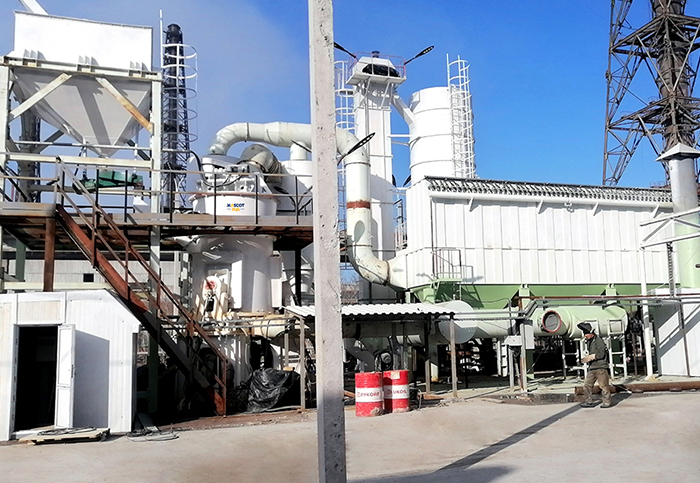
The production line of the vertical roller mill is a cost-effective and energy-efficient solution for processing powder, which is widely used in many industries, such as metallurgy, building materials, industrial solid waste treatment, thermal power plants, cement plants, and environmental protection fields. The primary purpose of this project is to finely grind raw materials through a vertical roller mill to meet the requirements of different industries for particle size, purity, and output of powder products.

YGMX Enhanced High-Pressure Mill is a new type of high-performance grinding equipment, and the biggest improvement of this milling equipment lies in the increase of the high-pressure spring system in the grinding roller part. Compared with the traditional high-pressure roller mill, it has a wider scope of application and excellent performance to meet the production needs of a variety of powder fineness. It is widely used in non-metallic minerals, chemicals, building materials, metallurgy, environmental protection, etc. Multiple areas.

The MTW series European grinding mill production line includes high-efficiency crushers, elevators, electromagnetic vibration feeders, milling machines, classifiers, and collectors. These pieces of equipment work together to achieve efficient crushing, grinding, and classification of various non-metallic ores, coal powder, slag, and other materials. It can meet the diverse needs of various industries for powder particle size, uniformity, shape, etc., and offer enterprises high-quality grinding products.

The Raymond mill production line is a highly efficient system designed for grinding operations, with a focus on energy efficiency, durability, and productivity. It caters to the needs of users by offering fine powder products in non-metallic ores, coal powder, and slag processing, aiding enterprises in achieving sustainable growth.

The high-pressure grinding mill production line is a project specially designed for efficient grinding operations. It is widely used in metallurgy, building materials, the chemical industry, highways, water conservancy hydropower, and other industries. It is a suspended roller mill that uses springs to increase pressure. It can achieve efficient grinding processing of various non-metallic raw materials. It has high efficiency, stability, and environmental protection characteristics.
Green and Intelligent Mining Machinery
Manufacturing and Export Base
Based on high quality and perfect after-sales service, our products have been
exported to more than 120 countries and regions.
Copyright © 2023 Zhengzhou Mascot Environmental Technology Co., Ltd Record number: Yu ICP No. 13021523-4





 WhatsApp