
Maintenance is the most controllable cost on a grinding line. The electricity tariff is set by the market, the raw material price by the quarry, but maintenance — wear parts, labor, downtime and lubricant — is decided by how the plant manages its equipment. In Mascot's reference case, the MTW Trapezium Grinding Mill line delivered 20% lower annual maintenance cost than the traditional mills it replaced — partly because of the machine's design, and partly because of a maintenance program any plant can implement within one quarter. This article lays out that program, week by week.
Before cutting maintenance cost, know where it leaks. On a typical grinding line the money leaves in four streams: wear parts — grinding rollers, ring, classifier blades, filter bags — which are replaced on a cycle; labor, the hours spent inspecting, servicing and repairing; downtime, the production lost while the line stands still, often the largest hidden cost of all; and consumables such as lubricant, which on traditional grease-lubricated mills means constant service attention.
The reference case shows the target: 20% lower annual maintenance on an MTW175 line processing limestone, with wear parts lasting over ten months and a four-month oil change cycle. That 20% is a combination of the machine's design advantages — covered in Section 6 — and the program in Sections 2-5, which any plant can run.

The first two weeks establish the numbers. Record the actual maintenance spend over the previous quarter — parts invoices, labor hours, lubricant purchases and, crucially, downtime hours attributed to maintenance. Without the baseline, the 20% target is a slogan; with it, every subsequent saving is measurable.
Run an equipment audit against the MTW series' design intervals: the wear surface of rollers and ring (expect 8-12 months on limestone, 4-7 months on quartz), the filter bags of the LQM72-7 dust collector, the oil level and condition, and the blower and classifier for unusual noise. The audit identifies which of the four cost streams is leaking most at your plant — and the leaks determine where the quarter's effort goes.
Three items generate most grinding-line maintenance cost, and fixing them first produces the visible part of the 20%.
Wear parts: replace rollers and ring on a scheduled basis — plan the replacement at the 8-12 month mark rather than discovering failure at the worst moment. Scheduled replacement costs less than emergency replacement: no rushed freight, no overtime labor, no lost production. Track the installation date of every set.
Filter bags: monitor the collector's pressure differential weekly. Replacing bags at the scheduled interval costs a fraction of the damage a blocked collector does — throttled output, overheated blower, and eventually a mill running below its rating while the electricity meter runs at full speed.
Lubricant: switch to the dilute oil discipline — the MTW system's four-month change cycle replaces the constant grease service traditional mills demand. A weekly oil level check and a four-month change cost hours per year, not days.

With the big three under control, the next four weeks convert one-off fixes into standing systems. A daily checklist — feed uniformity, oil level, powder discharge — takes ten minutes and catches the small failures before they become expensive ones. A weekly checklist — bearing temperature, collector pressure, noise — catches the slow trends. A monthly inspection of the wear surface catches the roller that is one month from needing replacement, when the replacement can still be planned.
Train the operators, because they are the first line of maintenance. A PLC-operated MTW line gives the panel readings that warn of developing problems; an operator who knows what the readings mean reports them a week before they fail, and a plant that acts on early reports avoids the breakdown entirely. Document everything — the simplest form is a logbook with dates — so the next quarter's baseline is already in hand.

The quarter closes the way it opened: with numbers. Recalculate the maintenance spend — parts, labor, lubricant and downtime — on the same basis as the baseline, and compare. The savings from scheduled wear-part replacement, longer bag life and reduced downtime should be visible in the comparison; where they are not, the audit tells you which stream is still leaking.
Lock the program in as the standing procedure: the checklists become the shift routine, the replacement schedule becomes the budget calendar, and the quarterly review becomes the habit. Maintenance cost reduction is not a project with an end; it is a management cycle, and the plant that repeats it keeps the 20% and compounds it.
The program works on any mill, but the MTW series gives it a head start through design. The trapezoidal roller and ring distribute wear evenly, extending part life to 8-12 months on medium-hard materials — against the concentrated, faster wear of narrow-band traditional rollers. The internal dilute oil system replaces constant grease service with a four-month cycle. The integral bevel gear eliminates the intermediate parts that traditional split drives wear and adjust. The curved air duct removes blockage stops, and the sealed design with the pulse collector keeps the site clean — cleaner plants lose fewer parts to abrasive dust.
The field result confirms the design: in the Southeast Asia case, the MTW175 line ran more than ten months with wear parts intact, 20% lower maintenance cost, and a second line ordered on the strength of the operating numbers. The design provides the baseline; the program in this article keeps it.

Q1: Can the 20% be achieved in the first quarter?
A: The visible savings — scheduled wear-part buying, bag maintenance, oil discipline — appear within weeks; the full 20% shows in the quarter-end comparison against your baseline. The reference plant's 20% is an annual figure sustained by the standing program.
Q2: What is the biggest hidden maintenance cost?
A: Downtime. An hour of line stoppage loses production, wages and contract confidence — usually worth more than the parts that caused it. Prevention systems target downtime first.
Q3: How long do MTW wear parts actually last?
A: 8-12 months on medium-hard materials such as limestone and calcite, and 4-7 months on abrasive materials such as quartz. Monthly inspection keeps the replacement scheduled, not emergency.
Q4: Does Mascot provide spare parts and support?
A: Yes. Rollers, rings, bags, seals and classifier parts are supplied for scheduled replacement, and after-sales engineers support technical questions and maintenance planning for the line's full life.
Reducing MTW mill maintenance cost by 20% in one quarter is a management sequence: measure the baseline, fix the big three — wear parts, bags, lubricant — build prevention checklists, and measure again. The MTW series' design makes the target reachable — even wear, four-month oil cycles, no blockage stops — and the reference case proves the combination, with 20% lower maintenance and a second order as the verdict. The program costs nothing to start; the checklists are in this article. Run it, and let the quarter-end numbers show the result.

About of Mascot
Zhengzhou Mascot Industry is a high-tech mining equipment company integrating R&D, manufacturing, sales, and after-sales service. Focusing on crushing, grinding, and mineral processing equipment, we provide professional solutions to our customers. We are ISO9001:2015 certified, and our products include mobile crushing plants, crawler crushing plant, construction waste crushing plants, jaw crushers, sand making machines, cone crushers, fine crushers, grinding mills, ball mills, etc., all with reliable performance to meet diverse project needs.
• Professional pre-sales support: Free project design and comprehensive solutions to help you accurately select the right equipment;
• Comprehensive on-site service: Providing installation guidance and worker training to ensure smooth equipment commissioning;
• Reliable after-sales guarantee: A complete after-sales system, timely response to technical inquiries and equipment maintenance, ensuring long-term stable operation.
To protect your rights, please contact us through the following official channels for professional service:
WhatsApp: 0086-16650273865
Email: mascot@mascotenv.com
We are committed to providing high-quality equipment and full-cycle services to deliver comprehensive intelligent solutions for the global mining industry!

The ball mill production line is a comprehensive production line that integrates material crushing, grinding, grading, and collection. This production line is mainly used to process various materials, including sand and gravel, cement, new building materials, silicates, refractory materials, fertilizers, ferrous metal beneficiation, non-ferrous metals, glass ceramics, etc.
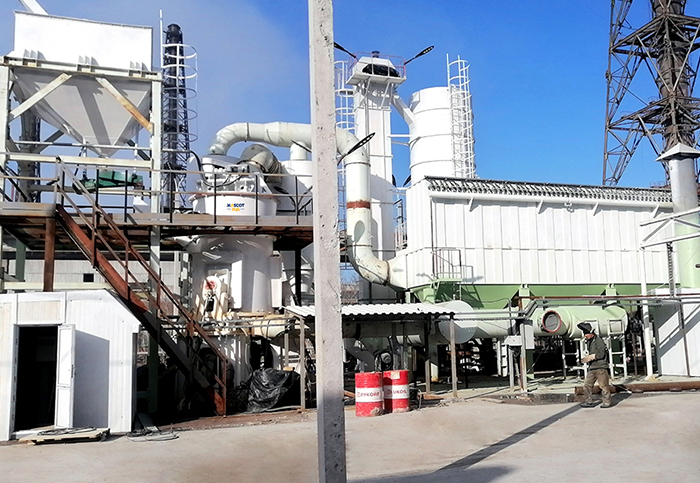
The production line of the vertical roller mill is a cost-effective and energy-efficient solution for processing powder, which is widely used in many industries, such as metallurgy, building materials, industrial solid waste treatment, thermal power plants, cement plants, and environmental protection fields. The primary purpose of this project is to finely grind raw materials through a vertical roller mill to meet the requirements of different industries for particle size, purity, and output of powder products.

The MTW series European grinding mill production line includes high-efficiency crushers, elevators, electromagnetic vibration feeders, milling machines, classifiers, and collectors. These pieces of equipment work together to achieve efficient crushing, grinding, and classification of various non-metallic ores, coal powder, slag, and other materials. It can meet the diverse needs of various industries for powder particle size, uniformity, shape, etc., and offer enterprises high-quality grinding products.

The Raymond mill production line is a highly efficient system designed for grinding operations, with a focus on energy efficiency, durability, and productivity. It caters to the needs of users by offering fine powder products in non-metallic ores, coal powder, and slag processing, aiding enterprises in achieving sustainable growth.

The gypsum grinding production line is an efficient, stable, and environmentally friendly production solution, which is widely used in construction, decoration, the chemical industry, and other fields. In addition, the grinding process is particularly critical, which directly affects the quality and particle size of the final product. With the continuous development of science and technology, the technical level and production efficiency of gypsum grinding production lines will be further improved, providing strong support for the development of the gypsum processing industry.
Green and Intelligent Mining Machinery
Manufacturing and Export Base
Based on high quality and perfect after-sales service, our products have been
exported to more than 120 countries and regions.
Copyright © 2023 Zhengzhou Mascot Environmental Technology Co., Ltd Record number: Yu ICP No. 13021523-4





 WhatsApp