
| Product | YGM High Pressure Grinding Mill |
|---|---|
| Global Market Size (2026) | USD 15.8 Billion (Grinding Mill Market) |
| Market CAGR (2026-2033) | 3.9% (Grinding Mill) | 5.62% (Mineral Processing Equipment) |
| Key Demand Regions | Southeast Asia, Middle East, Africa, South America, Central Asia, Eastern Europe |
| Brand | Mascot Heavy Industry |
| Certifications | ISO 9001:2015, CE |
| Key Contact | WhatsApp: 0086-16650273865 | Email: mascot@mascotenv.com |
| Note: Market data sourced from industry reports. Contact us for real-time quotations. | |
1. Global Grinding Mill Market: Current Landscape
The global grinding mill market is entering a sustained growth phase. Valued at approximately USD 15.8 billion in 2026, it is projected to reach USD 20.6 billion by 2033, registering a compound annual growth rate (CAGR) of 3.9% according to Persistence Market Research. Within this broader landscape, the high-pressure grinding segment has shown even stronger momentum —the high pressure grinding market grew from USD 505 million in 2025 and is forecast to reach USD 700 million by 2034, driven by increasing demand for energy-efficient, high-precision material processing solutions.
The YGM High Pressure Grinding Mill series occupies a strategic position at the intersection of several converging market trends: rising non-metallic mineral powder consumption, tightening environmental regulations favoring closed-loop systems, and growing preference for modular, scalable grinding solutions in emerging markets. Unlike capital-intensive vertical roller mills (VRMs) or ball mills, the YGM series delivers high-pressure grinding performance —with spring loading systems applying 1000-1500kg of additional roller pressure —at a substantially lower investment threshold, making it particularly suited for mid-market grinding operations in developing economies.
The accompanying mineral processing equipment market, valued at USD 18.59 billion in 2026 and growing at 5.62% CAGR to USD 24.44 billion by 2031 (Mordor Intelligence), provides a strong tailwind for YGM mill adoption. As infrastructure investment accelerates across emerging markets —particularly in Southeast Asia, Africa, and South America —demand for processed mineral powders used in construction materials, paints, plastics, and industrial fillers continues to rise.

2. Regional Demand Hotspots for YGM Grinding Mills
2.1 Southeast Asia: The Infrastructure-Driven Growth Engine
Southeast Asia remains the single largest export destination for YGM High Pressure Grinding Mills, accounting for an estimated 35-40% of total YGM series exports. Indonesia, Vietnam, Thailand, and the Philippines are the primary demand centers. The region's aggressive infrastructure development programs —including Indonesia's new capital city (IKN) project, Vietnam's North-South Expressway, and Thailand's Eastern Economic Corridor —have generated sustained demand for construction-grade calcium carbonate, limestone powder, and dolomite fillers, all of which fall squarely within the YGM mill's processing envelope.
The YGM130 and YGM95 models are the most frequently deployed configurations in this region. The YGM130 (5 rollers, 90kW, 2.5-9.5 t/h) is favored by medium-to-large limestone and calcite powder plants serving regional construction material supply chains, while the YGM95 (4 rollers, 45kW, 2.1-5.6 t/h) is the preferred entry point for smaller independent producers targeting local markets.
Vietnam's limestone powder export industry has been a particularly strong driver. As the country consolidates its position as a top-tier calcium carbonate exporter, grinding capacity expansion has accelerated, with multiple YGM130 and YGM160 units commissioned in 2025 alone.

2.2 Middle East: Diversification Beyond Oil Creates New Demand
The Middle East market for YGM grinding mills has expanded significantly over the past three years, driven by economic diversification strategies across the Gulf Cooperation Council (GCC) states. Saudi Arabia's Vision 2030, the UAE's industrial strategy, and Qatar's National Vision 2030 have all prioritized domestic manufacturing capacity, including construction materials, industrial minerals processing, and downstream chemical production.
The YGM160 (6 rollers, 132kW, 8-16 t/h) has emerged as the preferred configuration for Middle Eastern buyers, reflecting the region's tendency toward larger-scale, higher-capacity installations. Calcite powder production for the regional paint and plastics industries represents the dominant application. A notable trend is the deployment of dual YGM160 lines —where customers order two units simultaneously for parallel production, achieving combined outputs exceeding 25 t/h —a pattern observed among Saudi and UAE-based powder producers.
Barite grinding for oil drilling applications represents a secondary but strategically important market segment. As regional drilling activity fluctuates with global oil prices, the YGM160's wide material compatibility allows operators to switch between barite, calcite, and gypsum processing with minimal reconfiguration, providing operational flexibility that conventional single-material mills cannot match.

2.3 Africa: The Emerging Frontier
Africa represents the fastest-growing regional market for YGM grinding mills, albeit from a smaller base. Mining sector development, urbanization-driven construction demand, and Chinese infrastructure investment under the Belt and Road Initiative are the primary catalysts. Nigeria, South Africa, Ghana, Kenya, and Tanzania are the leading markets.
The African market predominantly favors the YGM85 (3 rollers, 22kW, 1.2-4 t/h) and YGM95 models, reflecting the prevalence of small-to-medium-scale operations and the need for equipment with manageable power requirements in regions where grid electricity reliability varies. The YGM85's compact footprint (5300x4100x5200mm) and modest 22kW motor make it particularly suitable for distributed, community-level mineral processing operations that are increasingly supported by development finance institutions.
Limestone and gypsum grinding for local cement and construction material production account for the majority of installations. A growing niche is the processing of agricultural minerals —including phosphate rock and limestone for soil amendment —supported by agricultural modernization programs across Sub-Saharan Africa.

2.4 South America: Mining Sector Recovery Drives Equipment Demand
South America's grinding mill market is closely tied to mining sector investment cycles. With copper, lithium, and iron ore prices maintaining elevated levels through 2025-2026, mineral processing capacity expansion has resumed across Chile, Peru, Brazil, and Argentina. While large-scale mining operations typically employ semi-autogenous grinding (SAG) and ball mills for primary ore processing, there is growing downstream demand for fine grinding of industrial minerals —barite, bentonite, kaolin, and calcium carbonate —used in mining process chemicals, drilling fluids, and environmental remediation.
The YGM130 is the most commonly specified model for South American customers, with the YGM160 gaining traction for larger barite processing operations supporting the region's oil and gas drilling sector in Argentina's Vaca Muerta shale formation and Brazil's pre-salt offshore fields.
2.5 Central Asia and Eastern Europe: Belt and Road Corridor Growth
The Central Asian market —encompassing Kazakhstan, Uzbekistan, and Kyrgyzstan —continues to grow steadily, supported by infrastructure connectivity projects under the Belt and Road Initiative. Kazakhstan, as Central Asia's largest economy, has been the primary market, with demand centered on barite processing (for the country's oil sector) and limestone/gypsum grinding for cement production.
Eastern Europe, particularly Russia and Turkey, represents a maturing but stable market. Turkish customers have increasingly shifted from entry-level YGM85 installations toward YGM130 and YGM160 units as their businesses scale. The YGM130's 5-roller configuration and 90kW motor provide the throughput and reliability required for established Turkish mineral processing companies serving both domestic and export markets.

3. Key Market Drivers Shaping International Demand
3.1 Infrastructure Investment Boom in Developing Economies
The single largest demand driver for YGM grinding mills is the global infrastructure construction cycle. The G20's Global Infrastructure Hub estimates that global infrastructure investment will reach USD 94 trillion by 2040. Construction materials —cement, concrete, asphalt, and dry-mix mortars —all require finely ground mineral powders as essential components. Every new highway, bridge, airport, and housing development in emerging markets translates into incremental demand for limestone powder, calcium carbonate filler, gypsum, and dolomite —materials that the YGM series is specifically engineered to process.
3.2 Non-Metallic Mineral Powder Consumption Growth
Downstream industries consuming non-metallic mineral powders —including paints and coatings, plastics and polymers, paper, rubber, and adhesives —are expanding globally. The powder processing equipment market, valued at USD 15.8 billion in 2025 with a 6.4% CAGR, reflects this sustained growth trajectory. Calcium carbonate remains the highest-volume industrial mineral filler, with global consumption exceeding 100 million tons annually, and a significant portion of this volume is produced using high-pressure grinding mill technology similar to the YGM series.
3.3 Environmental Regulations Favoring Closed-Loop Systems
Stricter environmental standards across both developed and developing markets have become a significant factor in grinding equipment selection. The YGM series' closed-loop air circulation system, which reduces dust emissions to 30mg/m鲁 or below when equipped with a pulse-jet baghouse, meets the tightening emissions standards in markets such as Vietnam, Indonesia, and the GCC states, where environmental enforcement has intensified. This regulatory tailwind is accelerating the replacement of older, open-circuit grinding systems with modern closed-loop alternatives, creating a substantial retrofit market.
3.4 Energy Cost Sensitivity in Emerging Markets
Energy consumption is typically the largest single operating cost for grinding operations, accounting for 40-60% of total processing costs. The YGM series' energy-efficient design —delivering 25-30% lower energy consumption compared to conventional open-circuit grinding systems —resonates strongly with buyers in markets where electricity costs are high relative to local purchasing power, such as Sub-Saharan Africa, parts of South Asia, and remote mining regions in South America.
3.5 Critical Minerals and Industrial Diversification
The global energy transition is reshaping mineral demand patterns. UNCTAD's June 2026 Global Trade Update projects lithium demand to rise by 353% between 2024 and 2040, with similar growth trajectories for graphite, cobalt, and rare earth elements. While primary ore processing for these minerals typically requires specialized equipment, the downstream processing of industrial minerals used as reagents, fillers, and process aids in critical mineral beneficiation is creating new demand niches for YGM-type grinding mills.

4. Export Performance and Competitive Landscape
4.1 YGM Series Export Trends
The YGM High Pressure Grinding Mill series has established a global installation base exceeding 500 units across 30+ countries. Export volume has grown at an estimated 8-12% annually over the past three years, outpacing the broader grinding mill market's 3.9% CAGR, indicating market share gains for the YGM product line in the high-pressure grinding segment.
Model-level export distribution reflects the market structure described above:
| Model | Estimated Export Share | Primary Markets | Growth Trend |
|---|---|---|---|
| YGM130 | ~30% | Southeast Asia, Middle East, South America | Stable growth |
| YGM160 | ~25% | Middle East, Southeast Asia, Eastern Europe | Strong growth (+15% YoY) |
| YGM95 | ~20% | Africa, Southeast Asia, Central Asia | Steady growth |
| YGM85 | ~15% | Africa, Central Asia, South America | Stable |
| Other Models | ~10% | Laboratories, niche applications | Niche demand |
The shift toward larger models —YGM130 and YGM160 —is a defining trend. As customer operations mature and scale, the upgrade path from smaller 3-roller configurations to larger 5- and 6-roller models is well-established. Repeat customers upgrading from YGM85 to YGM130, or from a single YGM130 to dual YGM160 lines, account for an increasing proportion of export orders, reflecting customer satisfaction with the platform and the natural scaling trajectory of successful grinding businesses.
4.2 Competitive Advantages in International Markets
The YGM series competes in a global market that includes European manufacturers (NETZSCH, Hosokawa Alpine, Gebr. Pfeiffer) at the premium end and various Chinese and Indian manufacturers across the mid-range and budget segments. The YGM series' competitive positioning rests on several pillars:
5. Technology Trends Influencing YGM Mill Adoption
5.1 Automation and Remote Monitoring
The integration of PLC intelligent control systems with remote monitoring capability is increasingly a baseline requirement rather than an optional feature in international markets. Buyers across Southeast Asia and the Middle East now routinely specify centralized touchscreen control with real-time parameter monitoring, interlock protection, and fault diagnostics. The YGM series' standard PLC system, which enables one-touch start/stop and automated process parameter adjustment, aligns with this market expectation and reduces the operator skill threshold —a critical factor in emerging markets facing skilled labor shortages.
5.2 High-Pressure Spring Loading Technology
The core technological differentiator of the YGM series is its high-pressure spring loading system, which applies 1000-1500kg of additional pressure per grinding roller. This technology increases grinding force by 40-60% compared to standard Raymond mills at equivalent motor power, directly improving energy efficiency and throughput. In a market environment where energy costs and productivity are the dominant operational concerns, this technology delivers measurable, verifiable value.
5.3 Modular Design for Rapid Deployment
The YGM series' modular construction —where the mill main body, classifier, blower, cyclone collector, and dust collector are independently assembled and integrated —reduces on-site installation time to 20-30 days, including foundation work. This is significantly shorter than the 45-60 day installation timeline typical of comparable European equipment. For buyers in markets where every day of delayed production represents lost revenue, the faster deployment timeline is a compelling procurement consideration.
5.4 Multi-Material Flexibility
The ability to process diverse materials —limestone, calcite, dolomite, barite, gypsum, talc, calcium carbonate, bentonite, kaolin, petroleum coke, and coal (Mohs hardness below 7, moisture under 6%) —on a single platform is a critical value proposition for buyers in less diversified economies. A YGM160 owner in Saudi Arabia, for example, can process calcite for the paints industry during one production cycle, switch to barite for oil drilling applications for the next, and run gypsum for construction materials thereafter, maximizing equipment utilization regardless of which downstream market is strongest at any given time.

6. Three-Year Market Outlook: 2026-2029
| Region | 2026 Status | 2027-2029 Outlook | Key Watch Factors |
|---|---|---|---|
| Southeast Asia | Largest market, stable | Continued 8-10% annual growth; Indonesia and Vietnam lead | Infrastructure budget execution; Vietnam export competitiveness |
| Middle East | Strong growth phase | 10-15% annual growth; shift toward YGM160 dual-line deployments | Oil price impact on government spending; Vision 2030 project timelines |
| Africa | Fast-growing, small base | 12-18% annual growth; YGM85/YGM95 dominant | Infrastructure financing availability; political stability in key markets |
| South America | Recovery phase | 6-8% annual growth; YGM130/YGM160 for mining support | Commodity price trajectories; mining investment cycles |
| Central Asia / E. Europe | Mature, steady | 4-6% annual growth; replacement and upgrade demand | Belt and Road project pipeline; Russia economic conditions |
The overall outlook for YGM High Pressure Grinding Mill exports remains positive across all major regions. The convergence of infrastructure investment, industrial minerals demand growth, environmental regulation tightening, and the ongoing replacement of older grinding technologies creates a robust demand environment. The YGM130 and YGM160 models are expected to be the primary growth drivers, reflecting the market's shift toward larger-scale, higher-capacity installations.
Key risks to monitor include: potential slowdowns in Chinese overseas infrastructure lending affecting project-linked equipment procurement in Africa and Central Asia; commodity price volatility impacting mining-sector capital expenditure in South America; and the emergence of regional competitors in India and Turkey that may challenge on price in their home and neighboring markets.
7. Strategic Guidance for International Buyers
7.1 Model Selection by Market Context
For buyers entering the grinding business in high-growth markets such as Nigeria or Indonesia, the YGM95 offers the optimal balance of capacity (2.1-5.6 t/h), investment cost, and operational simplicity. Its 4-roller design provides headroom for business growth while maintaining manageable power consumption and maintenance requirements.
For established operators seeking capacity expansion or replacement of older equipment, the YGM130 (2.5-9.5 t/h, 90kW) represents the industrial standard, with proven reliability in continuous 24/7 operation across diverse material types and operating environments.
For large-scale production bases serving regional or export markets —typical in the Middle East and Southeast Asia —the YGM160 (8-16 t/h, 132kW) with its 6-roller configuration provides the throughput and economies of scale that justify the higher capital investment.
7.2 Procurement Timing Considerations
Standard YGM models (YGM85-YGM160) ship within 15-25 days after order confirmation, with an additional 20-30 days for on-site installation and commissioning. Buyers should factor this 35-55 day total lead time into project planning. For markets with seasonal construction cycles —such as the Middle East, where project activity peaks outside the summer months —ordering 2-3 months ahead of the target production start date is recommended.
7.3 Spare Parts and Lifecycle Planning
Grinding rollers and rings are the primary wear components, with a service life of 6-12 months for standard materials (limestone, calcite) and 3-6 months for harder or more abrasive materials. International buyers should maintain a 6-month spare parts inventory of wear components to avoid production interruptions caused by shipping delays. Mascot maintains a centralized spare parts warehouse with express international shipping capability to all major export regions.
Zhengzhou Mascot Industry is a high-tech mining equipment company integrating R&D, manufacturing, sales, and after-sales service. Specializing in crushing, grinding, and mineral processing equipment, we deliver professional solutions to customers worldwide. We are ISO 9001:2015 certified and CE marked, with products including YGM High Pressure Grinding Mills, Raymond Mills, mobile crushing plants, jaw crushers, cone crushers, sand making machines, ball mills, and more —all engineered for reliable performance across diverse project requirements.
Our Export Service Advantages:
• Multi-Language Support: Technical communication available in English, Russian, French, Arabic, and Spanish;
• Global Logistics Network: Established shipping partnerships for containerized, flat-rack, and break-bulk delivery to all major ports worldwide;
• On-Site Commissioning: Experienced engineers deployed for installation, commissioning, and operator training at buyer locations;
• After-Sales Warranty: Standard 12-month warranty with extended coverage options and priority spare parts dispatch.
For market-specific inquiries, technical consultation, or a customized quotation tailored to your regional market conditions, please contact us through the following official channels:
Official Contact
WhatsApp: 0086-18737119558
Email: mascot@mascotenv.com
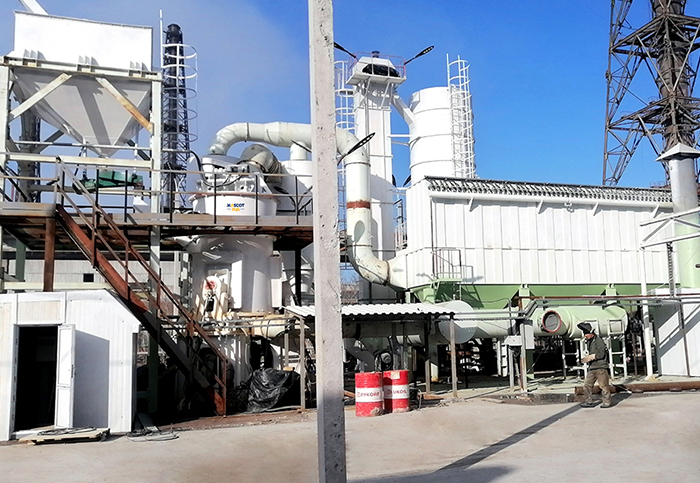
The production line of the vertical roller mill is a cost-effective and energy-efficient solution for processing powder, which is widely used in many industries, such as metallurgy, building materials, industrial solid waste treatment, thermal power plants, cement plants, and environmental protection fields. The primary purpose of this project is to finely grind raw materials through a vertical roller mill to meet the requirements of different industries for particle size, purity, and output of powder products.

The Raymond mill production line is a highly efficient system designed for grinding operations, with a focus on energy efficiency, durability, and productivity. It caters to the needs of users by offering fine powder products in non-metallic ores, coal powder, and slag processing, aiding enterprises in achieving sustainable growth.

This production line utilizes a three-ring medium-speed micro-grinding mill as the central equipment, complemented by other auxiliary equipment like hammer crushers, bucket elevators, and storage silos to establish a comprehensive grinding operation system. It has demonstrated strong potential for application and market competitiveness in industries such as construction, chemical industry, and new materials.

The high-pressure grinding mill production line is a project specially designed for efficient grinding operations. It is widely used in metallurgy, building materials, the chemical industry, highways, water conservancy hydropower, and other industries. It is a suspended roller mill that uses springs to increase pressure. It can achieve efficient grinding processing of various non-metallic raw materials. It has high efficiency, stability, and environmental protection characteristics.

The gypsum grinding production line is an efficient, stable, and environmentally friendly production solution, which is widely used in construction, decoration, the chemical industry, and other fields. In addition, the grinding process is particularly critical, which directly affects the quality and particle size of the final product. With the continuous development of science and technology, the technical level and production efficiency of gypsum grinding production lines will be further improved, providing strong support for the development of the gypsum processing industry.
Green and Intelligent Mining Machinery
Manufacturing and Export Base
Based on high quality and perfect after-sales service, our products have been
exported to more than 120 countries and regions.
Copyright © 2023 Zhengzhou Mascot Environmental Technology Co., Ltd Record number: Yu ICP No. 13021523-4





 WhatsApp