 25
25
 27
27
 23
23

31 tons per hour of 250-mesh limestone powder is not an ordinary number. Run a mill around the clock, 300 days a year, and that throughput becomes more than 220,000 tons of finished powder annually — enough to supply a regional concrete admixture market or a large desulfurization program. For most traditional grinding mills, pushing output to this level at such a fine particle size means runaway energy bills, accelerated wear and constant breakdowns. Yet a Mascot MTW Trapezium Grinding Mill has been delivering exactly that — stably, for more than ten months, in a Southeast Asian limestone plant.
This article does not just report the number. It explains the engineering behind it, layer by layer: why fine, high-volume grinding is inherently difficult, how the MTW175 converts motor power into finished powder, what keeps the mill stable hour after hour, and what the verified operating data actually shows. For anyone planning a limestone, calcite or similar non-metallic mineral powder line, understanding these mechanisms is the difference between buying equipment on reputation and buying it on evidence.
250 mesh corresponds to a particle size of about 0.058mm — fine enough to pass a sieve with 250 openings per inch. Producing fine powder at high throughput creates a natural conflict: the finer the target particle size, the more grinding passes each particle needs, and the longer material stays inside the grinding chamber. In practical terms, a mill that comfortably produces 40 t/h of 80-mesh powder may fall to a fraction of that at 400 mesh.
The physics are unforgiving. As the target size shrinks, the specific energy required per ton of finished powder rises steeply, because most of the energy goes into creating new surface area rather than into moving bulk material. At the same time, a larger share of the ground material is re-circulated to the grinding zone by the classifier, increasing the internal load. A design that handles this load poorly responds by slowing down, overheating or choking — which is precisely what happens to many traditional mills under sustained fine-grinding duty.
Traditional mills fail in recognizable ways. Output fluctuates with feed conditions instead of holding steady. Finished powder fineness drifts, because the classifier cannot maintain a precise cut at high recirculation rates. Rollers wear unevenly and need frequent replacement, since the effective grinding area is small and concentrated. Energy consumption per ton creeps up as the mill labors, and dust leakage adds environmental and product-loss costs. Each of these failures is, at bottom, a design limitation — and each one was addressed in the MTW series before the question of output was even considered.
Achieving 31 t/h at 250 mesh therefore requires four things to work together: grinding geometry that maximizes the work done per revolution, a drivetrain that wastes as little power as possible, a classifier that holds a precise cut point under heavy recirculation, and auxiliary systems that keep the mill running without interruption. The following sections show how the MTW175 delivers each of these.

The heart of the MTW175 is its trapezoidal grinding roller, 520x300mm, working against a matching grinding ring with a 1750mm inner diameter and 300mm height. The word "trapezoidal" is the key. Traditional mills use flat, cylindrical roller surfaces that touch the ring along a narrow band, so each revolution grinds only a thin strip of material. The trapezoidal profile of the MTW series widens the effective grinding zone, bringing a much larger volume of material under pressure in every pass.
More contact area per revolution has two consequences. First, throughput rises at the same motor power — the direct source of the 20%-30% grinding efficiency gain that characterizes the series. Second, the load spreads across a wider surface, so wear is distributed evenly instead of concentrating in one groove. That even wear is why the grinding rollers and ring of the MTW175 last more than ten months on limestone in the case plant, and 8-12 months on medium-hard materials generally, before replacement is needed.
The geometry also matters for powder quality. A wide, stable grinding zone produces a more uniform particle size distribution in each pass, which reduces the classifier's recirculation load and makes the 250-mesh cut easier to hold. In short, the trapezoidal shape is not a styling detail; it is the structural reason the mill can grind more, wear less and stay in spec at the same time.
Power only becomes throughput if it reaches the grinding zone efficiently. Traditional grinding mills use split transmission, in which the motor drives the grinding disc through intermediate gears and couplings. Every joint is a source of loss: assembly clearance, alignment error and friction between parts convert a share of the motor's power into heat and noise instead of grinding work.
The MTW series replaces this with an integral bevel gear transmission. The drive is a single, compact structure that carries power from the motor to the grinding disc with minimal intermediate stages. The practical result is that roughly 15% of the energy a conventional mill dissipates as heat and noise is recovered and applied to the material bed. On a 160kW machine running 24 hours a day, 15% of the input is the equivalent of a small auxiliary motor's worth of power — every day, for free.
There are secondary benefits as well. The integral structure runs quieter, improving the working environment for operators. It is more compact, which simplifies the mill's layout and foundation. And with fewer wearing interfaces in the drivetrain, the transmission itself requires less attention during routine maintenance. The bevel gear drive is a quiet component in the sense that it draws no attention — which is exactly the point: it never fails, and it never wastes.
Output is only half the story; the powder must also be on-spec. The MTW175 is topped by a 37kW frequency-conversion classifier that spins at a speed tuned to the exact cut point. The principle is simple: fine particles are carried upward by the airflow and pass through the classifier, while coarse particles are thrown back into the grinding chamber for another pass. The precision lies in how consistently the classifier makes that decision under heavy load.
Because the classifier speed is controlled by a frequency converter, the cut point can be adjusted steplessly across the mill's full range of 80-425 mesh (0.038-0.2mm). To produce 250-mesh powder, the impeller runs at the speed corresponding to that cut, and it holds it. The case plant reports a 99.6% pass rate for the finished powder — meaning 99.6% of the output meets the 250-mesh specification, a figure that fully satisfies the procurement standards of downstream high-end building material customers.
Equally important for a busy plant, fineness changes do not require stopping the mill. When the market asks for a coarser or finer grade, the operator changes the classifier speed on the PLC panel and the line adapts within minutes. The ability to switch grades without downtime keeps the mill's availability high, which is part of how it sustains annual production above 220,000 tons.

High output puts stress on bearings, and bearing failure is the classic reason grinding lines stop. Traditional mills rely on grease lubrication, which has high internal resistance and tends to run hot. Under sustained load, grease degrades, temperatures climb and bearing life shortens; maintenance teams are forced into frequent stop-and-service cycles that eat directly into output.
The MTW series uses an internal dilute oil lubrication system instead. A built-in oil pump circulates oil continuously through the key bearings, carrying heat away and keeping friction low. The oil change cycle stretches to four months, compared with the frequent grease service traditional mills require. In the case plant, more than ten months of operation passed without a single lubrication-related stoppage — a silent but decisive contribution to the 31 t/h figure.
Low bearing temperature has another benefit beyond reliability: it preserves the dimensional stability of the grinding assembly. Heat-induced expansion in the shaft and bearing housings can shift the roller-ring clearance and degrade grinding efficiency. Keeping the mill cool keeps the grinding geometry in its design envelope, so the mill keeps its rated performance shift after shift.
Grinding mills move powder with air, and the air path is where many designs fail. Traditional straight-duct mills accumulate material at the duct bends and junctions; under sustained high feed rates, deposits build up, airflow drops, and output collapses until the blockage is cleared by hand. Each clearing event costs not just the minutes of the stop, but the ramping time to bring the mill back to full output.
The MTW series uses a curved tangential air inlet. The tangential entry creates a smooth airflow path with low resistance, and the curve disperses the incoming material evenly through the duct instead of dumping it in a heap. Material does not settle and accumulate, so the mill sustains its rated output hour after hour. Eliminating blockage downtime is a larger contribution to daily tonnage than it may appear: a mill that never chokes simply produces more tons per shift than one that periodically does.
Stable output depends on stable operation, and stable operation depends on control. The MTW production line is managed by a PLC intelligent control system that centralizes feeding, grinding, classification, dust removal and discharging in one panel. Start-up and shut-down are one-key operations, and the system provides real-time monitoring and remote supervision.
The control system matters for output in a direct way: it keeps the feed uniform. A grinding mill fed in surges produces surges — moments of overload followed by moments of underload, averaging out to less than the rated throughput. The PLC, coordinated with the GZ2 vibrating feeder, holds the feed rate steady, which lets the mill run at its design point continuously. The case plant operates the line with fewer workers than its old equipment, and the reduction in human variability is one more reason the measured output stays at 31 t/h instead of drifting.

The engineering argument only becomes credible when it survives contact with real production. The case plant is a large building materials enterprise in Southeast Asia that produces limestone powder for concrete admixtures. Before switching to Mascot, it ran traditional grinding mills that exhibited every failure mode described earlier: low single-hour output, serious dust pollution, frequent failure of wearing parts, high daily maintenance costs and uneven finished powder fineness that failed the procurement standards of downstream customers.
After market investigation and equipment comparison, the enterprise selected the Mascot MTW175 Trapezium Grinding Mill complete production line in August 2025. Mascot engineers surveyed the site, then customized the line layout and auxiliary equipment matching for the plant's footprint, raw material conditions and target output. The raw limestone is ≤40mm in particle size with ≤5% moisture, and the required finished powder is 250 mesh at a design output of 28-32 t/h.
Execution was as important as equipment. All machinery was produced and debugged within 18 working days. Two senior installation engineers then traveled to the site to guide installation, commissioning and worker training, and the entire line was officially put into operation 28 days after the equipment arrived. The measured results, verified over more than ten months of operation:
| Parameter | Design Target | Actual Result |
|---|---|---|
| Output at 250 mesh | 28-32 t/h | 31 t/h average |
| Finished powder pass rate | High-standard | 99.6% |
| Energy consumption per ton | - | 22% lower than previous mills |
| Wear parts service life | - | 10+ months (grinding rollers & ring) |
| Annual maintenance cost | - | 20% lower |
The output number is the headline: an average of 31 t/h against a design target of 28-32 t/h means the mill operates at the top of its specification, not merely within it. The 99.6% pass rate means the powder consistently meets the downstream specification, protecting the plant's contracts and its price position. The 22% energy saving and 20% maintenance saving flow straight to the plant's cost per ton, which is the number that determines whether a grinding line is an asset or a liability.
The environmental performance was verified too. The matching pulse dust collector kept the site clean and dust-free, and the plant passed local environmental inspection without corrective action. Finally, the customer's confidence is measurable: it signed an intention agreement for a second MTW Trapezium Grinding Mill production line in April 2026, roughly eight months after the first line started — the most direct endorsement of the data in this article.

The mill does not achieve 31 t/h alone; the figure is produced by a fully matched system. Every auxiliary component is configured to the main mill model, so the line runs automatically from feeding to discharging:
| Auxiliary Equipment | Model | Power (kw) | Core Function |
|---|---|---|---|
| Vibrating Feeder | GZ2 | 0.25 | Uniform quantitative feeding |
| Bucket Elevator | TH400 | 5.5 | Vertical material conveying |
| Pulse Dust Collector | LQM72-7 | 11 | Dust collection & purification |
| Screw Conveyor | LSY273 | 3.0 | Finished powder conveying |
Each component has a defined job in sustaining output. The feeder meters material at a constant rate so the mill never starves and never overloads. The elevator lifts the feed to the mill inlet reliably, eliminating the feeding bottlenecks that throttle throughput. The pulse dust collector holds emissions below 20mg/m³ while recovering product that would otherwise be lost to the air. The screw conveyor moves finished powder away promptly so the classifier and discharge path never back up. With the PLC coordinating the whole sequence, the line is effectively a single machine rather than a collection of equipment.
Translate the case data into operating economics, and the picture is clear. At 31 t/h, the plant produces roughly 220,000 tons of 250-mesh powder per year on a 24-hour, 300-day schedule. A 22% reduction in energy per ton means the grinding line's electricity bill is reduced by about a fifth compared with the previous mills — a saving that compounds every year the line runs. A 20% reduction in annual maintenance, plus wear parts that last more than ten months, cuts both the cost and the frequency of interventions.
The less obvious saving is availability. The combination of dilute oil lubrication, blockage-free airflow and PLC automation means the line stays up. In powder production, an hour of unplanned downtime is an hour of lost margin, and a mill that runs ten months without a lubrication-related stop has already paid for reliability many times over.
None of these numbers are promises made to you in isolation — they are results already measured in an operating plant. Mascot offers free project design based on your own raw material, target fineness and output. Send the engineers your material characteristics and production goal, and they will size the correct MTW model, lay out the line and give you an output and energy estimate before you commit any budget.

Q1: Can other models in the MTW series reach similar performance at lower output?
A: Yes. The same trapezoidal geometry, bevel gear drive and classifier technology are shared across the series. MTW110 (3-10 t/h), MTW138 (6-20 t/h) and MTW215 (20-50 t/h) deliver the same efficiency advantages at their respective scales, so the case data scales with the machine.
Q2: What raw material conditions does the mill require?
A: The MTW series is designed for materials with Mohs hardness below 7 and moisture content below 6%. In the case plant, limestone at ≤40mm and ≤5% moisture was processed directly. For higher moisture, pre-drying is recommended.
Q3: How long did the line take from order to production?
A: In the case plant, all equipment was produced and debugged within 18 working days, and the line was commissioned 28 days after arrival on site, including engineer-guided installation and worker training.
Q4: How is the 250-mesh specification maintained over time?
A: The frequency-conversion classifier holds the cut point automatically, and the PLC keeps the feed uniform. Periodic checks of the finished powder are recommended after any classifier adjustment, and the 99.6% pass rate in the case plant reflects this stability.
The 31 t/h at 250 mesh is not a lucky result or a laboratory figure. It is the product of deliberate design choices: trapezoidal grinding geometry that enlarges the working area, an integral bevel gear drive that stops wasting power, a frequency-conversion classifier that holds the specification, and lubrication, airflow and control systems that keep the whole line running. The Southeast Asia case verifies each of these mechanisms with ten months of operating data.
If your plant produces, or plans to produce, fine limestone or other non-metallic mineral powder, the question is not whether the MTW series can meet your target — it is which model and line configuration matches your scale. Mascot's engineers will answer that question with a free project design based on your numbers.

About of Mascot
Zhengzhou Mascot Industry is a high-tech mining equipment company integrating R&D, manufacturing, sales, and after-sales service. Focusing on crushing, grinding, and mineral processing equipment, we provide professional solutions to our customers. We are ISO9001:2015銆乧ertified, and our products include mobile crushing palnts, crawler crushing plant,construction waste crushing plants, jaw crushers, sand making machines, cone crushers, fine crushers,grinding mills, ball mills, etc., all with reliable performance to meet diverse project needs.
• Professional pre-sales support: Free project design and comprehensive solutions to help you accurately select the right equipment;
• Comprehensive on-site service: Providing installation guidance and worker training to ensure smooth equipment commissioning;
• Reliable after-sales guarantee: A complete after-sales system, timely response to technical inquiries and equipment maintenance, ensuring long-term stable operation.
To protect your rights, please contact us through the following official channels for professional service:
WhatsApp: 0086-16650273865
Email: mascot@mascotenv.com
We are committed to providing high-quality equipment and full-cycle services to deliver comprehensive intelligent solutions for the global mining industry!

The MTW series European grinding mill production line includes high-efficiency crushers, elevators, electromagnetic vibration feeders, milling machines, classifiers, and collectors. These pieces of equipment work together to achieve efficient crushing, grinding, and classification of various non-metallic ores, coal powder, slag, and other materials. It can meet the diverse needs of various industries for powder particle size, uniformity, shape, etc., and offer enterprises high-quality grinding products.

This production line utilizes a three-ring medium-speed micro-grinding mill as the central equipment, complemented by other auxiliary equipment like hammer crushers, bucket elevators, and storage silos to establish a comprehensive grinding operation system. It has demonstrated strong potential for application and market competitiveness in industries such as construction, chemical industry, and new materials.

The gypsum grinding production line is an efficient, stable, and environmentally friendly production solution, which is widely used in construction, decoration, the chemical industry, and other fields. In addition, the grinding process is particularly critical, which directly affects the quality and particle size of the final product. With the continuous development of science and technology, the technical level and production efficiency of gypsum grinding production lines will be further improved, providing strong support for the development of the gypsum processing industry.

The high-pressure grinding mill production line is a project specially designed for efficient grinding operations. It is widely used in metallurgy, building materials, the chemical industry, highways, water conservancy hydropower, and other industries. It is a suspended roller mill that uses springs to increase pressure. It can achieve efficient grinding processing of various non-metallic raw materials. It has high efficiency, stability, and environmental protection characteristics.
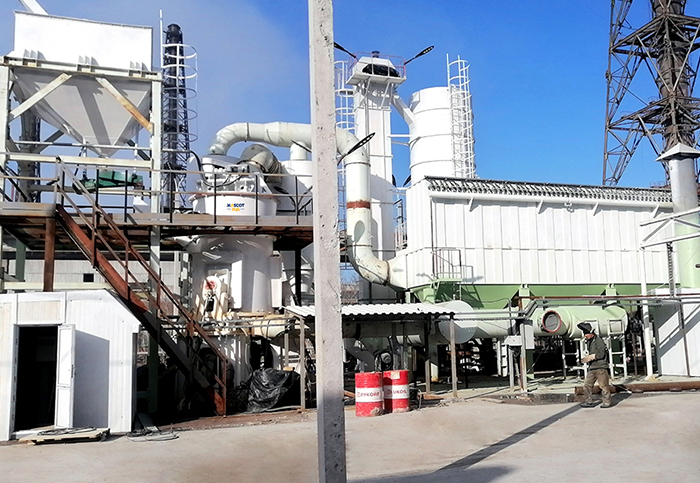
The production line of the vertical roller mill is a cost-effective and energy-efficient solution for processing powder, which is widely used in many industries, such as metallurgy, building materials, industrial solid waste treatment, thermal power plants, cement plants, and environmental protection fields. The primary purpose of this project is to finely grind raw materials through a vertical roller mill to meet the requirements of different industries for particle size, purity, and output of powder products.
Green and Intelligent Mining Machinery
Manufacturing and Export Base
Based on high quality and perfect after-sales service, our products have been
exported to more than 120 countries and regions.
Copyright © 2023 Zhengzhou Mascot Environmental Technology Co., Ltd Record number: Yu ICP No. 13021523-4





 WhatsApp