
How to Select the Better Fine Powder Grinding Equipment for Calcium Carbonate Production
Calcium carbonate (CaCO3) powder is among the highest-volume industrial minerals worldwide, consumed across plastics, paints, paper, rubber, adhesives, construction materials, and pharmaceuticals. The difference between a commodity-grade 200-mesh filler and a high-value 1,250-mesh coating-grade powder often comes down to a single decision: which grinding equipment sits at the heart of the processing line. The wrong mill yields inconsistent particle size, elevated iron contamination, excessive energy cost, and powder that fails downstream quality audits.
This guide evaluates grinding equipment selection for calcium carbonate production with a focus on YGM High-pressure Grinding Mill — a platform that addresses the three most persistent pain points in CaCO3 processing: fineness consistency, contamination control, and per-ton operating cost.
What Makes Calcium Carbonate Grinding Different
Calcium carbonate presents a specific set of grinding challenges that generic mill selection overlooks:
1. Whiteness and purity are revenue drivers — Iron contamination from grinding media or wear parts discolors the powder, instantly devaluing it for paper, paint, and plastic applications. Mills with high-chromium or ceramic wear surfaces are strongly preferred over standard steel.
2. Particle size distribution (PSD) is contractually specified — Customers do not buy "fine powder"; they buy powder within a defined D50 and D97 range. A mill that produces a wide, uncontrolled distribution generates off-spec material that must be re-ground or sold at a discount.
3. Multiple grades from one line multiply ROI — A mill that can switch from 200 mesh (filler) to 400 mesh (coating) to 800 mesh (high-end) without hardware changes lets a single production line serve multiple markets. Inflexible mills lock the operator into one grade and one margin profile.
4. Energy cost is the largest OpEx line item — Calcium carbonate grinding is energy-intensive. A 10% difference in kWh per ton, compounded over years, dwarfs any difference in equipment purchase price.

Why YGM High-Pressure Grinding Mill Fits Calcium Carbonate Production
1. Constant Pressure Preserves Particle Uniformity
The high-pressure spring system delivers 1,000–1,500 kg of constant grinding force per roller, independent of wear state. Unlike centrifugal mills where grinding pressure decays as rollers lose mass, YGM maintains stable particle size distribution throughout the wear-part lifecycle. For calcium carbonate producers supplying the same customer month after month, this means consistent product without continuous classifier adjustment.
2. 99%+ Pass Rate Eliminates Re-Grinding
The frequency-conversion classifier achieves a finished powder pass rate exceeding 99%. In calcium carbonate production, this means near-zero off-spec material requiring a second pass through the mill — a direct saving in energy, operator time, and equipment hours. For a 5 t/h line, a 99% pass rate versus a typical 90–92% pass rate from a mechanically classified mill recovers approximately 0.4–0.5 t/h of product that would otherwise be rejected or re-ground.
3. High-Chromium Alloy Wear Parts Reduce Iron Contamination
Grinding rollers and rings use high-chromium alloy material with 2–3× the service life of standard alloys. More importantly for calcium carbonate, high-chromium surfaces generate less iron-abrasion contamination than conventional steel, helping preserve the whiteness values that determine powder pricing in paper, paint, and plastic-grade markets.
4. Stepless Fineness Adjustment Across the CaCO3 Product Range
By adjusting classifier speed through the PLC control cabinet, a single YGM mill can produce 80-mesh coarse filler, 200-mesh general-purpose powder, 325-mesh medium-grade product, and 400–425-mesh fine coating-grade calcium carbonate — all without mechanical component changes. This flexibility allows operators to pivot between market segments as demand and pricing shift.
5. Measurable Energy Efficiency
High-efficiency gear transmission and the sealed negative-pressure dust system together reduce energy consumption per ton. In a documented comparison, a YGM130 limestone line achieved 28% lower kWh per ton than the mill it replaced. Calcium carbonate, with similar Mohs hardness (~3), yields comparable energy profiles.
Core Parameters of YGM High-pressure Grinding Mill
| Model | YGM65 | YGM95 | YGM130 | YGM160 |
|---|---|---|---|---|
| Grinding Rollers | 3 pcs | 4 pcs | 5 pcs | 6 pcs |
| Max Feed Size | <15 mm | <25 mm | <30 mm | <35 mm |
| Capacity | 0.3-2.0 t/h | 1.1-5.6 t/h | 2.2-9.5 t/h | 8.0-22.0 t/h |
| Main Motor Power | 18.5 kw | 37 kw | 75 kw | 132 kw |
| Finished Fineness | 80-425 mesh | 80-425 mesh | 80-425 mesh | 80-425 mesh |
Model Selection by Calcium Carbonate Application:
YGM65 — Pilot production, specialty grades, or niche high-purity CaCO3 (0.3–2.0 t/h)
YGM95 — Small-to-medium filler and general-purpose powder lines (1.1–5.6 t/h)
YGM130 — Mid-scale operations covering filler to coating grades, best cost-per-ton balance (2.2–9.5 t/h)
YGM160 — Large-volume commodity CaCO3 production (8.0–22.0 t/h)

Comparative Analysis: Grinding Technologies for Calcium Carbonate
| Technology | Best CaCO3 Application | Risk for CaCO3 |
|---|---|---|
| YGM High-Pressure Mill | 80–425 mesh across all grades; single-line multi-grade production | Feed moisture above 6% reduces throughput; pre-drying may be required |
| Traditional Raymond Mill | 80–200 mesh coarse-to-medium filler; single-grade lines | Iron contamination risk from standard rollers; output inconsistency; dust compliance |
| Ball Mill (Dry) | Ultra-fine CaCO3 above 800 mesh; high-hardness raw material | Highest energy consumption; steel ball contamination; requires classification circuit |
| Vertical Roller Mill | Large-scale >20 t/h continuous production | High capital cost; complex maintenance; overspec for medium-scale operations |
| Air Classifier Mill | Ultra-fine GCC (ground calcium carbonate) at 1,250–2,500 mesh | Very high capex; low throughput; requires pre-milled feed |
For the 80–425 mesh range that covers the majority of commercial calcium carbonate volume — from construction filler to paper coating — YGM offers the best balance of output, fineness control, contamination resistance, and operating cost among roller-type mills. Operations requiring ultra-fine GCC above 800 mesh should consider a downstream classifier mill after a YGM pre-grinding stage rather than relying on a single-stage solution.
Field Validation: Central Asia Limestone Grinding Project
Project Location: Central Asia
Processing Material: Limestone (CaCO3)
Required Fineness: 200 mesh
Capacity Demand: 8 t/h
Original Problem: Low output, high energy consumption, serious dust pollution of old grinding equipment
After comparing multiple international brands, the customer chose Mascot YGM130 High-pressure Grinding Mill as the core equipment. Our technical team customized a complete production line including vibrating feeder, bucket elevator, dust collector and screw conveyor.
Our engineers provided on-site installation guidance and professional operator training, completing commissioning within 30 days. After stable operation, the project achieved:
- Stable output: 8.5 t/h, exceeding customer demand
- Fineness effect: 200 mesh pass rate up to 99.2%
- Energy saving: Energy consumption per ton reduced by 28%
- Environmental protection: Dust emission ≤20mg/m³, meeting local standards
- Cost reduction: Annual maintenance cost reduced by 22%
The customer highly recognized the performance of Mascot YGM High-pressure Grinding Mill and signed a long-term cooperation agreement. The consistent particle size distribution enabled the operation to expand from construction-grade filler into higher-margin paper-coating-grade calcium carbonate within the first year of operation.

Auxiliary Equipment Configuration for YGM Grinding System
| Equipment Name | Model | Power | Function |
|---|---|---|---|
| Bucket Elevator | TH315 | 4 kw | Material lifting |
| Belt Scale Feeder | B400x6m | 2.2 kw | Precise & stable feeding |
| Dust Collector | LQM64-6 | -- | High-efficiency dust removal |
| High-pressure Blower | 9-26 series | 18.5-132 kw | Air supply & conveying |
Calcium Carbonate Powder Grade Reference
| Grade | Typical Fineness | Primary Applications | Recommended YGM Model |
|---|---|---|---|
| Coarse Filler | 80–150 mesh | Construction materials, asphalt filler, animal feed supplement | YGM65 / YGM95 |
| General-Purpose Powder | 200–250 mesh | PVC pipes, rubber compounding, putty powder, adhesives | YGM130 |
| Fine Coating Grade | 325–400 mesh | Paper coating, architectural paints, high-grade plastics | YGM130 / YGM160 |
| Ultra-Fine Grade | 425 mesh + downstream classifier | High-gloss paints, sealants, pharmaceutical excipients | YGM130/YGM160 + Classifier Mill |

Frequently Asked Questions (FAQs)
Q1: Can YGM mill produce calcium carbonate powder suitable for paper coating?
A: Yes. YGM achieves 325–425 mesh with a 99%+ pass rate, meeting the particle size and distribution requirements for paper coating-grade calcium carbonate. The high-chromium alloy wear parts minimize iron contamination, which is critical for maintaining brightness in coated paper. For ultra-fine GCC above 800 mesh, a downstream classifier mill can be added after YGM pre-grinding.
Q2: Does YGM grinding introduce iron contamination into calcium carbonate powder?
A: Minimally. YGM uses high-chromium alloy grinding rollers and rings, which generate significantly less iron-abrasion contamination than the standard steel wear parts in conventional Raymond mills. For applications where iron content is strictly specified (food-grade, pharmaceutical CaCO3), Mascot can recommend ceramic-lined auxiliary equipment to further reduce contamination risk.
Q3: How to switch between different calcium carbonate powder grades on a YGM mill?
A: Adjust the classifier speed through the PLC control cabinet. Higher speed produces finer powder (325–425 mesh for coating grade), lower speed produces coarser powder (80–200 mesh for filler grade). No mechanical component changes are required, allowing grade switching within a single shift.
Q4: What is the energy cost per ton for producing 325-mesh calcium carbonate on YGM130?
A: While exact figures depend on local electricity rates and feed moisture, documented field data from a YGM130 limestone (CaCO3) line at 200 mesh shows 28% lower kWh per ton than the Raymond mill it replaced. At 325 mesh, energy consumption increases with classifier speed, but remains within a competitive range. Mascot technical team can provide a site-specific energy estimate based on your feed material and target fineness.
Q5: What auxiliary equipment is essential for a calcium carbonate grinding line?
A: A complete YGM calcium carbonate line requires a vibrating feeder or belt scale feeder (precise feeding), bucket elevator (material lifting), high-pressure blower (air conveying), and pulse-jet dust collector (emission control). For high-moisture raw material, a rotary dryer before the mill is recommended to keep feed moisture below 6% for optimal grinding efficiency.
Mascot Heavy Industry is a high-tech enterprise integrating R&D, manufacturing, sales and service of mining and grinding equipment. We provide customized YGM High-pressure Grinding Mill solutions for calcium carbonate production, including project design, equipment manufacturing, installation guidance and after-sales support. Welcome global customers to contact us for cooperation.

About of Mascot
Zhengzhou Mascot Industry is a high-tech mining equipment company integrating R&D, manufacturing, sales, and after-sales service. Focusing on crushing, grinding, and mineral processing equipment, we provide professional solutions to our customers. We are ISO9001:2015、certified, and our products include mobile crushing palnts, crawler crushing plant,construction waste crushing plants, jaw crushers, sand making machines, cone crushers, fine crushers,grinding mills, ball mills, etc., all with reliable performance to meet diverse project needs.
• Professional pre-sales support: Free project design and comprehensive solutions to help you accurately select the right equipment;
• Comprehensive on-site service: Providing installation guidance and worker training to ensure smooth equipment commissioning;
• Reliable after-sales guarantee: A complete after-sales system, timely response to technical inquiries and equipment maintenance, ensuring long-term stable operation.
To protect your rights, please contact us through the following official channels for professional service:
WhatsApp: 0086-16650273865
Email: mascot@mascotenv.com
We are committed to providing high-quality equipment and full-cycle services to deliver comprehensive intelligent solutions for the global mining industry!

The MTW series European grinding mill production line includes high-efficiency crushers, elevators, electromagnetic vibration feeders, milling machines, classifiers, and collectors. These pieces of equipment work together to achieve efficient crushing, grinding, and classification of various non-metallic ores, coal powder, slag, and other materials. It can meet the diverse needs of various industries for powder particle size, uniformity, shape, etc., and offer enterprises high-quality grinding products.

The ball mill production line is a comprehensive production line that integrates material crushing, grinding, grading, and collection. This production line is mainly used to process various materials, including sand and gravel, cement, new building materials, silicates, refractory materials, fertilizers, ferrous metal beneficiation, non-ferrous metals, glass ceramics, etc.

The high-pressure grinding mill production line is a project specially designed for efficient grinding operations. It is widely used in metallurgy, building materials, the chemical industry, highways, water conservancy hydropower, and other industries. It is a suspended roller mill that uses springs to increase pressure. It can achieve efficient grinding processing of various non-metallic raw materials. It has high efficiency, stability, and environmental protection characteristics.
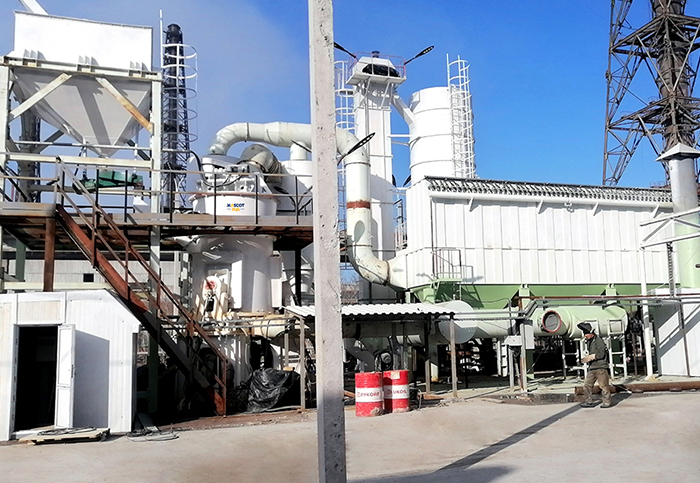
The production line of the vertical roller mill is a cost-effective and energy-efficient solution for processing powder, which is widely used in many industries, such as metallurgy, building materials, industrial solid waste treatment, thermal power plants, cement plants, and environmental protection fields. The primary purpose of this project is to finely grind raw materials through a vertical roller mill to meet the requirements of different industries for particle size, purity, and output of powder products.

The gypsum grinding production line is an efficient, stable, and environmentally friendly production solution, which is widely used in construction, decoration, the chemical industry, and other fields. In addition, the grinding process is particularly critical, which directly affects the quality and particle size of the final product. With the continuous development of science and technology, the technical level and production efficiency of gypsum grinding production lines will be further improved, providing strong support for the development of the gypsum processing industry.
Green and Intelligent Mining Machinery
Manufacturing and Export Base
Based on high quality and perfect after-sales service, our products have been
exported to more than 120 countries and regions.
Copyright © 2023 Zhengzhou Mascot Environmental Technology Co., Ltd Record number: Yu ICP No. 13021523-4





 WhatsApp