
1. Why YGM Raymond Mill Is the Preferred Choice for Mining Powder Processing
In the mining industry, processing mineral materials —calcite, limestone, barite, potassium feldspar, dolomite, and over 300 others —into fine powder is a prerequisite for downstream applications in construction materials, chemicals, paint, plastics, and metallurgy. Traditional grinding equipment (ball mills, standard Raymond mills) has well-documented limitations: low efficiency, high energy consumption, unstable particle size distribution, and maintenance-intensive operation. These shortcomings cannot meet the large-scale, high-consistency production demands of modern mining enterprises.
The YGM Raymond Mill (also called the YGM High-Pressure Raymond Grinding Mill) directly addresses these pain points. Built on the proven Raymond mill platform but incorporating a high-pressure spring loading system that applies 800-1500 kg of additional force to each grinding roller, the YGM series delivers 20-30% higher capacity and 15-25% lower energy consumption compared to standard Raymond mills at equivalent motor power. This article examines the YGM Raymond Mill's technical advantages, model selection framework, and real-world performance —providing mining enterprises with the data needed to make an informed equipment decision.

2. YGM Raymond Mill: System Architecture and Working Principle
The YGM Raymond Mill is a complete, self-contained grinding system deployed as an alternative to traditional ball mills for non-metallic mineral powder processing. It processes non-flammable and non-explosive minerals with Mohs hardness below 7 and moisture under 6%, including calcite, limestone, wollastonite, gypsum, potassium feldspar, kaolin, bentonite, barite, phosphate rock, manganese ore, quartz stone, and marble.
2.1 System Components
The YGM Raymond Mill system integrates seven core assemblies into a coordinated production unit:
2.2 Closed-Circuit Grinding Cycle
The working principle follows a continuous closed-circuit flow: bulk raw material is pre-crushed by a jaw crusher to the mill's feed specification (< 30-40 mm), lifted to a storage hopper by bucket elevator, and metered into the grinding chamber by a vibrating feeder. Inside the main mill, grinding rollers press against the grinding ring under the combined force of centrifugal rotation and high-pressure spring loading. Ground powder is entrained in the upward air stream and passes through the analyzer, where rotating blades separate qualified powder (passing through) from oversize material (returned to the grinding zone). Qualified powder travels to the cyclone collector for separation and discharge as finished product. The air stream returns to the blower inlet, completing the closed loop that minimizes energy loss and dust emission.
The YGM series spans models from YGM65 (0.4-1.8 t/h, 15 kW) to YGM190 (18-36 t/h, 250 kW), with the most popular configurations —YGM85, YGM95, YGM130, and YGM160 —covering the 1.2-16 t/h range that serves the majority of commercial grinding operations.

3. YGM Raymond Mill Quick Specifications
| Product | YGM Raymond Mill (High-Pressure Grinding Mill) |
|---|---|
| Model Range | YGM65 / YGM75 / YGM85 / YGM85B / YGM95 / YGM130 / YGM160 / YGM190 |
| Grinding Technology | High-pressure spring loading (800-1500 kg per roller) + centrifugal force |
| Feed Size | ≤ 40 mm (model dependent; maximum 40 mm for YGM190) |
| Motor Power | 15-250 kW (main mill); total system power varies by configuration |
| Capacity | 0.4-36 t/h (material, hardness, and fineness dependent) |
| Finished Fineness | 80-600 mesh (180-23 μm); adjustable via variable-frequency classifier |
| Applicable Materials | 300+ types: calcite, limestone, barite, feldspar, gypsum, kaolin, bentonite, dolomite, talc, marble, phosphate rock, quartz, manganese ore (Mohs < 7, moisture < 6%) |
| Brand | Zhengzhou Mascot Industry |
| Certification | ISO 9001:2015 |
| Packing | Standard containers, Nude Packing, Wooden boxes, etc. |
| Installation | Engineer-guided installation, commissioning, and operator training |
| Factory Visit | Warmly Welcomed |
| Export Countries | Southeast Asia, Central Asia, South America, North America, Africa, Middle East, Australia |
| Payment Terms | T/T, L/C, PayPal, etc. |
| Note: Specifications are for reference. Contact Mascot for a customized configuration based on material properties and production targets. | |
4. Core Advantages of YGM Raymond Mill
Compared with traditional Raymond mills and other grinding equipment categories, the YGM series delivers quantifiable advantages in grinding force, operational stability, fineness control, and maintenance economics.
4.1 High One-Time Grinding Efficiency: 30% More Grinding Force
The defining technological advantage of the YGM Raymond Mill is its high-pressure spring loading system. Each grinding roller is equipped with a calibrated spring assembly applying 800-1500 kg of static pressure independent of rotational speed. This dual-force mechanism —centrifugal force from the rotating main shaft plus spring-generated mechanical pressure —increases the total grinding force on the material bed by approximately 30% compared to a traditional Raymond mill of identical specifications. The result: production capacity increases by 20-30% under the same motor power, and the one-time grinding pass rate improves significantly, reducing the volume of material requiring recirculation and re-processing.
The large-diameter grinding rollers and matched grinding ring profile further enhance this effect by maximizing the contact surface area between rollers and material, ensuring uniform force distribution and minimizing localized wear. For operators, this translates directly to higher daily throughput and lower per-ton grinding cost.
4.2 Stable Operation and Extended Service Life
Several design features contribute to the YGM Raymond Mill's operational stability. The cover cylinder employs a soft connection structure with the main engine housing, absorbing vibration that would otherwise cause stress cracking at rigid connection points or shear failure at bolted joints —a common failure mode in traditional Raymond mills. The main shaft design minimizes wear at the central bearing, and the lower shaft seal has been simplified for straightforward replacement during routine maintenance without requiring extensive disassembly.
The grinding rollers and grinding ring are manufactured from high-wear-resistant alloy materials selected for each application's abrasion characteristics. A key operational advantage: the high-pressure spring system can be adjusted to compensate for wear on the rollers and ring. As components gradually wear, increasing the spring pressure maintains consistent grinding force and output fineness. This extends the effective service life of wear components well beyond the point where a traditional Raymond mill's components would require replacement —typically 6-12 months for standard materials (limestone, calcite) versus 4-8 months on standard Raymond mills.
4.3 Precise Fineness Control with 99% Screening Pass Rate
The YGM Raymond Mill is equipped with a patented variable-frequency squirrel cage classifier (analyzer) that provides precise, real-time control over finished product particle size. The classifier's rotation speed is adjustable via the frequency converter, allowing operators to dial in the target fineness from 80 to 600 mesh (180-23 μm) without mechanical modifications. This precision translates to a finished product screening pass rate of 99% —a level of consistency that standard Raymond mills and ball mill circuits with external classification typically cannot achieve without additional processing stages. The high pass rate minimizes the volume of oversize material returned to the grinding zone, further improving system throughput and energy efficiency.
4.4 Energy Efficiency and Environmental Compliance
The YGM Raymond Mill's closed-loop air circulation system recycles the gas stream within the grinding circuit rather than exhausting it after a single pass. This design reduces blower energy consumption by 25-30% compared to open-circuit systems. Negative-pressure operation throughout the circuit prevents dust leakage into the workspace, and the optional pulse-jet dust collector achieves emission concentrations meeting international environmental standards. The combined effect is a grinding system that is both more energy-efficient and cleaner than equivalent-capacity ball mill installations.

5. Application Case Study: YGM130 at Western Australia Limestone Mine
This case study documents a YGM Raymond Mill deployment at a large limestone mining and processing operation in Western Australia, demonstrating the equipment's performance advantage over the customer's previous grinding installation.
5.1 Customer Background and Project Requirements
| Customer | Large-scale limestone mining enterprise, Western Australia |
| End Market | Building materials and chemical industry limestone powder supply |
| Problem | Existing grinding equipment produced low efficiency, unstable finished product fineness, high energy consumption, and excessive maintenance costs. Could not meet growing market demand for high-quality limestone powder. |
| Material | Limestone (Mohs hardness 3-4, feed size ≤ 30 mm) |
| Target | Finished fineness 120-200 mesh; expected output 10-15 t/h |
5.2 Mascot Solution: YGM130 Configuration
Based on the customer's material properties and production targets, Mascot recommended and deployed the YGM130 Raymond Mill (5 rollers, 90 kW main motor, 1280 mm grinding ring) with:

5.3 Operational Results
The Western Australia installation has become a reference site for Mascot in the region, with the customer reporting that the YGM130's combination of throughput, product quality, and low operating cost has strengthened their competitive position in the Western Australian limestone powder market.
6. YGM Raymond Mill Model Specifications
| Model | Rollers | Roller Size (mm) | Ring Dia. (mm) | Feed (mm) | Fineness (mesh) | Capacity (t/h) | Power (kW) |
|---|---|---|---|---|---|---|---|
| YGM65 | 3 | 210×150 | 650 | ≤15 | 80-600 | 0.4-1.8 | 15 |
| YGM75 | 3 | 260×150 | 780 | ≤15 | 80-600 | 1-3 | 18.5 |
| YGM85 | 3 | 270×150 | 830 | ≤20 | 80-600 | 1.2-4 | 22 |
| YGM85B | 3 | 270×150 | 830 | ≤20 | 80-600 | 1.2-3.5 | 22 |
| YGM95 | 4 | 310×190 | 950 | ≤25 | 80-600 | 2.1-5.6 | 45 |
| YGM130 | 5 | 410×230 | 1280 | ≤30 | 80-600 | 2.5-9.5 | 90 |
| YGM160 | 6 | 450×300 | 1600 | ≤35 | 80-600 | 8-16 | 132 |
| YGM190 | 6 | 500×330 | 1900 | ≤40 | 80-600 | 18-36 | 250 |
Table: YGM Raymond Mill full model specifications. Highlighted rows represent the most commonly deployed configurations for commercial grinding operations. Actual throughput varies by material hardness, feed moisture, and target fineness.
7. Complete Mineral Processing Line: Related Equipment
The YGM Raymond Mill is the grinding core of a broader mineral processing chain. Mascot provides all complementary equipment, enabling single-source procurement and integrated system warranty.
7.1 Jaw Crusher — Primary Crushing for Mill Feed
Mascot jaw crushers serve as the primary crushing stage, reducing bulk mineral materials (feed size up to 1200 mm) to the YGM Raymond Mill's feed specification (≤ 30-40 mm). High crushing capacity, stable operation, and straightforward maintenance make the jaw crusher the standard front-end unit for YGM grinding systems. Proper pre-crushing ensures uniform mill feeding, reducing both grinding component wear and the risk of feed-related blockages.
7.2 Vibrating Feeder — Uniform Material Flow Control
The electromagnetic vibrating feeder meters crushed material into the YGM Raymond Mill at a precisely controlled rate. Uniform feeding prevents the mill from experiencing load spikes that cause unstable operation and product quality fluctuation. The feeder's adjustable feed rate allows operators to match material input to the mill's optimal processing capacity for a given material and fineness setting.
7.3 Cyclone Collector — High-Efficiency Powder Recovery
The cyclone collector is an integral component of the YGM Raymond Mill system, separating finished powder from the air stream through centrifugal force. High collection efficiency, minimal powder loss, and a compact structure ensure maximum product recovery and simplified system layout. For applications requiring enhanced dust control, a pulse-jet baghouse collector can be added downstream of the cyclone.
7.4 High-Pressure Suspension Mill — Performance Upgrade Path
For enterprises requiring finer finished powder (up to 1000 mesh) or higher throughput, Mascot's high-pressure suspension mill serves as the natural upgrade from the YGM Raymond Mill. With enhanced grinding force and a more sophisticated classification system, it delivers finer output and higher capacity for high-end powder processing applications.

8. Frequently Asked Questions About YGM Raymond Mill
Q1: What materials can the YGM Raymond Mill process? Can it handle metal ores?
The YGM Raymond Mill is designed for non-flammable, non-explosive minerals with Mohs hardness ≤7 and moisture ≤6%. This includes calcite, limestone, barite, feldspar, gypsum, kaolin, bentonite, dolomite, talc, marble, phosphate rock, quartz stone, and over 300 others. For metal ores with Mohs hardness up to 8 (e.g., manganese ore, certain iron ores), the YGM series can be used with appropriate feed size reduction and wear-resistant component specification. For high-hardness metal ores (Mohs 8+), pre-processing (fine crushing) and specialized wear-part materials are required. Mascot's engineering team evaluates material samples to confirm compatibility and recommend the optimal configuration.
Q2: How do I select the right YGM Raymond Mill model for my operation?
Model selection is based on three primary factors. Material characteristics: Hardness (Mohs scale), moisture content, feed size, and abrasiveness. These determine the effective throughput derating from the published specification. Target output: Required capacity (t/h) and finished product fineness (mesh). Finer output reduces throughput; always apply fineness derating factors. Site constraints: Available floor space, power supply capacity (total system load, not just main motor), and ceiling height. Mascot provides free engineering analysis including material grindability testing and customized model recommendations to ensure the selected YGM model matches both current requirements and 2-3 year growth projections.
Q3: What is the expected service life of a YGM Raymond Mill and how is it maintained?
With regular maintenance, the YGM Raymond Mill achieves a service life of 8-10 years before major overhaul. Key maintenance practices: (1) Inspect grinding rollers and ring every 500 operating hours; replace when wear exceeds 50% of the original profile. (2) Maintain the lubrication schedule for all bearings (main shaft, analyzer, blower). (3) Monitor and control feed parameters —consistent feed size and uniform feeding rate significantly extend wear-part life. (4) Conduct quarterly inspections of the spring loading system to verify correct pressure settings; adjust to compensate for wear. (5) Clean the analyzer and cyclone collector quarterly to maintain classification accuracy and collection efficiency. Mascot provides a 1-year standard warranty with extended coverage options, plus long-term remote technical support and on-site maintenance training for all installations.

About of Mascot
Zhengzhou Mascot Industry is a high-tech mining equipment company integrating R&D, manufacturing, sales, and after-sales service. Focusing on crushing, grinding, and mineral processing equipment, we provide professional solutions to our customers. We are ISO9001:2015、certified, and our products include mobile crushing palnts, crawler crushing plant,construction waste crushing plants, jaw crushers, sand making machines, cone crushers, fine crushers,grinding mills, ball mills, etc., all with reliable performance to meet diverse project needs.
• Professional pre-sales support: Free project design and comprehensive solutions to help you accurately select the right equipment;
• Comprehensive on-site service: Providing installation guidance and worker training to ensure smooth equipment commissioning;
• Reliable after-sales guarantee: A complete after-sales system, timely response to technical inquiries and equipment maintenance, ensuring long-term stable operation.
To protect your rights, please contact us through the following official channels for professional service:
WhatsApp: 0086-16650273865
Email: mascot@mascotenv.com
We are committed to providing high-quality equipment and full-cycle services to deliver comprehensive intelligent solutions for the global mining industry!

This production line utilizes a three-ring medium-speed micro-grinding mill as the central equipment, complemented by other auxiliary equipment like hammer crushers, bucket elevators, and storage silos to establish a comprehensive grinding operation system. It has demonstrated strong potential for application and market competitiveness in industries such as construction, chemical industry, and new materials.
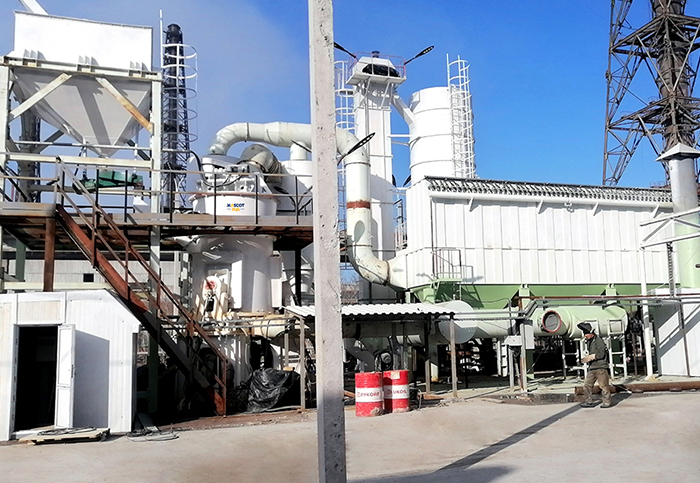
The production line of the vertical roller mill is a cost-effective and energy-efficient solution for processing powder, which is widely used in many industries, such as metallurgy, building materials, industrial solid waste treatment, thermal power plants, cement plants, and environmental protection fields. The primary purpose of this project is to finely grind raw materials through a vertical roller mill to meet the requirements of different industries for particle size, purity, and output of powder products.

The ball mill production line is a comprehensive production line that integrates material crushing, grinding, grading, and collection. This production line is mainly used to process various materials, including sand and gravel, cement, new building materials, silicates, refractory materials, fertilizers, ferrous metal beneficiation, non-ferrous metals, glass ceramics, etc.

The gypsum grinding production line is an efficient, stable, and environmentally friendly production solution, which is widely used in construction, decoration, the chemical industry, and other fields. In addition, the grinding process is particularly critical, which directly affects the quality and particle size of the final product. With the continuous development of science and technology, the technical level and production efficiency of gypsum grinding production lines will be further improved, providing strong support for the development of the gypsum processing industry.

The MTW series European grinding mill production line includes high-efficiency crushers, elevators, electromagnetic vibration feeders, milling machines, classifiers, and collectors. These pieces of equipment work together to achieve efficient crushing, grinding, and classification of various non-metallic ores, coal powder, slag, and other materials. It can meet the diverse needs of various industries for powder particle size, uniformity, shape, etc., and offer enterprises high-quality grinding products.
Green and Intelligent Mining Machinery
Manufacturing and Export Base
Based on high quality and perfect after-sales service, our products have been
exported to more than 120 countries and regions.
Copyright © 2023 Zhengzhou Mascot Environmental Technology Co., Ltd Record number: Yu ICP No. 13021523-4





 WhatsApp