
| Key Words | Mining Dry Ball Mill |
|---|---|
| Product Name | Dry Ball Mill |
| Feed Size | ≤25mm |
| Motor Power | 18.5-800KW |
| Capacity | 0.65–90 t/h |
| Core Functions | Dispersion of solids in liquid. |
| Brand | Mascot Heavy Industry |
| Packing | Standard containers,Nude Packing,Wooden boxes, etc |
| Installation | Engineer Guide |
| Factory visit | Welcomed Warmly |
| Export Countries | Southeast Asia, Central Asia, South America, North America, Africa |
| Payment | T/T,L/C payment,Paypal...etc |
| Please note: The above table data is for reference only. For specific information, please contact us. | |
Industry Analysis & Product Overview of Mascot Dry Ball Mill
With the rapid expansion of dry powder processing industries including building materials, chemical raw materials, refractory materials and cement raw material processing, many factories face prominent problems when adopting wet grinding equipment: supporting wastewater treatment tanks, dehydration drying equipment and sedimentation pools occupy huge factory space, and the post-processing cost of wet slurry powder increases by more than 25% every year. For water-sensitive raw materials such as quicklime, cement clinker, graphite and silicon powder, contact with water will cause material deterioration and product quality decline, which makes wet ball mill completely unable to meet production standards. To solve this industry pain point, Mascot Heavy Industry optimized the traditional ball mill structure and launched a full closed-loop dry ball mill series specially designed for anhydrous dry grinding production.

Table 1: Core Technical Parameters of Mascot Standard Dry Ball Mill Host
| Model Spec | Φ1.5×5.7m | Φ1.8×7.0m | Φ2.1×7.0m | Φ2.2×7.5m |
|---|---|---|---|---|
| Max Feed Size | ≤20mm | ≤25mm | ≤25mm | ≤30mm |
| Processing Capacity (t/h) | 0.8-4 | 4-12 | 10-28 | 15-45 |
| Main Motor Power (kw) | 130 | 245 | 380 | 450 |
| Recommended Feed Moisture | ≤5% | ≤5% | ≤5% | ≤5% |
| Finished Powder Mesh | 80-200 mesh | 80-250 mesh | 100-300 mesh | 100-325 mesh |
| Steel Ball Loading Capacity (t) | 12.25 | 24 | 32 | 38 |
4 Unique Advantages of Mascot Dry Ball Mill
1. No supporting wastewater treatment system, greatly saving plant investment: The dry ball mill completes grinding in a completely anhydrous environment, eliminating the need for sedimentation tanks, dehydration centrifuges and sewage circulation pipelines required by wet ball mill, which reduces the early infrastructure investment of the production line by 30% and saves daily water and sewage treatment costs.
2. Dry finished powder, direct packaging and deep processing: The powder discharged from the dry ball mill has moisture controlled below 1%, which can be directly packed into finished products without secondary drying process, greatly simplifying the production flow and shortening the whole production cycle.
3. Full closed pulse dust removal system, environmental compliance: The complete set of dry ball mill production line is equipped with LQM series bag dust collector and cyclone separator, all floating powder is recycled and collected, dust emission concentration is lower than 25mg/m³, which meets the environmental inspection standards of Africa, Southeast Asia and Central Asia.
4. Replaceable multi-type liner, wide material adaptability: The dry ball mill can be equipped with high manganese steel liner, ceramic liner and anti-corrosion alloy liner according to different materials, which can grind limestone, quicklime, graphite, cement clinker, talc, feldspar and more than 80 kinds of dry brittle minerals without material pollution.

Table 2: Standard Matching Auxiliary Equipment List of Complete Dry Ball Mill Line
| Serial No. | Auxiliary Equipment Name | Standard Model | Supporting Power |
|---|---|---|---|
| 1 | Quantitative Belt Scale Feeder | B400×6m | 2.2kw |
| 2 | TH Chain Bucket Elevator | TH315 | 4kw |
| 3 | Vibrating Feeder | GZ1 | 0.12kw |
| 4 | Cyclone Powder Separator | Φ2800 | Matching fan unit |
| 5 | LQM Pulse Dust Collector | LQM64-6 | Supporting air blower |
| 6 | PLC Central Control Cabinet | Customized full-line control | 380V whole line power supply |
Detailed Overseas Customer Application Case of Mascot Dry Ball Mill
A large lime powder processing factory in East Africa signed a full set of Mascot Φ2.1×7.0m dry ball mill production line order in early 2025. The customer’s core production demand is processing quicklime dry powder for road construction and chemical filler, with strict production requirements: stable hourly output above 15 tons, finished powder fineness 150 mesh, raw material moisture controlled below 4%, and local environmental protection standard dust emission limit ≤28mg/m³. Before cooperating with Mascot, the customer used a wet ball mill production line purchased from other manufacturers, which needed to build a large sewage treatment pool, and the lime slurry after grinding required 2 sets of drying equipment for secondary dehydration, resulting in high power consumption and large factory space occupation; in addition, lime contacted with water to produce chemical reaction, which seriously reduced the activity of finished lime powder and affected downstream sales.

After receiving the customer’s demand, Mascot technical team completed free factory layout drawing and dry grinding process solution within 2 working days, and recommended the Φ2.1×7.0m dry ball mill matched with full set feeding, lifting, cyclone separation and pulse dust removal auxiliary equipment. The whole set of equipment completed production, inspection and container loading within 30 working days, and shipped to the port of East Africa. Two professional Mascot mechanical engineers flew to the customer’s factory to complete equipment installation, commissioning and 6-day full-line operation training, and the whole project was officially put into stable production within 38 days after the equipment arrived at the port.
Up to now, this dry ball mill production line has run continuously and stably for more than 14 months, with actual stable hourly output of 18 tons, finished lime powder fineness stably maintained at 140-180 mesh, fully meeting the customer’s finished product standard. Compared with the original wet ball mill line, the customer canceled all sewage treatment and secondary drying equipment, the power consumption per ton of quicklime raw material dropped by 28%, and the annual maintenance cost of equipment reduced by 16% due to the anti-corrosion dry grinding structure design. The closed dust removal system matched with the dry ball mill completely meets local environmental inspection standards, and there has been no environmental penalty record in more than one year of operation. The customer has placed a second order of small Φ1.5×5.7m dry ball mill line for new talc powder dry grinding project in 2026, and highly recognized the stable performance and full-cycle after-sales service system of Mascot dry ball mill.

Related Recommended Grinding Equipment from Mascot Heavy Industry
1. Raymond Mill: Suitable for small-scale dry powder production with fineness requirement below 400 mesh, low initial investment, stable output 1-20t/h, widely used in small building materials raw material grinding.
2. Vertical Dry Kiln: Supporting front-end drying equipment for dry ball mill, which can reduce raw material moisture from 12% to below 5% to avoid material sticking inside the dry ball mill cylinder.
3. Vibrating Raw Material Silo: Large-capacity storage and uniform feeding equipment matched with dry ball mill, avoiding output fluctuation caused by intermittent feeding, improving overall dry grinding efficiency by 12%.

3 Frequently Asked Questions About Dry Ball Mill
Q1: Why does the dry ball mill have serious material sticking and blockage inside the cylinder?
Main causes: The moisture of raw material exceeds the standard 5%, and the material is easy to absorb moisture and agglomerate during grinding; the air volume of induced draft fan is too small to take away fine powder in time; the temperature of hot air supporting drying equipment is too low. Targeted solutions: Use vertical dry kiln to pre-dry raw materials to control moisture below 5%; adjust the air volume valve of the fan to increase air circulation volume; increase the hot air inlet temperature of the drying system to keep the cylinder in a dry state during operation.
Q2: What is the essential difference between dry ball mill and wet ball mill in production layout and cost?
The core difference lies in the production auxiliary supporting system: dry ball mill only needs to match dust removal and cyclone separation equipment, no water supply and sewage treatment facilities, small floor space and low early investment; wet ball mill needs to build water supply pipeline, sedimentation tank, dehydration equipment and sewage circulation system, occupying large factory area and high infrastructure cost. In terms of operation cost, dry ball mill has no water consumption and sewage treatment cost, while wet ball mill needs to consume a large amount of industrial water every day, and the slurry dehydration process will produce extra power consumption. Dry ball mill is more suitable for water-sensitive dry powder processing, and wet ball mill is suitable for mineral flotation and wet purification production lines.
Q3: How to reduce the dust overflow problem of dry ball mill and meet environmental standards?
Three core optimization schemes: Adopt full closed airtight design at the feeding and discharging ports of the dry ball mill to avoid powder leakage from gaps; match LQM multi-chamber pulse dust collector with sufficient filter bag area to capture all floating fine powder; regularly clean the filter bags of the dust collector to prevent blockage and reduce dust emission concentration. After full closed-loop matching, the dust emission of the whole dry ball mill line can be controlled below 30mg/m³, which can pass environmental inspection in all export countries.

About of Mascot
Zhengzhou Mascot Industry is a high-tech mining equipment company integrating R&D, manufacturing, sales, and after-sales service. Focusing on crushing, grinding, and mineral processing equipment, we provide professional solutions to our customers. We are ISO9001:2015、certified, and our products include mobile crushing palnts, crawler crushing plant,construction waste crushing plants, jaw crushers, sand making machines, cone crushers, fine crushers,grinding mills, ball mills, etc., all with reliable performance to meet diverse project needs.
• Professional pre-sales support: Free project design and comprehensive solutions to help you accurately select the right equipment;
• Comprehensive on-site service: Providing installation guidance and worker training to ensure smooth equipment commissioning;
• Reliable after-sales guarantee: A complete after-sales system, timely response to technical inquiries and equipment maintenance, ensuring long-term stable operation.
To protect your rights, please contact us through the following official channels for professional service:
WhatsApp: 0086-16650273865
Email: mascot@mascotenv.com
We are committed to providing high-quality equipment and full-cycle services to deliver comprehensive intelligent solutions for the global mining industry!
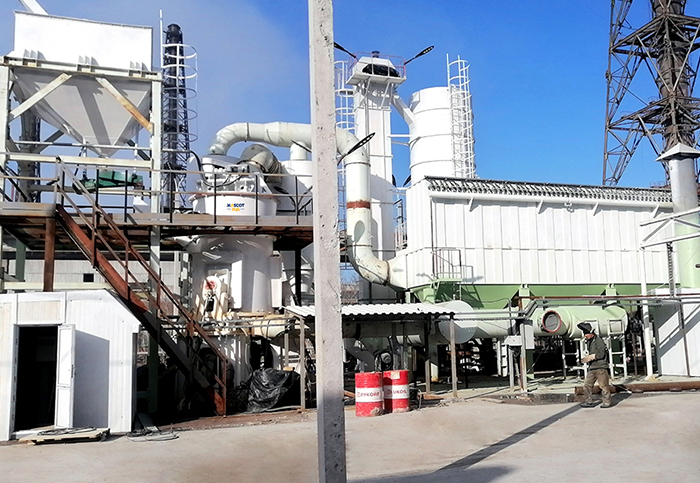
The production line of the vertical roller mill is a cost-effective and energy-efficient solution for processing powder, which is widely used in many industries, such as metallurgy, building materials, industrial solid waste treatment, thermal power plants, cement plants, and environmental protection fields. The primary purpose of this project is to finely grind raw materials through a vertical roller mill to meet the requirements of different industries for particle size, purity, and output of powder products.

YGMX Enhanced High-Pressure Mill is a new type of high-performance grinding equipment, and the biggest improvement of this milling equipment lies in the increase of the high-pressure spring system in the grinding roller part. Compared with the traditional high-pressure roller mill, it has a wider scope of application and excellent performance to meet the production needs of a variety of powder fineness. It is widely used in non-metallic minerals, chemicals, building materials, metallurgy, environmental protection, etc. Multiple areas.

The gypsum grinding production line is an efficient, stable, and environmentally friendly production solution, which is widely used in construction, decoration, the chemical industry, and other fields. In addition, the grinding process is particularly critical, which directly affects the quality and particle size of the final product. With the continuous development of science and technology, the technical level and production efficiency of gypsum grinding production lines will be further improved, providing strong support for the development of the gypsum processing industry.

The ball mill production line is a comprehensive production line that integrates material crushing, grinding, grading, and collection. This production line is mainly used to process various materials, including sand and gravel, cement, new building materials, silicates, refractory materials, fertilizers, ferrous metal beneficiation, non-ferrous metals, glass ceramics, etc.

The MTW series European grinding mill production line includes high-efficiency crushers, elevators, electromagnetic vibration feeders, milling machines, classifiers, and collectors. These pieces of equipment work together to achieve efficient crushing, grinding, and classification of various non-metallic ores, coal powder, slag, and other materials. It can meet the diverse needs of various industries for powder particle size, uniformity, shape, etc., and offer enterprises high-quality grinding products.
Green and Intelligent Mining Machinery
Manufacturing and Export Base
Based on high quality and perfect after-sales service, our products have been
exported to more than 120 countries and regions.
Copyright © 2023 Zhengzhou Mascot Environmental Technology Co., Ltd Record number: Yu ICP No. 13021523-4





 WhatsApp