 27
27
 27
27
 25
25

How to Produce High-Quality Gypsum Powder With YGM High Pressure Suspension Mill
Gypsum powder is one of the world's most consumed industrial minerals — an essential input for construction plaster, gypsum wallboard, cement retarder, self-leveling compounds, and medical-grade casting materials. The global gypsum market continues to expand alongside construction activity in developing economies and the growing adoption of prefabricated building systems. Yet producing gypsum powder that consistently meets industry specifications is not simply a matter of crushing and grinding. Unlike hard minerals, gypsum (Mohs hardness 2) is soft, heat-sensitive, and prone to over-grinding — challenges that demand a processing platform designed for precision, not brute force. The YGM High-Pressure Suspension Mill addresses these demands through constant-pressure grinding, variable-frequency classification, and controllable throughput parameters that prevent the quality-eroding effects of over-processing. This article examines how high-pressure suspension grinding technology produces high-quality gypsum powder across the full range of commercial specifications.
What Makes Gypsum Powder Processing Different
Gypsum (CaSO4·2H2O) presents processing challenges that are fundamentally different from harder minerals like limestone or quartz. These characteristics define the requirements for any grinding system:
1. Extreme Softness (Mohs 2) — Gypsum is one of the softest industrial minerals. In a mill optimized for hard rock, gypsum can over-grind, producing excessive ultrafines that waste energy, create dust control problems, and alter the setting characteristics of the final plaster product. The grinding system must apply controlled, moderate force rather than maximum crushing pressure.
2. Heat Sensitivity and Phase Stability — Raw gypsum is calcium sulfate dihydrate (CaSO4·2H2O). When heated to approximately 120–180°C during processing, it partially dehydrates to hemihydrate (CaSO4·0.5H2O) — the form used in construction plaster. However, uncontrolled heat in the grinding chamber can cause premature, uneven dehydration, producing a mixture of dihydrate, hemihydrate, and anhydrite phases that behave unpredictably when mixed with water. The grinding system must minimize thermal input to preserve the intended phase composition.
3. Moisture Content Management — Natural gypsum typically carries 5–15% free moisture, far higher than most grinding mill intake limits. Excess moisture causes material to cake on grinding surfaces rather than fracture. For gypsum plants that integrate calcination and grinding in a single line, moisture control is inseparable from product quality.
4. Fineness Specification by Application — The required particle size for gypsum powder varies dramatically by end use. Base coat plaster typically requires 80–120 mesh; finish coat plaster demands 150–200 mesh; joint compounds and specialty plasters may require 200–325 mesh. A processing platform that cannot switch between these specifications without mechanical reconfiguration limits a producer to a single market segment.

Why YGM High-Pressure Suspension Mill Fits Gypsum Processing
The YGM high-pressure suspension grinding principle delivers specific advantages for soft, heat-sensitive gypsum:
1. Adjustable Constant Pressure Prevents Over-Grinding
Unlike centrifugal mills that apply uncontrolled centrifugal force, YGM's spring-loaded constant-pressure system delivers a known, adjustable force of 1,000–1,500 kg per roller. For gypsum, this means the grinding pressure can be set to the minimum level that achieves the target fineness — no more. This prevents the energy waste and quality degradation caused by over-grinding soft material. The constant-pressure mechanism also maintains consistent fineness as rollers wear, unlike centrifugal mills where grinding intensity drifts with roller mass loss.
2. Low Thermal Load on Material
In YGM grinding, most energy goes into particle fracture through compression and attrition, with limited frictional heat generation compared to high-speed impact mills or ball mills. The sealed negative-pressure airflow system evacuates powder from the grinding zone quickly, minimizing residence time and the associated heat exposure. For gypsum, this reduces the risk of unintentional phase change during grinding — the mill produces powder with the intended hydrate composition, not a mixture of unknown phases.
3. Frequency-Conversion Classification for Precision Grading
The variable-frequency classifier allows operators to dial in target fineness from 80 to 425 mesh without mechanical changes. For gypsum producers, this means a single line can serve the full spectrum of construction plaster applications: 80–120 mesh base coat in the morning, 150–200 mesh finish coat in the afternoon. The PLC saves preset RPM profiles for each product, eliminating trial-and-error between grade switches.
4. Sealed Negative-Pressure Dust Control
Gypsum powder is light, airborne, and can cause respiratory irritation at high concentrations. YGM's sealed negative-pressure system captures dust at the source with pulse-jet baghouse filtration, controlling emissions to ≤20 mg/m³. The enclosed circuit also isolates the processing environment from ambient humidity, preventing moisture re-absorption by hygroscopic gypsum powder.

Core Parameters of YGM High-Pressure Grinding Mill
| Model | YGM65 | YGM95 | YGM130 | YGM160 |
|---|---|---|---|---|
| Grinding Rollers | 3 pcs | 4 pcs | 5 pcs | 6 pcs |
| Max Feed Size | <15 mm | <25 mm | <30 mm | <35 mm |
| Capacity (Gypsum) | 0.5-2.5 t/h | 1.5-6.5 t/h | 3.0-11.0 t/h | 10.0-26.0 t/h |
| Main Motor Power | 18.5 kw | 37 kw | 75 kw | 132 kw |
| Finished Fineness | 80-425 mesh | 80-425 mesh | 80-425 mesh | 80-425 mesh |
Model Selection by Gypsum Production Scale:
YGM65 — Pilot lines, specialty gypsum products, medical-grade plaster (0.5–2.5 t/h)
YGM95 — Small-to-medium construction plaster operations for regional markets (1.5–6.5 t/h)
YGM130 — Mid-scale operations covering base coat to finish coat grades; best cost-per-ton balance (3.0–11.0 t/h)
YGM160 — Large-volume gypsum powder for national distribution and wallboard plants (10.0–26.0 t/h)

The Gypsum Powder Production Workflow: Raw Gypsum to Finished Plaster
Producing high-quality gypsum powder requires an integrated processing line where each stage is calibrated to the unique properties of gypsum. The complete workflow built around YGM high-pressure suspension grinding follows five stages:
1. Primary Crushing and Sizing
Raw gypsum rock (typically 200–500 mm from the quarry) is reduced to mill feed size (<15–35 mm depending on YGM model) using a jaw crusher or hammer crusher. For gypsum, crusher selection matters: hammer crushers can generate excess fines and heat, while jaw crushers produce a cleaner, more uniform feed with lower dust generation. The target feed size must be strictly controlled because oversized gypsum lumps in the mill cause uneven roller loading and localized over-grinding.
2. Calcination (When Required)
If the target product is construction plaster (hemihydrate), gypsum must be calcined at approximately 120–180°C to drive off 1.5 molecules of crystal water. Calcination can be performed before or after grinding, with each route having distinct implications. Pre-grinding calcination produces hemihydrate that must then be ground — the YGM mill's low thermal load is critical here because already-calcined material is highly reactive and can re-hydrate if exposed to moisture. Post-grinding calcination processes dihydrate powder through a calciner, with YGM providing the precisely sized feed for uniform heat exposure.
3. High-Pressure Suspension Grinding
Pre-crushed (and optionally calcined) gypsum enters the YGM mill via a belt scale feeder at a uniform rate. For gypsum, the feed rate is typically set at 85–95% of rated capacity — higher than for harder minerals because gypsum's low hardness allows faster throughput. The grinding pressure is set at the minimum spring tension that achieves target fineness, preventing over-grinding. The PLC-controlled system logs main motor amperage; fluctuations exceeding 5% at steady feed rate indicate inconsistent material flow requiring adjustment.
4. Precision Classification
Ground gypsum is carried by airflow into the frequency-conversion classifier. The classifier separates on-spec powder from oversize particles, which are returned for re-grinding. For gypsum, classification speed is particularly important because gypsum's softness means that even slightly overspeed classification can strip out particles that would otherwise meet specification, reducing throughput without quality benefit. The PLC saves preset RPM profiles for each gypsum grade, enabling fast, repeatable grade transitions.
5. Collection, Storage and Packaging
Qualified powder exits through a cyclone collector, with ultrafine dust captured by the pulse-jet baghouse. The negative-pressure system ensures dust emission ≤20 mg/m³. For gypsum, an additional consideration is moisture protection during storage: calcined hemihydrate is hygroscopic and will re-hydrate if exposed to ambient humidity. Collected powder should be transferred directly to sealed silos or moisture-barrier bags. The enclosed YGM collection circuit minimizes airborne moisture contact during the most vulnerable stage of processing.

Gypsum Powder Grade Matrix: Fineness vs. Application
| Mesh Range | Particle Size | Gypsum Product Grade | Primary Applications |
|---|---|---|---|
| 40–80 mesh | 180–425 μm | Cement Retarder Grade | Cement additive for setting time control |
| 80–120 mesh | 125–180 μm | Base Coat Plaster | Undercoat plastering, wall leveling, rough finishing |
| 150–200 mesh | 74–106 μm | Finish Coat Plaster | Smooth wall finishing, decorative plaster, gypsum putty |
| 250–325 mesh | 45–58 μm | Specialty / Joint Compound | Joint compounds, self-leveling underlayments, precision casting |
A single YGM line with stepless classifier adjustment covers the full 80–325 mesh gypsum product spectrum. Transitions between grades are executed through PLC speed changes alone, without halt, without hardware swap, and without trial-and-error recalibration.
Critical Process Control Variables for Gypsum Powder Quality
1. Feed Rate and Material Bed Management
Gypsum's low hardness means it grinds quickly, and the material bed on the grinding ring depletes faster than with harder minerals. If the feeder does not replenish the bed fast enough, rollers contact the ring directly — generating unnecessary wear and a metallic contamination risk. A belt scale feeder set at 85–95% of rated capacity maintains a consistent material bed. For gypsum, operators should watch the main motor amperage log: a falling trend at steady feed rate may indicate bed thinning; a rising trend may indicate material caking from excess moisture.
2. Grinding Pressure for Over-Grinding Prevention
The YGM spring system's adjustable tension is a quality control tool for gypsum — not just an operational parameter. Springs set too tight produce excessive ultrafines that alter plaster setting characteristics, reduce workability time, and waste energy. Springs set too loose produce undersized output. The quarterly pressure calibration against manufacturer specifications should be customized for gypsum: pressure is set to the lowest tension that consistently meets the target D97 specification, minimizing both over-grinding and energy consumption.
3. Classifier Speed and Product Consistency
The frequency-conversion classifier determines both fineness and PSD narrowness. For gypsum, a narrower PSD means more consistent setting time, water demand, and workability — all critical commercial specifications. Running the classifier at the lowest RPM that meets the target mesh specification produces the narrowest practical PSD at the lowest energy cost. Mascot provides model-specific classifier calibration guidance for common gypsum grades.
4. Feed Moisture and Calcination State
YGM is rated for feed moisture below 6%. Natural gypsum at 5–15% free moisture requires pre-drying before grinding, particularly if calcination is performed post-grinding. If calcination occurs pre-grinding, the incoming material is already hemihydrate with low moisture — but it is also chemically reactive and will absorb ambient humidity rapidly. The sealed negative-pressure circuit of the YGM system protects calcined gypsum from moisture re-absorption during grinding and collection.
5. Wear-Part Monitoring for Contamination Control
Although gypsum is soft, continuous high-volume production still wears rollers and rings. The high-chromium alloy surfaces minimize both wear rate and metallic contamination. Operators should track two gypsum-specific indicators: declining whiteness in the finished powder (suggesting wear-part metal entering the product) and increasing main motor amperage at steady feed rate (suggesting increased friction from worn surfaces). Scheduled replacement at defined intervals, not reactive replacement after quality complaints, preserves product consistency.

Field Validation: Construction Plaster Production Line in South Asia
Project Location: South Asia
Processing Material: Natural gypsum (dihydrate)
Target Product: Construction plaster — base coat (100 mesh) and finish coat (180 mesh)
Capacity Demand: 8 t/h
Original Problem: Existing ball mill produced inconsistent fineness with wide PSD; excessive ultrafines caused variable setting time in finished plaster; high energy consumption (52 kWh/ton) made the operation marginally profitable during low-demand seasons
The producer replaced the ball mill with a Mascot YGM130 High-Pressure Suspension Mill integrated into a complete processing line including jaw crusher, rotary dryer, belt scale feeder, cyclone collector, and pulse-jet baghouse. The calcination stage (rotary kiln at 150–170°C) was retained upstream of grinding, with YGM processing the calcined hemihydrate directly. Mascot engineers provided on-site commissioning and gypsum-specific operator training, completing the transition within 22 days.
Key performance metrics after twelve months of stable operation:
- Stable output: 8.8 t/h (100-mesh base coat) and 7.2 t/h (180-mesh finish coat), both exceeding targets
- Fineness pass rate: 99.3% at 100 mesh; 98.8% at 180 mesh
- Setting time consistency: Reduced variability from ±4.5 min to ±1.2 min
- Energy consumption: 34 kWh/ton — a 35% reduction from the ball mill baseline of 52 kWh/ton
- Dust emission: Consistently ≤18 mg/m³
- Grade switching time: Reduced from 4+ hours (ball charge change) to under 10 minutes (PLC classifier speed adjustment)
- Maintenance cost: Annual reduction of 28% driven by high-chromium wear-part life and elimination of ball charge replenishment
The plant manager noted: "The ability to switch between base coat and finish coat production in minutes rather than hours transformed our order fulfillment. We can now accept small custom-grade orders profitably because there is no line-changeover penalty." Following the successful YGM130 deployment, the company ordered a second line for a new facility processing desulfurized gypsum (FGD gypsum) from a nearby coal power plant.

Auxiliary Equipment Configuration for Gypsum Processing Line
| Equipment Name | Model | Power | Function |
|---|---|---|---|
| Jaw Crusher | PE250x400 | 15 kw | Primary crushing: gypsum rock to mill feed size |
| Rotary Dryer | Customized | -- | Pre-drying natural gypsum to <5% moisture |
| Rotary Calciner | Customized | -- | Thermal dehydration to hemihydrate (if pre-grinding) |
| Bucket Elevator | TH315 | 4 kw | Material lifting to feed hopper |
| Belt Scale Feeder | B400x6m | 2.2 kw | Uniform feeding; gypsum bed thickness control |
| Dust Collector | LQM64-6 | -- | Gypsum dust capture; ≤20 mg/m³ emission |
| High-Pressure Blower | 9-26 series | 18.5-132 kw | Airflow for powder conveying and classification |
Daily Process Monitoring Indicators for Gypsum Powder Production
| Indicator | Normal Range | Warning Signal | Action |
|---|---|---|---|
| Main Motor Amperage | Stable ±5% | Falling at same feed rate (bed thinning) | Increase feed rate; check feeder calibration |
| Classifier RPM vs. Mesh | As calibrated per grade | Coarsening at same RPM | Inspect classifier blade wear |
| Baghouse Differential Pressure | As commissioned | Rising trend | Clean or replace filter bags; check for gypsum caking |
| Feed Moisture | <6% (calcined: <2%) | Above threshold | Adjust dryer/calciner; check raw material storage |
| Product Setting Time | Within ±2 min of target | Drifting outside specification | Check calcination temperature; verify PSD |
| Finished Product Pass Rate | ≥99% | Below 97% | Evaluate roller, ring, and classifier condition |

Frequently Asked Questions (FAQs)
Q1: Can YGM process both natural gypsum and synthetic (FGD) gypsum?
A: Yes. Natural gypsum and flue gas desulfurization (FGD) gypsum have comparable hardness (Mohs 2) and respond similarly to high-pressure suspension grinding. The key difference is moisture: natural gypsum typically carries 5–15% free moisture requiring pre-drying, while FGD gypsum from modern power plants often arrives at 8–12% moisture and also requires drying. Once moisture is below 6%, both materials process identically through YGM, producing powder with consistent PSD and setting characteristics.
Q2: How does YGM prevent over-grinding of soft gypsum?
A: Three design factors prevent over-grinding: (1) the adjustable spring pressure system allows tension to be set at the minimum level that achieves target fineness, avoiding unnecessary particle size reduction; (2) the constant-pressure mechanism delivers consistent force throughout the wear cycle, unlike centrifugal mills where grinding intensity increases as roller diameter decreases; and (3) the variable-frequency classifier evacuates on-spec powder quickly, minimizing recirculation and repeated grinding of already-acceptable particles.
Q3: Does YGM grinding generate enough heat to affect gypsum phase composition?
A: No. YGM compression-and-attrition grinding generates limited frictional heat compared to high-speed impact mills or ball mills. The airflow system rapidly evacuates powder from the grinding zone, keeping residence time and thermal exposure low. For post-calcination grinding of hemihydrate, this low thermal load is a critical advantage: it prevents the hemihydrate from further dehydrating to anhydrite, which would alter setting characteristics and require reformulation.
Q4: What is the practical capacity range for gypsum on YGM?
A: Gypsum processes faster than harder minerals due to its low Mohs hardness. Typical capacity ranges at 100-mesh base coat specification: YGM65 delivers 0.5–2.5 t/h; YGM95 delivers 1.5–6.5 t/h; YGM130 delivers 3.0–11.0 t/h; and YGM160 delivers 10.0–26.0 t/h. Finer grades (180–325 mesh) operate at approximately 15–25% lower throughput due to the longer residence time required for finer grinding and more selective classification.
Q5: How does YGM compare to ball mills for gypsum plaster production?
A: Ball mills are the traditional choice for gypsum grinding but carry specific disadvantages: (1) higher energy consumption — typically 45–55 kWh/ton for gypsum, versus 30–40 kWh/ton for YGM; (2) wider PSD with more ultrafines, causing setting time variability; (3) longer grade changeover time, as ball charge adjustments take hours; and (4) higher maintenance cost from ball charge replenishment and mill lining replacement. YGM delivers narrower PSD, faster grade switching, and lower total cost of ownership for gypsum processing at 80–325 mesh. Ball mills remain relevant for ultra-fine gypsum below 325 mesh or for operations where extremely high throughput (30+ t/h) justifies the higher energy cost.
Mascot Heavy Industry is a high-tech enterprise integrating R&D, manufacturing, sales and service of mining and grinding equipment. We provide customized YGM High-Pressure Suspension Mill solutions for gypsum powder production, including project design, equipment manufacturing, installation guidance and after-sales support. Welcome global customers to contact us for cooperation.

About of Mascot
Zhengzhou Mascot Industry is a high-tech mining equipment company integrating R&D, manufacturing, sales, and after-sales service. Focusing on crushing, grinding, and mineral processing equipment, we provide professional solutions to our customers. We are ISO9001:2015.ertified, and our products include mobile crushing plants, crawler crushing plant, construction waste crushing plants, jaw crushers, sand making machines, cone crushers, fine crushers, grinding mills, ball mills, etc., all with reliable performance to meet diverse project needs.
• Professional pre-sales support: Free project design and comprehensive solutions to help you accurately select the right equipment;
• Comprehensive on-site service: Providing installation guidance and worker training to ensure smooth equipment commissioning;
• Reliable after-sales guarantee: A complete after-sales system, timely response to technical inquiries and equipment maintenance, ensuring long-term stable operation.
To protect your rights, please contact us through the following official channels for professional service:
WhatsApp: 16650273865
Email: mascot@mascotenv.com
We are committed to providing high-quality equipment and full-cycle services to deliver comprehensive intelligent solutions for the global mining industry!
<!-- === SEO METADATA === --> <!-- TITLE SEO: --> <!-- DESCRIPTION SEO: --> <!-- KEYWORDS: , gypsum powder manufacturing, gypsum calcination grinding, hemihydrate plaster production, FGD gypsum processing, gypsum base coat plaster, gypsum finish coat, gypsum powder fineness, gypsum setting time control, YGM130 gypsum, Mascot gypsum mill, gypsum powder production line --> <!-- UNINDEXED URLS: 1. https://china.mascotmill.com/news/produce-high-quality-gypsum-powder-ygm-suspension-mill.html 2. https://china.mascotmill.com/applications/gypsum-powder-grinding-solutions.html 3. https://china.mascotmill.com/resources/gypsum-powder-production-workflow-guide.html 4. https://china.mascotmill.com/grinding_equipment/ygm-gypsum-plaster-mill.html 5. https://china.mascotmill.com/cases/ygm130-gypsum-plaster-south-asia.html 6. https://china.mascotmill.com/resources/gypsum-grade-matrix-fineness-application.html 7. https://china.mascotmill.com/faq/gypsum-powder-grinding-hemihydrate-production.html 8. https://china.mascotmill.com/solutions/gypsum-construction-plaster-production-line.html 9. https://china.mascotmill.com/comparison/gypsum-grinding-ygm-vs-ball-mill.html 10. https://china.mascotmill.com/resources/fgd-synthetic-gypsum-processing-guide.html -->

This production line utilizes a three-ring medium-speed micro-grinding mill as the central equipment, complemented by other auxiliary equipment like hammer crushers, bucket elevators, and storage silos to establish a comprehensive grinding operation system. It has demonstrated strong potential for application and market competitiveness in industries such as construction, chemical industry, and new materials.

The gypsum grinding production line is an efficient, stable, and environmentally friendly production solution, which is widely used in construction, decoration, the chemical industry, and other fields. In addition, the grinding process is particularly critical, which directly affects the quality and particle size of the final product. With the continuous development of science and technology, the technical level and production efficiency of gypsum grinding production lines will be further improved, providing strong support for the development of the gypsum processing industry.
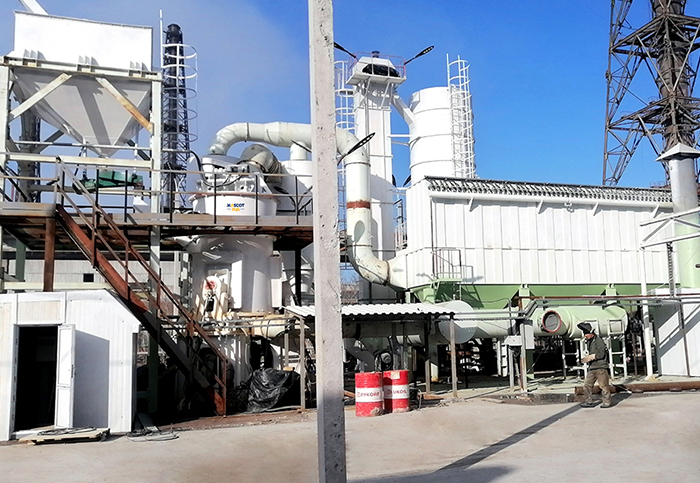
The production line of the vertical roller mill is a cost-effective and energy-efficient solution for processing powder, which is widely used in many industries, such as metallurgy, building materials, industrial solid waste treatment, thermal power plants, cement plants, and environmental protection fields. The primary purpose of this project is to finely grind raw materials through a vertical roller mill to meet the requirements of different industries for particle size, purity, and output of powder products.

The high-pressure grinding mill production line is a project specially designed for efficient grinding operations. It is widely used in metallurgy, building materials, the chemical industry, highways, water conservancy hydropower, and other industries. It is a suspended roller mill that uses springs to increase pressure. It can achieve efficient grinding processing of various non-metallic raw materials. It has high efficiency, stability, and environmental protection characteristics.

The Raymond mill production line is a highly efficient system designed for grinding operations, with a focus on energy efficiency, durability, and productivity. It caters to the needs of users by offering fine powder products in non-metallic ores, coal powder, and slag processing, aiding enterprises in achieving sustainable growth.
Green and Intelligent Mining Machinery
Manufacturing and Export Base
Based on high quality and perfect after-sales service, our products have been
exported to more than 120 countries and regions.
Copyright © 2023 Zhengzhou Mascot Environmental Technology Co., Ltd Record number: Yu ICP No. 13021523-4





 WhatsApp