 27
27
 25
25
 27
27

Gypsum powder is one of the most widely used raw materials in construction — plasterboard, interior plasters, self-leveling floors. This article focuses on grinding natural gypsum (dihydrate) with the MTW Trapezium Grinding Mill: output, fineness, model selection and line setup. Calcination is not covered here.
The MTW mill handles minerals below Mohs 7 and 6% moisture. Four models cover 3-50 t/h and 80-425 mesh (0.038-0.2mm), giving gypsum producers an upgrade path from one line to many as demand grows.
Natural gypsum (dihydrate) is a soft sulfate mineral at Mohs ~2, softer than limestone (~3) and quartz (7). That softness shapes mill selection, wear life and energy.
Because gypsum is soft, it can be ground directly once feed size and moisture are controlled. The trapezoidal roller and ring lift grinding efficiency 20-30% over conventional straight rollers. Field experience indicates wear parts on gypsum last longer than the 8-12 months typical of limestone — an experience-based judgment, not a guarantee.
Feed directly only below 6% moisture; above that, pre-drying is required or powder sticks to the ring, output drops and ducts block. Mine gypsum at 3-5% surface moisture after stockpiling is within the direct range.
Feed limits: MTW110 ≤30mm, MTW138 ≤35mm, MTW175 ≤40mm, MTW215 ≤45mm. Lumps above the limit need reduction first, usually by a jaw crusher — gypsum mine rock typically needs a small crushing stage.

For a gypsum producer, the two numbers that matter are tons per hour and mesh size. The MTW series delivers 0.038-0.2mm (80-425 mesh), adjustable while running.
Building gypsum powder is most commonly produced at 200-325 mesh. This sits mid-band for the MTW classifier, so the mill keeps good output while producing fine powder.
Output falls as fineness gets finer. The rated ranges assume typical materials and mid-range fineness, so for a 250-325 mesh gypsum line, size one step above the nominal requirement.
The variable frequency classifier adjusts the finished powder from 80 to 425 mesh from the PLC panel without stopping the line. One line can therefore run coarser agricultural gypsum in one shift and fine building plaster in the next, with only a few minutes of speed change between batches.

Model selection starts with target tonnage, then fineness and feed size. The table compares the four models.
| Model | Output (t/h) | Fineness (mesh) | Main Motor (kW) | Max Feed Size (mm) |
|---|---|---|---|---|
| MTW110 | 3-10 | 80-425 | 55 | 30 |
| MTW138 | 6-20 | 80-425 | 90 | 35 |
| MTW175 | 10-35 | 80-425 | 160 | 40 |
| MTW215 | 20-50 | 80-425 | 220 | 45 |
Energy comparison: the series reaches about 0.18 t/h per kW on the MTW110 and 0.22-0.23 on the larger models, thanks to the trapezoidal geometry and the bevel gear drive, which cuts energy loss by about 15%. A plant planning 5 t/h selects the MTW110 or MTW138; one planning 25 t/h looks at the MTW175 or MTW215. Full details: see the MTW Trapezium Grinding Mill page.

A complete gypsum line is more than the mill itself. Four auxiliary machines form the feeding, lifting, dedusting, and conveying circuit, and Mascot supplies them together so capacity, voltage, and control are matched.
| Equipment | Model | Power (kW) | Role in the Line |
|---|---|---|---|
| Vibrating feeder | GZ2 | 0.25 | Feeds crushed gypsum into the mill steadily |
| Bucket elevator | TH400 | 5.5 | Lifts feed material and finished powder |
| Pulse bag dust collector | LQM72-7 | 11 | Captures fine powder, keeps dust below 20 mg/m3 |
| Screw conveyor | LSY273 | 3 | Conveys finished powder to storage or packing |
The line runs under PLC control: feed matches mill load, the classifier holds the fineness set point, and the bag filter keeps dust below 20 mg/m3. For 10-35 t/h at 200-325 mesh, the MTW175 with this auxiliary set is the common configuration; the set scales around all four models.

Tonnage is one thing; batch-to-batch quality is another. Three points deserve attention.
Uniform fineness is what makes building gypsum powder usable — coarse fractions make plaster set unevenly. The classifier holds fineness in a tight band; in a Southeast Asian project, an MTW175 grinding limestone to 250 mesh achieved 31 t/h with a 99.6% pass rate. The same principle applies on gypsum.
Ground gypsum is hygroscopic: humid storage causes caking and rehydration that destroy setting performance. Store in sealed silos or dry bags and keep feed moisture below 6%.
Because gypsum (Mohs ~2) is softer than limestone (~3), roller and ring life typically exceeds the 8-12 months seen on limestone; quartz (Mohs 7) wears the same parts in 4-7 months. Inspect the wear surface regularly to hold rated output.

We do not recommend feeding material above 6% moisture directly into the mill: powder sticks to the ring and classifier, output drops, and maintenance intervals shorten. Install a pre-drying stage so the feed enters below 6%.
200-325 mesh is the most common specification for building gypsum powder. The classifier is adjustable from 80 to 425 mesh, so the same line can also produce coarser agricultural gypsum or finer specialty powder by changing the classifier speed.
In the Southeast Asia reference project, the MTW175 was manufactured in 18 working days and commissioned 28 days after arrival; the exact timeline depends on auxiliaries, shipping and site preparation.
The MTW mill gives gypsum producers a direct path from raw gypsum to saleable powder: keep moisture below 6%, crush to the model's feed limit, select the model by tonnage, and complete the line with the GZ2 feeder, TH400 elevator, LQM72-7 collector and LSY273 conveyor under PLC control. Fineness adjusts from 80 to 425 mesh on the run, and gypsum's softness favors long wear life. Mascot engineers can size the line around your gypsum analysis; the MTW Trapezium Grinding Mill page provides the full specification.

About of Mascot
Zhengzhou Mascot Industry is a high-tech mining equipment company integrating R&D, manufacturing, sales, and after-sales service. Focusing on crushing, grinding, and mineral processing equipment, we provide professional solutions to our customers. We are ISO9001:2015 certified, and our products include mobile crushing plants, crawler crushing plant, construction waste crushing plants, jaw crushers, sand making machines, cone crushers, fine crushers, grinding mills, ball mills, etc., all with reliable performance to meet diverse project needs.
• Professional pre-sales support: Free project design and comprehensive solutions to help you accurately select the right equipment;
• Comprehensive on-site service: Providing installation guidance and worker training to ensure smooth equipment commissioning;
• Reliable after-sales guarantee: A complete after-sales system, timely response to technical inquiries and equipment maintenance, ensuring long-term stable operation.
To protect your rights, please contact us through the following official channels for professional service:
WhatsApp: 0086-16650273865
Email: mascot@mascotenv.com
We are committed to providing high-quality equipment and full-cycle services to deliver comprehensive intelligent solutions for the global mining industry!

The Raymond mill production line is a highly efficient system designed for grinding operations, with a focus on energy efficiency, durability, and productivity. It caters to the needs of users by offering fine powder products in non-metallic ores, coal powder, and slag processing, aiding enterprises in achieving sustainable growth.
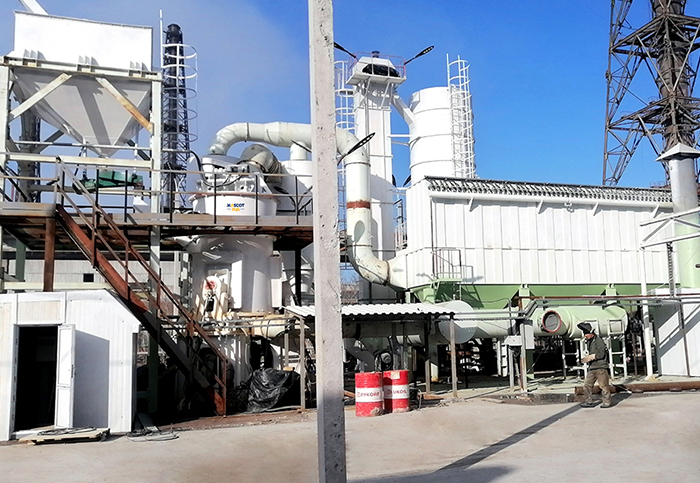
The production line of the vertical roller mill is a cost-effective and energy-efficient solution for processing powder, which is widely used in many industries, such as metallurgy, building materials, industrial solid waste treatment, thermal power plants, cement plants, and environmental protection fields. The primary purpose of this project is to finely grind raw materials through a vertical roller mill to meet the requirements of different industries for particle size, purity, and output of powder products.

The ball mill production line is a comprehensive production line that integrates material crushing, grinding, grading, and collection. This production line is mainly used to process various materials, including sand and gravel, cement, new building materials, silicates, refractory materials, fertilizers, ferrous metal beneficiation, non-ferrous metals, glass ceramics, etc.

The gypsum grinding production line is an efficient, stable, and environmentally friendly production solution, which is widely used in construction, decoration, the chemical industry, and other fields. In addition, the grinding process is particularly critical, which directly affects the quality and particle size of the final product. With the continuous development of science and technology, the technical level and production efficiency of gypsum grinding production lines will be further improved, providing strong support for the development of the gypsum processing industry.

YGMX Enhanced High-Pressure Mill is a new type of high-performance grinding equipment, and the biggest improvement of this milling equipment lies in the increase of the high-pressure spring system in the grinding roller part. Compared with the traditional high-pressure roller mill, it has a wider scope of application and excellent performance to meet the production needs of a variety of powder fineness. It is widely used in non-metallic minerals, chemicals, building materials, metallurgy, environmental protection, etc. Multiple areas.
Green and Intelligent Mining Machinery
Manufacturing and Export Base
Based on high quality and perfect after-sales service, our products have been
exported to more than 120 countries and regions.
Copyright © 2023 Zhengzhou Mascot Environmental Technology Co., Ltd Record number: Yu ICP No. 13021523-4





 WhatsApp