
Output problems are the most common issue raised by grinding mill operators. The MTW Trapezium Grinding Mill is a robust machine, but like all industrial equipment it depends on correct operation, healthy wear parts and a clean auxiliary system. When output drops or fluctuates, the cause is almost always one of five things — and almost all are fixable on site.
This guide follows how Mascot's service engineers diagnose a plant: five verified causes, the fix for each, and a 30-minute diagnostic workflow you can run yourself before calling for support. It applies to all four models, which share the same grinding, classification, lubrication and airflow systems.
| Cause | Typical Symptom | Check First |
|---|---|---|
| 1. Inconsistent feeding | Output fluctuates with operating conditions | GZ2 feeder and PLC feed rate |
| 2. Worn rollers & grinding ring | Output falls gradually over weeks | Wear surface of the trapezoidal zone |
| 3. Airflow or dust collector issue | Sudden drop, dust leakage, high backpressure | Curved air duct, LQM72-7 bags, blower |
| 4. Classifier speed mismatch | Fineness too fine, output low | Classifier frequency, blade wear |
| 5. Lubrication or drivetrain problem | Rising noise or heat, output dip | Oil level, bearing temperature, gear |
None of the five is "the mill is a bad machine." All are operating, wear or auxiliary-system conditions — and all can be corrected.
The most common cause of unstable output is unstable feed. When material arrives in surges, the mill alternates between overload and starvation, and the average throughput sits far below rated capacity — while the operator often blames the machine for a feeding problem.
The fix is uniform, quantitative feeding: the GZ2 vibrating feeder delivers material at a controlled rate coordinated with the PLC system. Set the feed to the design point and keep it there — steady feed is the cheapest output upgrade a plant can make.
Grinding efficiency lives in the trapezoidal contact zone between rollers and ring. As these surfaces wear, the effective grinding area shrinks and output falls gradually — often unnoticed until throughput has dropped 15%-20%. The machine is not failing; its consumables are due.
The fix is scheduled inspection and replacement. The trapezoidal design distributes wear evenly, giving 8-12 months of life on medium-hard materials such as limestone and calcite, and 4-7 months on abrasive materials such as quartz. Inspect the wear surface monthly; replace when deep grooves appear or when output per ampere of motor current falls noticeably.

Grinding mills move powder on air, and anything that interferes with airflow interferes with output. The MTW series uses a curved tangential air duct to prevent the buildup that chokes straight-duct designs — but the air path extends beyond the mill: clogged collector bags raise backpressure and drop output, often suddenly; a leaking seal or weakening blower does the same.
The fix is to check the whole air path: confirm the duct is clear, monitor the LQM72-7 collector's pressure drop, clean or replace bags on schedule, and listen to the blower. A clean baghouse is a fast, cheap way to recover lost capacity.
The frequency-conversion classifier decides what passes as finished powder and what returns for another pass. Set too high for the target fineness, it makes the mill over-recirculate: coarse material cycles endlessly, the grinding zone fills, and output collapses while the powder that comes out is finer than needed.
The fix is to match classifier speed to the target: adjust the frequency on the PLC panel in small steps, run 5-10 minutes and check the powder before adjusting again. Also inspect the classifier blades for wear.
The MTW series lubricates its key bearings with an internal dilute oil system — a built-in pump circulates oil continuously and the change cycle is up to four months. But "long cycle" still means "oil must be maintained": low oil, contamination or a failing pump raises bearing temperature and quietly drags output down.
The fix is simple discipline: check the oil level weekly, watch bearing temperature, and change oil on the four-month schedule rather than when trouble appears. Listen for changes in noise — a smooth hum is healthy, a rumble means wear. The integral bevel gear is long-life, but it deserves the same scheduled attention.

When output looks wrong, measure — do not guess. This workflow follows how Mascot engineers work and takes about thirty minutes:
Map the results against the table in Section 1 — in most cases the cause identifies itself within half an hour.

Sometimes the machine is fine and the material changed. The MTW series is designed for non-metallic minerals with Mohs hardness below 7 and moisture below 6%. If the feed gets harder, wetter (requiring pre-drying), larger than the model's feed limit — up to 45mm on the MTW215 — or contaminated with scrap iron, output falls regardless of maintenance. These are raw material problems needing screening, pre-drying or supplier correction. Plants that record feed conditions when output is healthy can tell a mill problem from a material problem.
The best fix is the one that never has to happen. The MTW series' design intervals stop the five causes before they appear:
Daily: check feed uniformity, oil level and powder discharge. Weekly: bearing temperature, collector pressure, noise. Monthly: roller and ring wear, duct cleaning. Every 4 months: oil change. Every 8-12 months: roller and ring replacement (sooner for abrasive feed).

Q1: How should output actually be measured?
A: Measure tons over a full hour at the normal setting, including stops, using the line scale or counted bags. Keep a daily record — trends matter more than single readings.
Q2: When exactly should rollers and the ring be replaced?
A: When deep grooves appear, or when output per ampere of motor current falls noticeably. Expect 8-12 months on limestone and calcite, 4-7 months on quartz.
Q3: Can output be fully recovered after fixing the cause?
A: In most cases, yes. Once the cause is restored, the mill returns to rated output — the field case of 31 t/h at 250 mesh was maintained for over ten months with exactly this discipline.
Low or unstable output on an MTW Trapezium Grinding Mill is almost never a mystery. Check the five causes in order, run the 30-minute diagnostic workflow, rule out raw material changes, and keep the maintenance schedule. If the cause still escapes you, Mascot's engineers will diagnose with you remotely or on site, and spare parts are available to restore the line quickly.

About of Mascot
Zhengzhou Mascot Industry is a high-tech mining equipment company integrating R&D, manufacturing, sales, and after-sales service. Focusing on crushing, grinding, and mineral processing equipment, we provide professional solutions to our customers. We are ISO9001:2015 certified, and our products include mobile crushing plants, crawler crushing plant, construction waste crushing plants, jaw crushers, sand making machines, cone crushers, fine crushers, grinding mills, ball mills, etc., all with reliable performance to meet diverse project needs.
• Professional pre-sales support: Free project design and comprehensive solutions to help you accurately select the right equipment;
• Comprehensive on-site service: Providing installation guidance and worker training to ensure smooth equipment commissioning;
• Reliable after-sales guarantee: A complete after-sales system, timely response to technical inquiries and equipment maintenance, ensuring long-term stable operation.
To protect your rights, please contact us through the following official channels for professional service:
WhatsApp: 0086-16650273865
Email: mascot@mascotenv.com
We are committed to providing high-quality equipment and full-cycle services to deliver comprehensive intelligent solutions for the global mining industry!
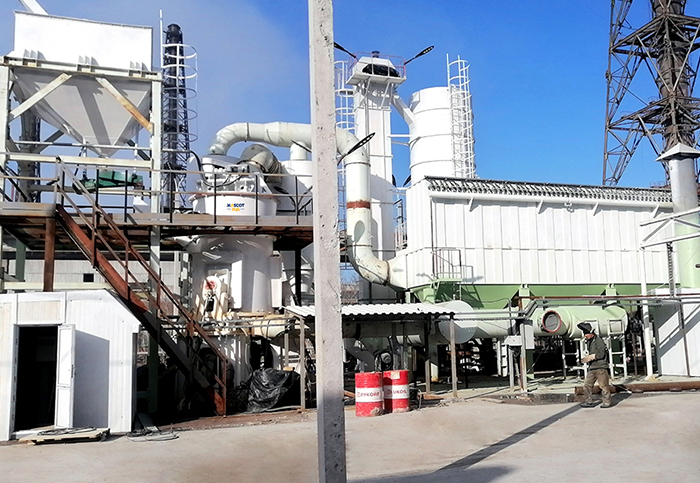
The production line of the vertical roller mill is a cost-effective and energy-efficient solution for processing powder, which is widely used in many industries, such as metallurgy, building materials, industrial solid waste treatment, thermal power plants, cement plants, and environmental protection fields. The primary purpose of this project is to finely grind raw materials through a vertical roller mill to meet the requirements of different industries for particle size, purity, and output of powder products.

The high-pressure grinding mill production line is a project specially designed for efficient grinding operations. It is widely used in metallurgy, building materials, the chemical industry, highways, water conservancy hydropower, and other industries. It is a suspended roller mill that uses springs to increase pressure. It can achieve efficient grinding processing of various non-metallic raw materials. It has high efficiency, stability, and environmental protection characteristics.

This production line utilizes a three-ring medium-speed micro-grinding mill as the central equipment, complemented by other auxiliary equipment like hammer crushers, bucket elevators, and storage silos to establish a comprehensive grinding operation system. It has demonstrated strong potential for application and market competitiveness in industries such as construction, chemical industry, and new materials.

The ball mill production line is a comprehensive production line that integrates material crushing, grinding, grading, and collection. This production line is mainly used to process various materials, including sand and gravel, cement, new building materials, silicates, refractory materials, fertilizers, ferrous metal beneficiation, non-ferrous metals, glass ceramics, etc.

YGMX Enhanced High-Pressure Mill is a new type of high-performance grinding equipment, and the biggest improvement of this milling equipment lies in the increase of the high-pressure spring system in the grinding roller part. Compared with the traditional high-pressure roller mill, it has a wider scope of application and excellent performance to meet the production needs of a variety of powder fineness. It is widely used in non-metallic minerals, chemicals, building materials, metallurgy, environmental protection, etc. Multiple areas.
Green and Intelligent Mining Machinery
Manufacturing and Export Base
Based on high quality and perfect after-sales service, our products have been
exported to more than 120 countries and regions.
Copyright © 2023 Zhengzhou Mascot Environmental Technology Co., Ltd Record number: Yu ICP No. 13021523-4





 WhatsApp