5 Reasons Why YGM High Pressure Grinding Mill Outperforms Traditional Raymond Mills
The Raymond Mill is one of the most widely deployed grinding platforms in the global non-metallic minerals industry — and for good reason. Its century-old design lineage has proven reliable across thousands of installations. But reliability alone does not equal competitiveness. In markets where throughput, fineness consistency, energy cost, and maintenance downtime directly determine profitability, the evolutionary gap between a traditional Raymond Mill and the YGM High-Pressure Grinding Mill is not marginal — it is structural. YGM is not a Raymond clone with updated branding. It is a ground-up re-engineering of the suspension roller mill concept, built around a constant-pressure spring mechanism that fundamentally changes how grinding force is generated, sustained, and controlled throughout the wear-part lifecycle.
What follows are the five engineering reasons — not opinions, not marketing claims, but verifiable differences in design principle — that explain why YGM delivers higher output, finer and more consistent powder, longer wear-part life, and lower total cost of ownership than a traditional Raymond Mill of equivalent motor power.

Reason 1: Constant-Pressure Grinding Mechanism vs. Decaying Centrifugal Force
This is the single most consequential difference between the two platforms.
A traditional Raymond Mill generates grinding force through centrifugal action: as the main shaft rotates, the grinding rollers are thrown outward against the ring by centrifugal force. The magnitude of this force depends on roller mass and rotational speed. As rollers wear and lose mass over months of operation, the centrifugal force decreases, and grinding intensity declines with it. The result is a predictable, unavoidable throughput decay curve — output drops 10–15% between wear-part changes, and operators must continually adjust feed rate and classifier settings to compensate.
The YGM High-Pressure Grinding Mill replaces centrifugal force with a high-pressure spring system that delivers 1,000–1,500 kg of constant mechanical force per roller, applied directly to the grinding ring through a linkage assembly. The spring tension is independent of roller mass and rotational speed. As rollers wear and lose diameter, the spring assembly extends to maintain the same force at the contact point. Output remains flat across the wear cycle. No decay curve. No chasing a moving target. The quarterly spring tension calibration against manufacturer specifications is the only maintenance action required to sustain grinding performance over the roller's entire service life.
The measurable difference: In a documented limestone-grinding comparison, a YGM130 maintained throughput within ±3% between wear-part changes, while the Raymond Mill it replaced exhibited a 13% throughput decline over the same period. For a 5 t/h line operating 6,000 hours per year, that 10-percentage-point difference represents approximately 3,000 tons of additional annual output — output that the Raymond Mill simply loses as rollers wear.

Reason 2: 20–30% Higher Throughput at Equivalent Motor Power
Motor power is a capital cost. Throughput per installed kilowatt is the return on that capital. At matched motor ratings, YGM consistently delivers 20–30% more finished product per hour than a traditional Raymond Mill processing the same material at the same target fineness.
Three design factors produce this efficiency advantage:
1. Constant pressure transfers more motor energy into particle fracture. In a centrifugal mill, a portion of motor energy is consumed by accelerating the roller mass outward — energy that contributes nothing to grinding. YGM's spring-loaded mechanism decouples grinding force from rotational dynamics, directing a higher fraction of input energy into the material bed where it belongs.
2. The sealed negative-pressure airflow circuit evacuates finished powder faster. In an open-circuit Raymond Mill, wind-blown losses and inconsistent draft reduce the efficiency of material transport from the grinding zone to the classifier. YGM's enclosed circuit with a high-pressure blower maintains consistent airflow, moving qualified powder to collection with minimal recirculation of already-acceptable particles.
3. The frequency-conversion classifier prevents over-classification. Traditional Raymond Mills often use fixed-speed mechanical classifiers that reject a wider band of particles than necessary, returning them for unnecessary re-grinding. YGM's variable-frequency classifier can be tuned to the exact cut-point required, minimizing the recirculation load and maximizing the fraction of ground material that exits as saleable product on the first pass.
The measurable difference: A 132 kW YGM160 processes 8.0–22.0 t/h across the 80–425 mesh range. A traditional Raymond Mill of equivalent power (typically designated 5R or 6R) processes approximately 6.0–17.0 t/h in the same range. The throughput gap widens at finer specifications, where YGM's classification precision has the greatest impact.

Reason 3: 425-Mesh Capability With 99%+ Pass Rate vs. 325-Mesh Practical Limit
Fineness capability is not just a specification — it is a market-access barrier. A mill that cannot reach 400 mesh cannot serve the paper-coating, high-end paint, and premium plastic-filler markets that command the highest per-ton margins.
Traditional Raymond Mills are practically limited to 80–325 mesh. The centrifugal mechanism loses grinding efficiency at finer particle sizes because the force required to fracture progressively smaller particles increases while centrifugal force remains fixed or, as rollers wear, decreases. The mechanical classifiers on older Raymond designs also lack the precision to make a clean 325-mesh cut, resulting in pass rates of 85–92% — meaning 8–15% of product requires re-grinding or is sold at discount as off-spec material.
YGM's constant-pressure grinding and variable-frequency classification together extend the practical fineness ceiling to 80–425 mesh with a pass rate exceeding 99%. Three technical factors enable this:
1. Sustained grinding force at fine particle sizes, because spring pressure does not decay with roller diameter or rotational dynamics.
2. Precision variable-frequency classification that makes a sharp particle-size cut, rejecting only genuinely oversized material rather than a broad band of marginal particles.
3. PLC-controlled classifier speed profiles that store and recall RPM settings for each product grade, eliminating the trial-and-error that mechanical classifiers require for every grade change.
The measurable difference: A YGM130 at 325 mesh delivers 99.2% pass rate. A traditional Raymond Mill at the same nominal specification typically delivers 88–92% pass rate. For a 5 t/h line, the YGM produces approximately 4.96 t/h of on-spec powder; the Raymond produces 4.40–4.60 t/h. The 0.36–0.56 t/h gap is not a theoretical efficiency figure — it is powder that the Raymond Mill either rejects for re-grinding (doubling energy cost) or sells at a lower grade (reducing revenue).

Reason 4: 2–3× Longer Wear-Part Life With Reduced Uneven Wear
Wear-part replacement is the largest maintenance line item in any grinding operation. The difference between 8-month and 14-month replacement intervals is not marginal — it is the difference between one scheduled shutdown per year and two, between predictable budgeting and emergency procurement.
Two independent factors extend YGM wear-part life beyond traditional Raymond Mill performance:
1. High-chromium alloy metallurgy. YGM grinding rollers and rings use a high-chromium alloy formulation with 2–3× the service life of the standard manganese or alloy steel used in most traditional Raymond Mills. For abrasive materials like silica, feldspar, or barite, this difference compounds: every day of extended service life is a day the mill is producing instead of undergoing maintenance.
2. Constant pressure eliminates uneven wear. In a centrifugal Raymond Mill, the grinding force is not evenly distributed across the roller face — the outer edge experiences higher force than the inner edge, creating an uneven wear pattern that reduces roller life and degrades grinding performance well before the roller is fully consumed. YGM's spring-loaded linkage applies force uniformly across the roller face, producing even wear that extracts maximum service from the full roller mass. Even wear also means that grinding geometry remains consistent until replacement — the roller-to-ring gap stays uniform, and particle size distribution does not drift as the roller profile changes.
The measurable difference: In a granulated blast furnace slag application (Mohs 5–6, highly abrasive), YGM130 high-chromium rollers lasted 14 months before replacement. The traditional Raymond Mill previously on the same site required roller replacement every 5–6 months processing the same material. The annual cost of wear parts dropped by approximately 55% after the conversion, even accounting for the higher unit price of high-chromium rollers.

Reason 5: 28% Lower Energy Consumption Per Ton of Finished Product
Energy is not a fixed overhead — it is the largest single operating cost in a grinding plant, typically representing 40–60% of total OpEx. A 28% reduction in kWh per ton is not an incremental improvement; it is a structural cost advantage that compounds over every hour of operation for the mill's entire service life.
The energy advantage of YGM over traditional Raymond Mills arises from the same design factors that drive throughput and fineness:
1. Higher throughput at the same motor power means each kilowatt-hour produces more finished product — the simplest and most direct efficiency gain.
2. 99%+ pass rate eliminates re-grinding energy. Every ton of material that must pass through the mill a second time doubles its energy cost. YGM's precision classification minimizes the recirculation load, ensuring that motor energy goes into producing saleable powder, not re-processing already-ground material.
3. Constant pressure maintains grinding efficiency throughout the wear cycle. As a Raymond Mill's roller mass decreases, a growing fraction of input energy is wasted on sub-optimal grinding force. YGM's spring system maintains design-level grinding efficiency from the first day after roller replacement to the last, with no parasitic energy loss from wear-related force decay.
4. Sealed negative-pressure circuit reduces auxiliary power demand. Open-circuit Raymond Mills often require additional dust collection fans and air-handling equipment to manage wind-blown losses and fugitive emissions. YGM's integrated sealed circuit consolidates material transport, classification, and dust collection into a single airflow system with a single blower, reducing total auxiliary power consumption.
The measurable difference: In a documented Central Asia limestone operation grinding to 200 mesh, a YGM130 consumed 28% less energy per ton than the Raymond Mill it replaced. For a line operating 6,000 hours per year at 8 t/h and an electricity cost of USD 0.08/kWh, a 28% reduction translates to approximately USD 10,750 per year in direct energy savings — and this figure is conservative, assuming identical motor power. In practice, YGM's higher throughput at matched power further improves the kWh/ton ratio.

The Five Advantages in Summary
| Advantage | Traditional Raymond Mill | YGM High-Pressure Grinding Mill | Impact on Operations |
|---|---|---|---|
| Grinding Force | Centrifugal; decays with roller wear | Constant-pressure spring system; 1,000–1,500 kg per roller, independent of wear | Flat throughput across wear cycle; no decay compensation required |
| Throughput at Matched Power | Baseline | 20–30% higher | More saleable product per installed kilowatt; faster payback on capital |
| Fineness Ceiling | 325 mesh; 85–92% pass rate | 425 mesh; ≥99% pass rate | Access to higher-margin coating and filler markets |
| Wear-Part Life | Standard alloy; 5–8 months under abrasive conditions | High-chromium alloy; 12–14 months under abrasive conditions | Fewer maintenance shutdowns; 55% lower annual wear-part cost |
| Energy per Ton | Baseline | 28% lower in documented comparisons | Structural OpEx advantage compounding over equipment lifetime |
Core Parameters of YGM High-Pressure Grinding Mill
| Model | YGM65 | YGM95 | YGM130 | YGM160 |
|---|---|---|---|---|
| Grinding Rollers | 3 pcs | 4 pcs | 5 pcs | 6 pcs |
| Max Feed Size | <15 mm | <25 mm | <30 mm | <35 mm |
| Capacity | 0.3-2.0 t/h | 1.1-5.6 t/h | 2.2-9.5 t/h | 8.0-22.0 t/h |
| Main Motor Power | 18.5 kw | 37 kw | 75 kw | 132 kw |
| Finished Fineness | 80-425 mesh | 80-425 mesh | 80-425 mesh | 80-425 mesh |
| Comparable Raymond Model | 3R series | 4R series | 5R series | 6R series |
When a Traditional Raymond Mill Still Makes Sense
No engineering comparison is complete without identifying the scenarios where the platform being compared against remains a viable, or even preferable, choice. A traditional Raymond Mill may be the more practical option when:
1. Capital budget is the overriding constraint — Raymond Mills carry a lower upfront purchase price. If the operation cannot finance the YGM premium, a Raymond Mill at least gets production started. The trade-off is higher ongoing OpEx that erodes margins over time.
2. The application is single-grade, coarse-only (80–200 mesh), and low-volume — If the operation will never need 325-mesh or finer output, never switch between grades, and processes under 3 t/h, a Raymond Mill's throughput and fineness ceilings are not binding constraints.
3. Energy costs are exceptionally low in the operating region — At electricity prices below approximately USD 0.03/kWh, the payback period on YGM's energy efficiency advantage extends beyond 24 months, which may exceed the operator's investment horizon.
4. Existing Raymond Mill infrastructure and spare parts inventory are extensive — For plants with multiple Raymond Mills already on site, standardizing on one platform simplifies maintenance training, spare parts procurement, and operator rotation. The conversion cost includes not just the mill but the operational disruption of retraining.

Field Validation: Raymond-to-YGM Conversion in Central Asia
Project Location: Central Asia
Processing Material: Limestone (Mohs 3)
Target Product: 200-mesh construction-grade filler and 325-mesh paper-coating-grade powder
Previous Equipment: 5R Raymond Mill (75 kW main motor)
Original Problems: Throughput declined 13% between roller changes every 7 months; 325-mesh pass rate averaged 89%; kWh/ton was 20% above budget; dust emissions at 85 mg/m³ exceeded tightening local regulations
The operator replaced the 5R Raymond Mill with a Mascot YGM130 High-Pressure Grinding Mill (same 75 kW motor class), integrated into a new processing line with belt scale feeder, cyclone collector, and pulse-jet baghouse. Mascot engineers completed commissioning and operator training within 18 days.
Key performance metrics after twelve months of comparative operation:
- Throughput at 200 mesh: YGM130 8.5 t/h vs. Raymond 5R 7.1 t/h (+20%)
- Throughput at 325 mesh: YGM130 5.1 t/h vs. Raymond 5R 3.8 t/h (+34%)
- 325-mesh pass rate: YGM130 99.2% vs. Raymond 5R 89%
- Energy consumption: YGM130 8.8 kWh/ton vs. Raymond 5R 12.2 kWh/ton (-28%)
- Wear-part replacement interval: YGM130 13 months vs. Raymond 5R 7 months
- Dust emission: YGM130 18 mg/m³ vs. Raymond 5R 85 mg/m³
- Annual maintenance cost (wear parts + labor): 48% lower for YGM130
The plant manager summarized: "The throughput difference at 325 mesh alone — 5.1 vs. 3.8 t/h — meant we could fulfill paper-coating contracts that the Raymond Mill could not meet on schedule. The YGM130 premium was recovered through additional revenue from those contracts within 11 months, before we even counted the energy savings."

Total Cost of Ownership: YGM vs. Raymond Over 5 Years
| Cost Category | Traditional Raymond (5R, 75 kW) | YGM130 (75 kW) | 5-Year Delta |
|---|---|---|---|
| Equipment Purchase | ~USD 38,000 | ~USD 50,000 | +USD 12,000 |
| Energy (6,000 h/yr, USD 0.08/kWh) | ~USD 43,920/yr | ~USD 31,680/yr | -USD 61,200 |
| Wear Parts (rollers, rings, blades) | ~USD 8,500/yr | ~USD 4,200/yr | -USD 21,500 |
| Maintenance Labor & Downtime | ~USD 6,000/yr | ~USD 3,500/yr | -USD 12,500 |
| Lost Output (throughput gap at 325 mesh) | N/A (baseline) | +1.3 t/h incremental revenue | Revenue gain from higher throughput |
| 5-Year Total Cost (excl. revenue) | ~USD 330,100 | ~USD 246,900 | -USD 83,200 |
The YGM130's USD 12,000 purchase premium is recovered through energy savings alone within approximately 11 months at the specified electricity rate. Over five years, the total cost advantage of USD 83,200 does not include the additional revenue from higher throughput and access to higher-margin 325-mesh markets — factors that typically shorten the effective payback period to under 8 months.
Frequently Asked Questions (FAQs)
Q1: If YGM is clearly superior, why are Raymond Mills still sold and used?
A: Three reasons: (1) lower upfront purchase price suits operations where capital budget is the binding constraint; (2) extensive installed base creates inertia — plants with existing Raymond infrastructure, spare parts inventory, and trained operators face a transition cost beyond the mill purchase price; and (3) for low-volume, coarse-only applications (80–200 mesh, under 3 t/h), the performance gap is relevant but not operationally decisive. Raymond Mills remain a viable entry point; YGM becomes the economically rational choice when throughput, fineness, energy cost, or maintenance frequency are material to profitability.
Q2: Is the YGM constant-pressure spring system more complex to maintain than a centrifugal Raymond mechanism?
A: The spring system adds a maintenance task — quarterly tension calibration against manufacturer specifications — that does not exist on a centrifugal Raymond Mill. However, this task takes approximately 30 minutes and the benefit is sustained grinding performance that eliminates the throughput decay curve. In practice, operators spend less total maintenance time on YGM because the constant pressure reduces uneven wear, extends replacement intervals, and eliminates the continuous feed-rate and classifier adjustments that Raymond Mills require as rollers degrade.
Q3: Can a Raymond Mill be upgraded to YGM performance levels?
A: No. The constant-pressure spring mechanism is integral to the YGM frame and linkage design; it cannot be retrofitted to a centrifugal Raymond Mill chassis. Aftermarket upgrades such as high-chromium rollers or improved classifiers can narrow the gap on specific metrics, but they cannot replicate the fundamental advantage of constant grinding pressure. The performance differences described in this article are design-level, not component-level.
Q4: What is the practical difference between 99% and 89% pass rate in daily operation?
A: On a 5 t/h line, an 89% pass rate means 0.55 t/h of material fails specification and must either be re-ground (doubling its energy cost and consuming mill capacity that could process new feed) or sold at a lower grade (reducing revenue per ton). Over 6,000 operating hours, a 99% pass rate recovers approximately 3,000 tons of additional on-spec product that the 89% mill loses to re-grinding or downgrading. For a processor selling 325-mesh powder at a USD 20/ton premium over 200-mesh filler, this quality gap alone can represent USD 60,000 per year in avoidable revenue loss.
Q5: How should an operator evaluate whether to buy Raymond or YGM for a new installation?
A: Calculate the five-year total cost of ownership including purchase price, energy (at local rates), wear parts (using manufacturer-recommended replacement intervals for the specific material), maintenance labor, and the revenue value of throughput and fineness differences. If the five-year TCO favors YGM by more than 20% — which it does in most mid-scale and above operations at electricity prices above USD 0.05/kWh — the Raymond Mill's lower purchase price is a false economy. If capital budget is strictly capped and financing options are unavailable, a Raymond Mill starts production; the trade-off is higher OpEx that erodes margins over time.
Mascot Heavy Industry is a high-tech enterprise integrating R&D, manufacturing, sales and service of mining and grinding equipment. We provide customized YGM High-Pressure Grinding Mill solutions, including project design, equipment manufacturing, installation guidance and after-sales support. Welcome global customers to contact us for cooperation.

About of Mascot
Zhengzhou Mascot Industry is a high-tech mining equipment company integrating R&D, manufacturing, sales, and after-sales service. Focusing on crushing, grinding, and mineral processing equipment, we provide professional solutions to our customers. We are ISO9001:2015.ertified, and our products include mobile crushing plants, crawler crushing plant, construction waste crushing plants, jaw crushers, sand making machines, cone crushers, fine crushers, grinding mills, ball mills, etc., all with reliable performance to meet diverse project needs.
• Professional pre-sales support: Free project design and comprehensive solutions to help you accurately select the right equipment;
• Comprehensive on-site service: Providing installation guidance and worker training to ensure smooth equipment commissioning;
• Reliable after-sales guarantee: A complete after-sales system, timely response to technical inquiries and equipment maintenance, ensuring long-term stable operation.
To protect your rights, please contact us through the following official channels for professional service:
WhatsApp: 16650273865
Email: mascot@mascotenv.com
We are committed to providing high-quality equipment and full-cycle services to deliver comprehensive intelligent solutions for the global mining industry!

The Raymond mill production line is a highly efficient system designed for grinding operations, with a focus on energy efficiency, durability, and productivity. It caters to the needs of users by offering fine powder products in non-metallic ores, coal powder, and slag processing, aiding enterprises in achieving sustainable growth.

The high-pressure grinding mill production line is a project specially designed for efficient grinding operations. It is widely used in metallurgy, building materials, the chemical industry, highways, water conservancy hydropower, and other industries. It is a suspended roller mill that uses springs to increase pressure. It can achieve efficient grinding processing of various non-metallic raw materials. It has high efficiency, stability, and environmental protection characteristics.

The MTW series European grinding mill production line includes high-efficiency crushers, elevators, electromagnetic vibration feeders, milling machines, classifiers, and collectors. These pieces of equipment work together to achieve efficient crushing, grinding, and classification of various non-metallic ores, coal powder, slag, and other materials. It can meet the diverse needs of various industries for powder particle size, uniformity, shape, etc., and offer enterprises high-quality grinding products.
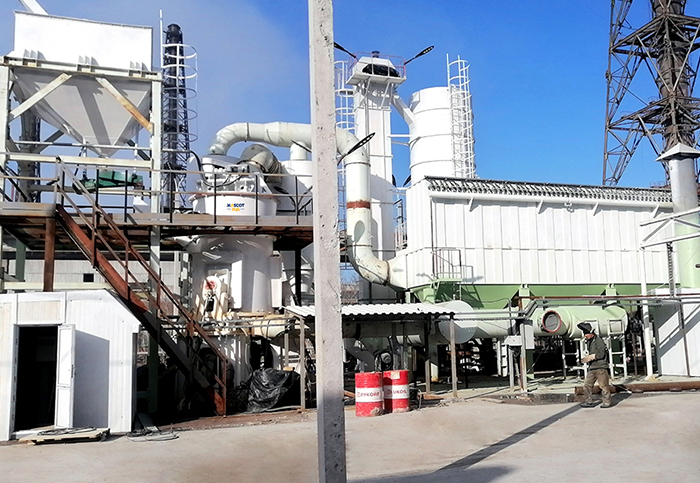
The production line of the vertical roller mill is a cost-effective and energy-efficient solution for processing powder, which is widely used in many industries, such as metallurgy, building materials, industrial solid waste treatment, thermal power plants, cement plants, and environmental protection fields. The primary purpose of this project is to finely grind raw materials through a vertical roller mill to meet the requirements of different industries for particle size, purity, and output of powder products.

YGMX Enhanced High-Pressure Mill is a new type of high-performance grinding equipment, and the biggest improvement of this milling equipment lies in the increase of the high-pressure spring system in the grinding roller part. Compared with the traditional high-pressure roller mill, it has a wider scope of application and excellent performance to meet the production needs of a variety of powder fineness. It is widely used in non-metallic minerals, chemicals, building materials, metallurgy, environmental protection, etc. Multiple areas.
Green and Intelligent Mining Machinery
Manufacturing and Export Base
Based on high quality and perfect after-sales service, our products have been
exported to more than 120 countries and regions.
Copyright © 2023 Zhengzhou Mascot Environmental Technology Co., Ltd Record number: Yu ICP No. 13021523-4





 WhatsApp