 27
27
 25
25
 27
27

| Key Words | Mining Wet Ball Mill |
|---|---|
| Product Name | Wet Ball Mill |
| Feed Size | ≤25mm |
| Motor Power | 18.5-800 kW |
| Capacity | 0.65-90 t/h |
| Core Functions | Wet grinding, dispersion of solids in liquid, mineral beneficiation preparation |
| Applicable Materials | Gold ore, copper ore, iron ore, limestone, quartz, and other metallic & non-metallic minerals |
| Brand | Zhengzhou Mascot Industry |
| Certification | ISO 9001:2015 |
| Packing | Standard containers, Nude Packing, Wooden boxes, etc. |
| Installation | Engineer-guided installation and commissioning |
| Factory Visit | Warmly Welcomed |
| Export Countries | Southeast Asia, Central Asia, South America, North America, Africa, Middle East |
| Payment Terms | T/T, L/C, PayPal, etc. |
| Note: The above table data is for reference only. For project-specific parameters, please contact our engineering team. | |
1. Overview of Wet Ball Mill: Working Principle and Applications
A wet ball mill is a key grinding equipment that crushes and grinds materials in a liquid medium —typically water or chemical solution —through grinding media such as steel balls or ceramic balls. It is widely deployed in mining beneficiation, ceramic raw material preparation, chemical material processing, and other fields. In the mining industry, it is an indispensable component of ore processing lines, positioned between crushing and beneficiation stages.
The core working principle of the wet ball mill: the motor drives the cylinder to rotate through the reducer. Grinding media inside the cylinder are lifted to a certain height by centrifugal force and friction, then cascade or slide down, generating strong impact, extrusion, and friction on the material-slurry mixture. This mechanical action achieves ultra-fine grinding of the feed material. Unlike dry ball mills, wet ball mills use liquid as the grinding carrier to form flowing slurry, which improves grinding efficiency and effectively controls dust pollution.
As a professional mining equipment manufacturer, Mascot's wet ball mill adopts an advanced structural design: the cylinder is lined with wear-resistant materials (manganese steel and rubber lining) to protect the cylinder and enhance grinding performance, while a hollow shaft design ensures smooth feeding and discharging of slurry. It processes a wide range of ores —including gold ore, copper ore, iron ore, and limestone —covering both metallic and non-metallic minerals. The equipment can be customized to meet the specific grinding requirements of mining projects at any scale.

2. Core Advantages of Mascot Wet Ball Mill
Compared with traditional wet ball mills and dry ball mills, the Mascot wet ball mill delivers measurable advantages in efficiency, energy saving, environmental protection, and operational stability. These advantages translate directly into improved economic returns for mining enterprises.
2.1 High Grinding Efficiency and Uniform Particle Size
Mascot's wet ball mill optimizes the angle of the lifting plate inside the cylinder, creating a more rational movement trajectory for the grinding media. This improvement raises the impact energy conversion rate by approximately 18% compared to conventional wet ball mills. The liquid medium continuously removes fine particles from the grinding zone, preventing over-grinding and ensuring uniform finished product particle size. Fineness fluctuation is controlled within ±1.5%.
Under identical mill dimensions and power input, the Mascot wet ball mill achieves 15-30% higher production efficiency than dry ball mills, with significantly reduced unit energy consumption. This performance gap widens for materials with high moisture content, where dry mills lose additional efficiency to material agglomeration.
2.2 Energy Saving and Environmental Compliance
The Mascot wet ball mill is equipped with high-efficiency energy-saving motors that reduce matched motor power by 18-25% compared to traditional wet ball mills. Auxiliary system savings are equally significant: lubricating oil consumption drops by approximately 70% and cooling water usage by approximately 90%, yielding a comprehensive energy saving exceeding 20%. The wet grinding process inherently eliminates dust generation, protecting both the working environment and operator health —a critical advantage as the mining industry faces increasingly stringent environmental regulations worldwide.
2.3 Stable Operation and Low Maintenance Cost
Mascot wet ball mills employ special rolling bearings as the cylinder support structure, resolving the long-standing challenges of service life, centering, sealing, and cylinder displacement in heavy-duty rolling bearing applications. Under normal operating conditions, the main bearing requires no replacement for 10 years, eliminating a major maintenance cost and downtime source. Key components —including the cylinder and large gear —are manufactured from high-quality cast steel with strong wear and corrosion resistance, ensuring stable 24/7 continuous operation. The annual failure rate is maintained below 2.7%, based on field data from over 300 installed units globally.
2.4 Strong Adaptability and Customizable Design
The Mascot wet ball mill accommodates a broad material spectrum, from high-hardness ores (e.g., copper ore at f=12-14 on the Protodyakonov scale) to softer minerals, achieving efficient grinding across the range. Based on project-specific requirements —feed size, target fineness, daily processing capacity, and site constraints —Mascot provides fully customized design solutions that integrate seamlessly with the broader production line, maximizing equipment utilization and return on investment.

3. Application Case Study: South American Copper Mine
To demonstrate the operational impact of the Mascot wet ball mill, the following case study documents a deployment at a large copper mine in South America. The project illustrates the equipment's advantages in high-efficiency grinding, energy conservation, and stable long-term operation.
Project Background: A large copper mine in South America with an annual ore processing capacity of 200,000 tons. Original ore hardness measured f=12-14 (Protodyakonov scale), and the target grinding fineness was -200 mesh at 90% passing. The mine's existing wet ball mill exhibited low grinding efficiency, unstable particle size distribution, high energy consumption, and frequent mechanical failures —issues that collectively constrained production output and increased operating costs.
Mascot Solution: Following on-site investigation and detailed demand analysis, Mascot provided a customized Φ3200×4500 wet ball mill with the following integrated system components:
Results:
This case has been recognized by the mine's parent company as a benchmark installation. The demonstrated performance metrics —particularly the 96% fineness qualification rate and 40% maintenance cost reduction —have informed equipment selection standards for the company's other processing sites across the region.
4. Complete Mining Processing Line: Related Equipment
The wet ball mill operates as part of an integrated crushing-grinding-classification circuit. Mascot supplies the full equipment chain to form a complete mining processing solution, optimizing overall line efficiency and simplifying procurement. The following equipment is recommended for integration with the wet ball mill:
4.1 Jaw Crusher — Primary Crushing
Mascot jaw crushers serve as primary crushing equipment, reducing large run-of-mine ore (feed size up to 1200mm) to particles (discharge size 10-300mm) suitable for wet ball mill feeding. Key advantages include a high crushing ratio, stable operation, and straightforward maintenance. It is the standard choice for primary crushing in mining projects worldwide.
4.2 Cone Crusher — Secondary/Tertiary Crushing
Mascot cone crushers perform secondary or tertiary crushing, further reducing jaw crusher output into finer particles (discharge size 5-50mm). This intermediate size reduction improves wet ball mill grinding efficiency while reducing grinding media wear. The cone crusher is optimized for hard and medium-hard ores, delivering high crushing efficiency and uniform product particle size.
4.3 Hydraulic Cyclone — Classification and Closed-Circuit Control
Mascot hydraulic cyclones pair with the wet ball mill to form a closed-circuit grinding-classification system. The cyclone classifies mill discharge slurry: coarse particles are returned to the mill for regrinding, while fine particles meeting the target specification proceed to downstream beneficiation (flotation, magnetic separation, or leaching). This closed-circuit configuration substantially improves grinding efficiency and product quality while reducing system-wide energy consumption.

5. Frequently Asked Questions About Wet Ball Mill
Q1: What factors affect the grinding efficiency of a wet ball mill?
Three primary factors influence grinding efficiency. First, slurry concentration: Optimal range is 60-75% solids. Excessively high concentration reduces grinding efficiency and increases energy consumption; excessively low concentration decreases the probability of grinding media impacting material particles. Second, grinding media filling rate and size ratio: The optimal filling rate is 40-45% of mill volume. The ratio of large, medium, and small grinding media must be calculated based on feed size distribution and target fineness using established methodologies such as the Bond formula. Third, mill rotational speed: Speed must be matched to grinding media characteristics and material properties to ensure the media cascade rather than centrifuge, generating optimal impact and attrition.
Q2: How should a wet ball mill be cleaned to extend its service life?
Regular cleaning is essential for equipment longevity. The recommended procedure: (1) Cut off power supply and allow the equipment to cool to a safe temperature. (2) Empty remaining material through the discharge valve; manually remove residual material if necessary. (3) Remove grinding media and clean the cylinder inner wall and lining plate using a brush and water hose; use a vacuum system to remove residual powder and debris. (4) Dry the cylinder inner wall and grinding media thoroughly, reinstall the grinding media, and verify normal equipment function. Cleaning frequency depends on usage intensity; every 15-30 days is recommended for continuous production operations.
Q3: What is the difference between a wet ball mill and a dry ball mill, and how do I choose?
The core difference lies in the grinding medium: wet ball mills use liquid (water or chemical solution) as the carrier, while dry ball mills rely on air flow. This difference produces several operational distinctions:
Mascot's technical team provides professional selection analysis based on your specific project conditions, including material testing, process simulation, and customized equipment configuration.
6. Wet Ball Mill Technical Specifications
| Parameter | Specification |
|---|---|
| Feed Size | ≤25 mm |
| Motor Power Range | 18.5-800 kW |
| Capacity Range | 0.65-90 t/h |
| Grinding Type | Wet grinding |
| Grinding Media | Steel balls or ceramic balls (application-dependent) |
| Cylinder Lining | Manganese steel or rubber lining (customizable) |
| Slurry Concentration | 60-75% (recommended operating range) |
| Bearing Type | Special heavy-duty rolling bearing (10-year service life) |
| Control System | PLC-based with slurry concentration automatic regulation (optional) |
| Certification | ISO 9001:2015 |
Table: Wet ball mill technical specifications. Custom configurations available based on project requirements.

About of Mascot
Zhengzhou Mascot Industry is a high-tech mining equipment company integrating R&D, manufacturing, sales, and after-sales service. Focusing on crushing, grinding, and mineral processing equipment, we provide professional solutions to our customers. We are ISO9001:2015、certified, and our products include mobile crushing palnts, crawler crushing plant,construction waste crushing plants, jaw crushers, sand making machines, cone crushers, fine crushers,grinding mills, ball mills, etc., all with reliable performance to meet diverse project needs.
• Professional pre-sales support: Free project design and comprehensive solutions to help you accurately select the right equipment;
• Comprehensive on-site service: Providing installation guidance and worker training to ensure smooth equipment commissioning;
• Reliable after-sales guarantee: A complete after-sales system, timely response to technical inquiries and equipment maintenance, ensuring long-term stable operation.
To protect your rights, please contact us through the following official channels for professional service:
WhatsApp: 0086-16650273865
Email: mascot@mascotenv.com
We are committed to providing high-quality equipment and full-cycle services to deliver comprehensive intelligent solutions for the global mining industry!

The MTW series European grinding mill production line includes high-efficiency crushers, elevators, electromagnetic vibration feeders, milling machines, classifiers, and collectors. These pieces of equipment work together to achieve efficient crushing, grinding, and classification of various non-metallic ores, coal powder, slag, and other materials. It can meet the diverse needs of various industries for powder particle size, uniformity, shape, etc., and offer enterprises high-quality grinding products.

This production line utilizes a three-ring medium-speed micro-grinding mill as the central equipment, complemented by other auxiliary equipment like hammer crushers, bucket elevators, and storage silos to establish a comprehensive grinding operation system. It has demonstrated strong potential for application and market competitiveness in industries such as construction, chemical industry, and new materials.

The Raymond mill production line is a highly efficient system designed for grinding operations, with a focus on energy efficiency, durability, and productivity. It caters to the needs of users by offering fine powder products in non-metallic ores, coal powder, and slag processing, aiding enterprises in achieving sustainable growth.

YGMX Enhanced High-Pressure Mill is a new type of high-performance grinding equipment, and the biggest improvement of this milling equipment lies in the increase of the high-pressure spring system in the grinding roller part. Compared with the traditional high-pressure roller mill, it has a wider scope of application and excellent performance to meet the production needs of a variety of powder fineness. It is widely used in non-metallic minerals, chemicals, building materials, metallurgy, environmental protection, etc. Multiple areas.
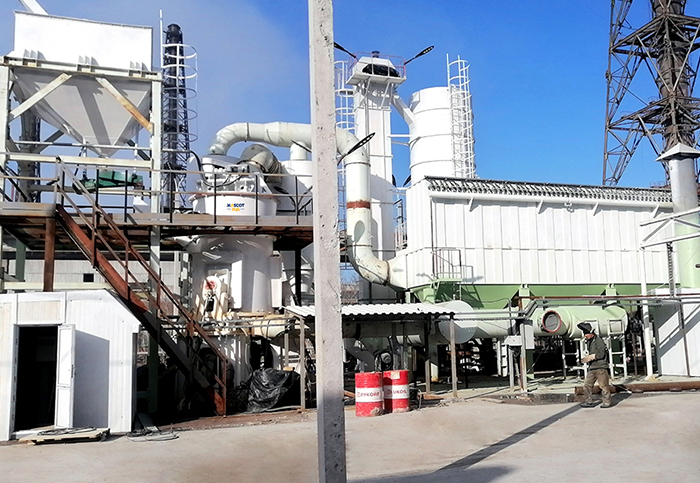
The production line of the vertical roller mill is a cost-effective and energy-efficient solution for processing powder, which is widely used in many industries, such as metallurgy, building materials, industrial solid waste treatment, thermal power plants, cement plants, and environmental protection fields. The primary purpose of this project is to finely grind raw materials through a vertical roller mill to meet the requirements of different industries for particle size, purity, and output of powder products.
Green and Intelligent Mining Machinery
Manufacturing and Export Base
Based on high quality and perfect after-sales service, our products have been
exported to more than 120 countries and regions.
Copyright © 2023 Zhengzhou Mascot Environmental Technology Co., Ltd Record number: Yu ICP No. 13021523-4





 WhatsApp