 27
27
 25
25
 27
27
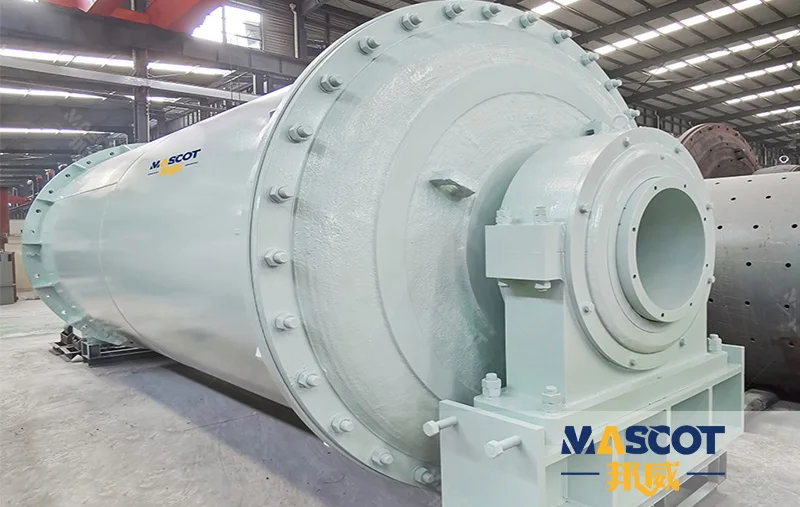
In glaze and feldspar preparation the enemy is not hardness, it is iron. A glaze batch that picks up a few parts per million of iron from a steel mill will show it after firing as specking and colour shift on the finished tile or sanitary ware — a defect no amount of downstream screening can remove. This guide covers how the liner is chosen, how the rest of the material-contact zone is built, how batch parameters are set, and what a batch actually delivers in practice.
A Ceramic Ball Mill exists for one purpose: high-purity grinding and mixing of materials where iron contamination has to be strictly avoided. Instead of a steel shell wearing against steel media, the ceramic series uses high-alumina or ceramic linings and grinding media, which makes it the preferred choice for premium ceramic glaze, electronic materials, silica and high-end chemical processing.
Feldspar and glaze fit that description precisely. Both are consumed by industries that judge the product on colour and purity: ceramics, paints, chemicals, electronics, minerals and laboratory R&D. The materials involved — high-purity silica, pigments, colour-critical and corrosive feeds — are exactly the ones for which a conventional steel mill is a liability rather than an asset, however cheaply it grinds.

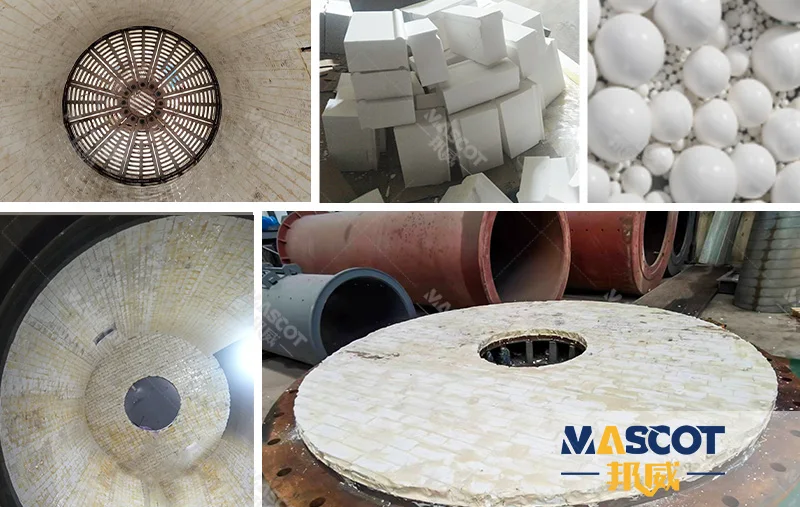
The standard lining is 92% high-alumina (Al&sub2;O&sub3;), with 95% ultra-high-alumina offered for the most demanding applications. For most glaze and feldspar duties the 92% grade is the working specification; the 95% grade is specified where wear conditions or purity requirements are at their most severe. Where a process has a specific chemical-compatibility requirement that ceramics do not meet, silica lining is the alternative, and the recommendation should follow the material's Mohs hardness rather than a price preference.
Alumina in industrial service is not the same material as household pottery. The liners have a compressive strength exceeding 850 MPa and are precision-cut to interlock inside a steel shell that absorbs impact — the ceramic does the contact work, the steel does the structural work. That composite construction is what makes a ceramic mill a production machine rather than a laboratory curiosity.
Lining alone does not deliver an iron-free product. The material-contact zone must be ceramic throughout: cylinder lining, end covers, discharge grate and grinding media. That is the configuration Mascot supplies as standard, with zero metal contact anywhere the feed or product touches the machine, and a material composition certificate issued with every shipment so the specification can be verified rather than assumed.
When specifying a ceramic mill, ask two questions of any supplier: which internal parts are ceramic, and what documentation comes with the unit. A mill with an alumina cylinder lining but a steel discharge grate is not an iron-free mill, and the certificate is what turns a claim into a checkable fact.
Ceramic mills run in two production modes, and the choice is usually made by the product rather than the preference of the plant. Glaze preparation is typically a batch operation: a weighed recipe of frit, feldspar, clay and water is ground together to a target residue, then discharged and replaced. Body preparation and mineral powder production usually run continuously at steady throughput.
The practical advantage of the ceramic series is that one machine can serve both patterns: it is configurable for wet or dry operation without hardware changes, by adjusting the feed method. Wet grinding feeds material as a slurry; dry grinding feeds powder with optional ventilation. That flexibility is why many ceramic tile and sanitary ware factories use a single model line for both glaze preparation (wet) and body preparation (dry). The operating mode is confirmed at order stage and the discharge is configured to match, so it is worth deciding early whether the mill will be asked to do both jobs.
A batch cycle is governed by four controllable parameters — grinding time, media size, solid concentration and rotation speed — and a ceramic mill is designed so that all four can be set precisely rather than approximated. The sequence is simple to describe and demanding to run well:
1. Loading and preparation. Material and media are loaded and the sealed chamber is prepared under optimized conditions.
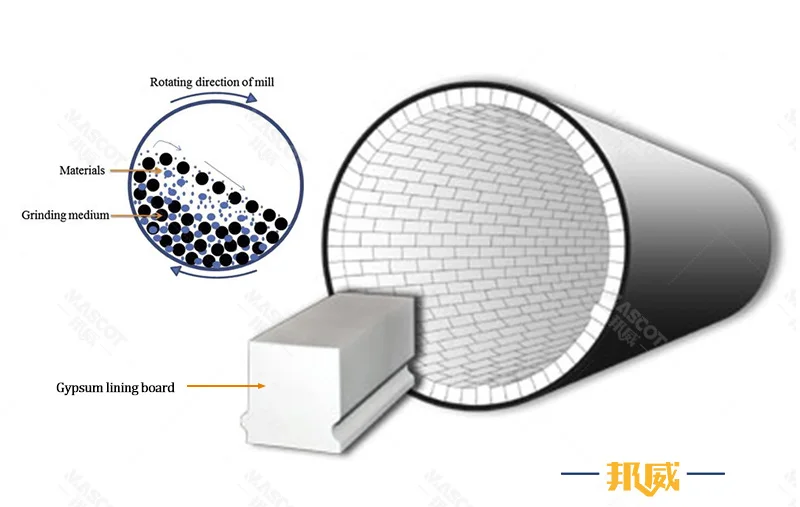
2. Rotational motion. The cylinder rotates at a controlled, adjustable speed — 65-80% of critical speed — to drive the grinding action.
3. Grinding action. Combined cascading, cataracting and sliding motions of the media reduce particle size by impact and attrition.
4. Particle size reduction. Particles are fractured by impact and finely ground by attrition, with the ceramic lining preventing agglomeration.
5. Discharge. The ground product is discharged through the outlets, at fineness from 100 microns down to sub-micron levels.
6. Process control. Grinding time, media size, solid concentration and rotation speed are held to the recipe for repeatable results.
Two of those parameters deserve more attention than they usually receive. Media size determines whether the batch is broken down by impact or refined by attrition — a glaze that is ground with media that is too coarse will reach its residue target slowly and wear the lining harder. Solid concentration determines how the slurry moves: a thick glaze slip cushions the media and cuts grinding efficiency, while a dilute slip increases wear per ton of product and lengthens the drying stage downstream. Both are recipe decisions, and both should be fixed before the mill is ordered, not tuned after commissioning.
| Lining / media | Metal contact | Typical service life | Where it fits |
| 92% high alumina (standard) | None | 3-5 years (materials below Mohs 7) | Glaze, feldspar, silica and most purity-critical duties |
| 95% ultra-high alumina | None | Specified per application | The most demanding wear and purity conditions |
| Rubber | None | 1-2 years | Lower-wear duties where lining cost dominates |
| Manganese steel | Iron pickup risk | 12-18 months in abrasive service | Cement, ore and bulk duties, not colour-critical products |
The trade-off is real and worth stating plainly. A 92% alumina lining costs more up front than rubber or manganese steel, and the return comes from lifespan and contamination: under normal operating conditions with materials below Mohs 7, the alumina lining lasts 3-5 years, against 1-2 years for rubber lining or 12-18 months for manganese steel in abrasive service. For a plant whose product is rejected on colour, the second number matters more than the first, because a contaminated batch is a total loss rather than a maintenance cost.
Ceramic linings raise an obvious question from first-time buyers: will they survive the journey? The answer lies in how the machine is built and packed. Each mill is factory-run with a partial media load before disassembly for shipping, so the drive train and lining seating are proven before the unit leaves. All ceramic components are packed in reinforced wooden crates with foam separation, and across 20 years of exports to more than 40 countries, transit damage claims on the liners are below 0.3%.
A Vietnamese producer needed 325-mesh silica powder for the solar glass industry — a market where the iron specification is tight enough that a batch failing it is scrap. The problem was upstream of the customer's quality lab: standard steel mills were introducing iron contamination and glass batches were being rejected as a result.
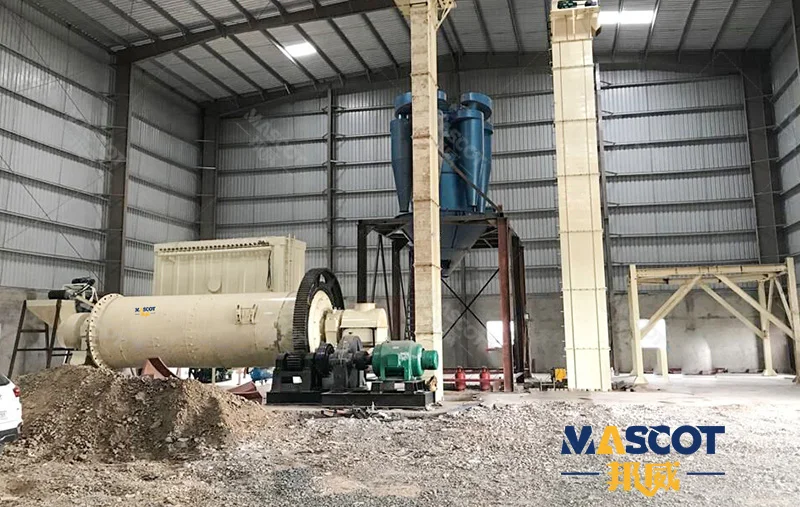
The solution was an MCBM-1830 ceramic ball mill configured with a 92% high-alumina lining and alumina grinding balls — zero metal contact through the whole circuit. Iron content in the finished powder fell below 0.008%, and the mill settled into a stable output of 2.8 tons per batch. Lining service life extended beyond three years and the customer's maintenance costs fell by 40%, which is the commercial case for ceramic construction in one line: purity first, and a lower lifetime cost as the second benefit rather than the main argument.
Q1: What is the main difference between a ceramic ball mill and a steel ball mill?
A: The lining and the grinding media. A ceramic mill uses non-metallic materials to prevent iron contamination, which is critical for industries such as ceramics and glass. The mechanical principle is the same; the material contact zone is not.
Q2: Alumina or silica lining — how do I choose?
A: Alumina (92% or 95%) is the industry standard for durability and wear resistance. Silica lining is used where a specific chemical-compatibility requirement applies. The recommendation should follow your material's Mohs hardness and chemistry, which is why the application data matters more than the datasheet.
Q3: Can one mill run both wet and dry grinding?
A: Yes. The mills are configurable for either wet or dry processing depending on your production flow — the feed method changes, the machine does not. Confirm your preferred mode at order stage so the discharge can be configured accordingly.
Q4: What fineness can a batch reach?
A: Discharge fineness runs from 100 microns down to sub-micron levels, with the result controlled by grinding time, media size, solid concentration and rotation speed. Your target residue and the recipe that achieves it should be established with the supplier before purchase.
Q5: What is the lead time and shipping process?
A: Standard models typically ship within 20-30 business days, with sea-worthy packaging and full documentation for international customs. If you need a complete crushing and grinding plant, the line can be designed and built as a package.
Glaze and feldspar are bought on purity and colour, so the mill that grinds them has to be specified on contamination rather than throughput alone. That means an alumina lining rated to the job (92% as standard, 95% where conditions demand it), a ceramic contact zone through liner, end covers, discharge grate and media, a documented material composition certificate, and batch parameters — media size and solid concentration in particular — fixed against the recipe rather than adjusted by feel.
The Ceramic Ball Mill covers that duty in both batch and continuous service and in either wet or dry mode, with alumina linings rated at 3-5 years under Mohs 7 materials. Where a plant also prepares dry body mixes or mineral powders at coarser fineness, a Dry Ball Mill complements the ceramic unit in the same flow sheet; where the product has to go beyond 325 mesh into the ultra-fine range, the HGM Series Micro-powder Grinding Mill takes over. Send your material, target residue and batch size, and the lining grade, media charge and cycle time can be specified around your recipe.

About of Mascot
Zhengzhou Mascot Industry is a high-tech mining equipment company integrating R&D, manufacturing, sales, and after-sales service. Focusing on crushing, grinding, and mineral processing equipment, we provide professional solutions to our customers. We are ISO9001:2015 certified, and our products include mobile crushing plants, crawler crushing plant, construction waste crushing plants, jaw crushers, sand making machines, cone crushers, fine crushers, grinding mills, ball mills, etc., all with reliable performance to meet diverse project needs.
• Professional pre-sales support: Free project design and comprehensive solutions to help you accurately select the right equipment;
• Comprehensive on-site service: Providing installation guidance and worker training to ensure smooth equipment commissioning;
• Reliable after-sales guarantee: A complete after-sales system, timely response to technical inquiries and equipment maintenance, ensuring long-term stable operation.
To protect your rights, please contact us through the following official channels for professional service:
WhatsApp: 0086-16650273865
Email: mascot@mascotenv.com
We are committed to providing high-quality equipment and full-cycle services to deliver comprehensive intelligent solutions for the global mining industry!

The Raymond mill production line is a highly efficient system designed for grinding operations, with a focus on energy efficiency, durability, and productivity. It caters to the needs of users by offering fine powder products in non-metallic ores, coal powder, and slag processing, aiding enterprises in achieving sustainable growth.

The gypsum grinding production line is an efficient, stable, and environmentally friendly production solution, which is widely used in construction, decoration, the chemical industry, and other fields. In addition, the grinding process is particularly critical, which directly affects the quality and particle size of the final product. With the continuous development of science and technology, the technical level and production efficiency of gypsum grinding production lines will be further improved, providing strong support for the development of the gypsum processing industry.

The MTW series European grinding mill production line includes high-efficiency crushers, elevators, electromagnetic vibration feeders, milling machines, classifiers, and collectors. These pieces of equipment work together to achieve efficient crushing, grinding, and classification of various non-metallic ores, coal powder, slag, and other materials. It can meet the diverse needs of various industries for powder particle size, uniformity, shape, etc., and offer enterprises high-quality grinding products.

YGMX Enhanced High-Pressure Mill is a new type of high-performance grinding equipment, and the biggest improvement of this milling equipment lies in the increase of the high-pressure spring system in the grinding roller part. Compared with the traditional high-pressure roller mill, it has a wider scope of application and excellent performance to meet the production needs of a variety of powder fineness. It is widely used in non-metallic minerals, chemicals, building materials, metallurgy, environmental protection, etc. Multiple areas.

The high-pressure grinding mill production line is a project specially designed for efficient grinding operations. It is widely used in metallurgy, building materials, the chemical industry, highways, water conservancy hydropower, and other industries. It is a suspended roller mill that uses springs to increase pressure. It can achieve efficient grinding processing of various non-metallic raw materials. It has high efficiency, stability, and environmental protection characteristics.
Green and Intelligent Mining Machinery
Manufacturing and Export Base
Based on high quality and perfect after-sales service, our products have been
exported to more than 120 countries and regions.
Copyright © 2023 Zhengzhou Mascot Environmental Technology Co., Ltd Record number: Yu ICP No. 13021523-4





 WhatsApp