 25
25
 27
27
 27
27
How to Grind Iron Ore Slag Efficiently Using High Pressure Roller Mills
Iron ore slag — the byproduct of blast furnace and steelmaking operations — is no longer a waste disposal problem. The global iron and steel slag market was valued at USD 25.81 billion in 2024 and continues to grow as industries discover new ways to convert slag into construction aggregate, supplementary cementitious material, road base, mineral wool, and soil amendment. But converting fused, glassy slag into commercially valuable powder is among the most demanding grinding applications in the minerals industry. Unlike soft minerals, slag combines moderate-to-high hardness (Mohs 5–7), sharp angular particle morphology, and residual metallic iron content that collectively punish conventional grinding equipment with accelerated wear, unstable throughput, and inconsistent particle size distribution. The YGM High-Pressure Grinding Mill — a high-pressure roller mill platform — addresses slag's specific demands through constant-pressure grinding, high-chromium alloy wear protection, and variable-frequency classification that together deliver the three outcomes slag processors need most: predictable throughput, controllable fineness, and extended wear-part life under abrasive conditions. This article examines how high-pressure roller mill technology grinds iron ore slag efficiently across the commercial fineness range.

What Makes Iron Ore Slag Grinding Different
Iron ore slag is not a single material. Blast furnace slag (BFS), basic oxygen furnace slag (BOFS), and electric arc furnace slag (EAFS) differ in composition, hardness, and grindability. However, they share characteristics that make them uniquely challenging for grinding equipment:
1. High Hardness and Abrasiveness (Mohs 5–7) — The glassy, fused structure of slag is significantly harder than limestone (Mohs 3) or gypsum (Mohs 2). Slag particles fracture along conchoidal surfaces, producing sharp, angular fragments that act as an abrasive lapping compound on grinding surfaces. Standard manganese or carbon steel wear parts degrade rapidly; high-chromium alloy or specialized wear-resistant materials are non-negotiable for economically viable slag grinding.
2. Residual Metallic Iron Content — Steel slag in particular contains 10–30% metallic iron particles, some as large as several millimeters, that resist grinding and can damage classifier blades, clog screens, and contaminate finished powder if not separated before or during processing. An effective slag grinding line typically incorporates magnetic separation stages upstream and downstream of the mill.
3. Variable Grindability — Blast furnace slag, when rapidly water-quenched (granulated), forms a glassy amorphous structure that grinds more readily than air-cooled crystalline slag. Steel slag, with its higher iron oxide and free lime content, presents different grinding behavior even within the same batch. A mill that cannot adapt its operating parameters to incoming feed variability will produce inconsistent output.
4. Target Fineness Dictates Market Value — Coarse slag sand (0–5 mm) serves as concrete aggregate. Medium-fine slag powder (80–200 mesh) functions as a low-cost filler or road base binder. Fine slag powder (200–425 mesh) enters supplementary cementitious applications where surface area directly controls reactivity. Each fineness tier commands a different price, and a mill that can span multiple tiers from a single platform multiplies the processor's market access.

Why High Pressure Roller Mills Fit Iron Ore Slag Processing
The YGM high-pressure roller mill principle delivers specific advantages for hard, abrasive slag:
1. Constant-Pressure Compression Crushes Rather Than Impacts
Unlike impact crushers or hammer mills that shatter brittle materials through high-speed collision, YGM applies 1,000–1,500 kg of sustained compression force per roller against a stationary grinding ring. For slag, compression fracture exploits the material's inherent brittleness — glassy slag particles fail under compressive stress more efficiently than under impact. The constant-pressure mechanism maintains this force as rollers wear, delivering consistent throughput across the wear-part lifecycle rather than the declining output curve typical of centrifugal mills.
2. High-Chromium Alloy Wear Protection
Slag's abrasiveness is the primary threat to grinding economics. YGM grinding rollers and rings use high-chromium alloy material with 2–3× the service life of standard manganese or carbon steel equivalents. While no wear material is immune to slag, the high-chromium formulation extends replacement intervals and reduces the metallic contamination that can discolor finished powder. For slag processors, the question is not whether wear parts must be replaced — they will — but how many tons of powder each set of wear parts produces before replacement.
3. Adjustable Grinding Pressure for Variable Slag Hardness
The spring tension system allows operators to calibrate grinding force to the specific slag being processed. Air-cooled blast furnace slag (hard, crystalline) requires higher spring pressure than water-quenched granulated slag (softer, glassy). Steel slag with high metallic iron content requires moderate pressure to avoid over-compacting metallic particles into the grinding ring. The ability to tune pressure per material batch, rather than operating at one fixed setting, preserves both throughput and wear-part life.
4. Frequency-Conversion Classification for Grade Flexibility
The variable-frequency classifier produces 80–425 mesh powder without mechanical changes. For slag processors, this means a single YGM line can produce coarse slag sand substitute (80–120 mesh), medium-grade filler (150–200 mesh), and fine supplementary cementitious powder (250–425 mesh). The PLC saves preset RPM profiles for each grade, enabling grade switches by speed adjustment alone.
5. Sealed Negative-Pressure System for Dust and Environmental Control
Slag grinding generates silica-containing dust that poses respiratory hazards at elevated concentrations. YGM's sealed negative-pressure circuit with pulse-jet baghouse captures dust at the source, controlling emissions to ≤20 mg/m³. The enclosed design also prevents wind-blown loss of fine slag powder, which is light enough to become airborne in open-circuit systems.
Core Parameters of YGM High-Pressure Grinding Mill
| Model | YGM65 | YGM95 | YGM130 | YGM160 |
|---|---|---|---|---|
| Grinding Rollers | 3 pcs | 4 pcs | 5 pcs | 6 pcs |
| Max Feed Size | <15 mm | <25 mm | <30 mm | <35 mm |
| Capacity (Slag, 100 mesh) | 0.2-1.5 t/h | 0.8-4.0 t/h | 1.5-7.0 t/h | 5.0-16.0 t/h |
| Main Motor Power | 18.5 kw | 37 kw | 75 kw | 132 kw |
| Finished Fineness | 80-425 mesh | 80-425 mesh | 80-425 mesh | 80-425 mesh |
Model Selection by Slag Processing Scale:
YGM65 — Pilot-scale slag grinding, specialty slag products, laboratory-grade batches (0.2–1.5 t/h)
YGM95 — Small slag processing operations for regional construction markets (0.8–4.0 t/h)
YGM130 — Mid-scale slag powder production; best balance of throughput, wear cost, and grade flexibility (1.5–7.0 t/h)
YGM160 — Large-volume slag grinding for cement plants and construction material suppliers (5.0–16.0 t/h)

The Iron Ore Slag Grinding Workflow: From Coarse Slag to Commercial Powder
Grinding iron ore slag efficiently requires an integrated processing line where each stage is designed for abrasive, variable-hardness material. The complete workflow built around YGM high-pressure roller mill technology follows five stages:
1. Pre-Processing: Magnetic Separation and Pre-Crushing
Raw slag from blast furnace or steelmaking operations arrives as irregular lumps up to 300 mm containing embedded metallic iron. Stage one is magnetic separation to extract recoverable iron — a valuable co-product that offsets grinding costs. The demagnetized slag is then reduced to mill feed size (<15–35 mm) using a jaw crusher with high-manganese wear plates. For steel slag specifically, a second magnetic separation after pre-crushing captures iron particles liberated by fracture, protecting downstream equipment and improving finished powder purity.
2. Drying and Moisture Control
Water-quenched granulated blast furnace slag can carry 10–25% moisture. YGM is rated for feed moisture below 6%; moisture above this threshold causes slag particles to paste on grinding surfaces, sharply reducing throughput. A rotary dryer sized for the processing line's maximum throughput is standard equipment, not an option, for slag grinding. Drying also serves a secondary purpose: pre-heated, dry slag fractures more cleanly under roller compression than moisture-laden slag that deforms plastically.
3. High-Pressure Roller Grinding
Dried, pre-crushed slag enters the YGM mill via a belt scale feeder at a uniform rate. For slag, the feed rate is typically set at 75–85% of rated capacity — lower than for softer minerals to manage the higher grinding resistance. Spring tension is calibrated per slag type: granulated blast furnace slag requires moderate pressure; air-cooled crystalline slag requires higher pressure; steel slag with residual iron requires pressure high enough to fracture the mineral phase without compacting metallic particles. The PLC logs main motor amperage; for slag, a rising amperage trend is the earliest warning of wear-part degradation under abrasive conditions.
4. Classification and Grade Separation
Ground slag is carried by airflow into the frequency-conversion classifier. Oversize particles return for re-grinding; on-spec powder passes to collection. For slag, classification is particularly performance-sensitive because the angular particle shape affects aerodynamic behavior differently than spherical mineral particles. The classifier RPM must be calibrated specifically for slag at each target mesh, not assumed from calibrations developed for limestone or gypsum.
5. Collection, Post-Processing Magnetic Separation, and Packaging
Qualified powder exits through a cyclone collector, with ultrafine dust captured by the pulse-jet baghouse (≤20 mg/m³). A final magnetic separation stage before storage removes any metallic fines generated by wear-part abrasion during grinding. For slag powder destined for cement or concrete applications, this final iron removal is a quality requirement — residual metallic iron can cause surface staining in finished concrete and interfere with cement hydration chemistry.
Slag Powder Grade Matrix: Fineness vs. End-Use Applications
| Fineness Range | Particle Size | Slag Product Grade | Primary Applications |
|---|---|---|---|
| 0–5 mm | Coarse granular | Slag Aggregate | Concrete aggregate, road base, railway ballast |
| 40–120 mesh | 125–425 μm | Coarse Slag Powder | Soil stabilization, low-grade construction filler, asphalt modifier |
| 150–200 mesh | 74–106 μm | Medium-Grade Slag Powder | Masonry cement extender, precast concrete, controlled low-strength material |
| 250–425 mesh | 33–58 μm | Fine Slag Powder | Supplementary cementitious material, high-performance concrete, grouting compounds |
A single YGM line covers 40–425 mesh slag powder through stepless classifier adjustment. The 250–425 mesh range represents the highest-value segment where slag powder serves as a partial cement replacement, commanding prices two to four times higher than coarse slag sand. For processors targeting ultra-fine GGBS specifications (400–600 m²/kg Blaine), YGM serves as the pre-grinding stage before a ball mill or vertical mill, reducing the downstream mill's workload and overall energy consumption by 30–40%.

Critical Process Control Variables for Slag Grinding Efficiency
1. Feed Rate Management Under Abrasive Conditions
Slag grinding consumes wear parts faster than any other common industrial mineral application. The most effective strategy for extending wear-part life is maintaining a consistent material bed on the grinding ring. When the bed thins, rollers contact the ring directly, accelerating wear and generating metallic contamination. A belt scale feeder maintaining 75–85% of rated capacity ensures sufficient material cushion. Operators should log main motor amperage per shift: a rising trend at steady feed rate is the earliest indicator of developing wear, typically appearing weeks before throughput or fineness degradation becomes measurable.
2. Grinding Pressure Tuning by Slag Type
Not all slag responds to the same grinding pressure. Water-quenched granulated blast furnace slag, with its glassy amorphous structure, fractures efficiently at moderate spring tension. Air-cooled crystalline slag and steel slag require higher pressure but must be monitored for excessive metallic particle compaction. The quarterly pressure calibration against manufacturer specifications should be customized per slag type, with tension set to the lowest level that achieves target throughput — higher pressure increases wear rate with diminishing throughput returns.
3. Classifier Speed Calibration for Angular Particles
Slag particles are angular and irregular, unlike the more equant particles produced from limestone or gypsum grinding. Their aerodynamic behavior in the classifier differs from mineral powders of the same nominal size, meaning classifier RPM settings calibrated on limestone will not produce the same mesh cut on slag. Each slag type and target mesh requires its own RPM calibration, saved as a preset profile in the YGM PLC. Without slag-specific calibration, the classifier will either pass oversize particles (undermining product quality) or reject acceptable particles (reducing throughput).
4. Wear-Part Monitoring Schedule
In slag processing, wear-part replacement is not a repair — it is a scheduled operating expense. Three indicators govern replacement timing: (1) main motor amperage rising beyond 10% above baseline at the same feed rate and fineness; (2) declining hourly throughput at the same classifier RPM; and (3) increasing metallic iron content in finished powder detected by post-grinding magnetic separation yield. High-chromium alloy rollers and rings extend replacement intervals, but no wear material eliminates the need for scheduled replacement under slag conditions.
5. Magnetic Separation Integration and Iron Recovery
For steel slag, the magnetic separation circuit is as critical to process economics as the mill itself. A three-stage magnetic separation setup — pre-crushing, post-crushing, and post-grinding — typically recovers 8–15% of input mass as metallic iron, which can be sold to steel mills as scrap. This revenue stream directly offsets grinding costs. The post-grinding magnetic separator also serves as a quality gate, removing wear-part metal fines before the finished powder reaches storage, protecting the product's cementitious performance and visual appearance in concrete applications.

Field Validation: Blast Furnace Slag Processing Line in Northeast Asia
Project Location: Northeast Asia
Processing Material: Water-quenched granulated blast furnace slag (GBFS)
Target Product: Fine slag powder at 325 mesh for cement extender application
Capacity Demand: 5 t/h
Original Problem: Existing ball mill suffered rapid liner and ball wear from slag abrasiveness, with ball charge replacement every 90 days and liner replacement every 8 months. Energy consumption averaged 58 kWh/ton. Throughput declined by approximately 12% between scheduled maintenance intervals as wear progressed.
The operator replaced the ball mill with a Mascot YGM130 High-Pressure Grinding Mill as the primary grinding stage, integrated into a complete processing line including jaw crusher, two-stage magnetic separation, rotary dryer, belt scale feeder, cyclone collector, and pulse-jet baghouse. A downstream ball mill was retained for ultra-fine finishing of a portion of the output for GGBS-grade customers. Mascot engineers provided on-site commissioning and slag-specific operator training, completing the transition within 28 days.
Key performance metrics after eighteen months of operation:
- Stable output: 5.4 t/h at 325 mesh, exceeding the 5 t/h target
- Fineness pass rate: 98.6% at 325 mesh
- High-chromium roller life: 14 months before replacement (versus 8-month ball mill liner cycle)
- Energy consumption: YGM stage 32 kWh/ton (versus 58 kWh/ton for the standalone ball mill)
- Combined line energy (YGM + finishing ball mill): 48 kWh/ton — a 17% reduction from the original ball mill alone
- Iron recovery from magnetic separation: 11.2% of input mass, generating scrap revenue that offset 18% of total grinding costs
- Dust emission: Consistently ≤18 mg/m³
- Throughput consistency: Output variation between wear-part changes reduced from ±12% to ±3%
The plant manager noted: "The constant-pressure grinding principle made the difference. Our ball mill output declined steadily as the balls wore down, and we were always chasing the spec. With YGM, the throughput stays flat for months at a time because the springs compensate for roller wear. We now schedule maintenance based on the calendar, not based on declining output." The operation has since expanded to process steel slag from a nearby EAF plant, using higher spring tension settings calibrated to the harder feedstock.

Auxiliary Equipment Configuration for Slag Grinding Line
| Equipment Name | Model | Power | Function |
|---|---|---|---|
| Magnetic Separator (Primary) | CTB series | -- | Pre-crushing iron recovery; protects crusher from metallic overload |
| Jaw Crusher | PE250x400 | 15 kw | Slag size reduction to <15–35 mm mill feed |
| Magnetic Separator (Secondary) | CTB series | -- | Post-crushing iron recovery; captures liberated metallic particles |
| Rotary Dryer | Customized | -- | Moisture reduction to <5%; critical for granulated slag |
| Bucket Elevator | TH315 | 4 kw | Material lifting to feed hopper |
| Belt Scale Feeder | B400x6m | 2.2 kw | Stable slag feeding; bed thickness control under abrasive conditions |
| Dust Collector | LQM64-6 | -- | Slag dust capture; ≤20 mg/m³ emission compliance |
| Magnetic Separator (Tertiary) | CTB series | -- | Post-grinding iron removal; finished powder quality control |
| High-Pressure Blower | 9-26 series | 18.5-132 kw | Airflow for powder conveying and classification |
Daily Process Monitoring Indicators for Slag Grinding
| Indicator | Normal Range | Warning Signal | Action |
|---|---|---|---|
| Main Motor Amperage | Stable ±5% | Rising >10% above baseline | Inspect roller and ring wear; schedule replacement |
| Classifier RPM vs. Mesh | As calibrated per slag type | Coarsening at same RPM | Check classifier blade wear from abrasive slag |
| Baghouse Differential Pressure | As commissioned | Rising trend | Clean or replace bags; check for slag dust caking |
| Feed Moisture | <6% (slag: <5% ideal) | Above threshold | Adjust dryer operation; check granulated slag storage |
| Post-Grinding Iron Recovery | Stable percentage of input | Rising iron content in powder | Check roller/ring wear; increase magnetic field strength |
| Finished Product Pass Rate | ≥98% | Below 96% | Evaluate roller, ring, and classifier wear condition |

Frequently Asked Questions (FAQs)
Q1: What types of iron ore slag can YGM high-pressure roller mills process?
A: YGM mills process granulated blast furnace slag (GBFS), air-cooled blast furnace slag, basic oxygen furnace slag (BOFS), and electric arc furnace slag (EAFS). The key variables are pre-processing requirements: granulated slag requires drying to below 5% moisture; steel slag (BOFS/EAFS) requires magnetic separation to remove metallic iron before grinding. Spring tension and classifier RPM must be calibrated per slag type because grindability varies significantly between water-quenched glassy slag and air-cooled crystalline slag.
Q2: How does slag abrasiveness affect wear-part life and what can be done about it?
A: Slag (Mohs 5–7) is significantly more abrasive than limestone, gypsum, or calcite. High-chromium alloy rollers and rings are the primary defense, delivering 2–3× the service life of standard manganese or carbon steel. Beyond material selection, two operational practices extend wear-part life: (1) maintaining a consistent material bed on the grinding ring — the material itself cushions roller-to-ring contact; and (2) setting spring tension to the minimum level that achieves target throughput, as higher pressure accelerates wear without proportional throughput gain. In field operation, YGM130 high-chromium rollers processing granulated blast furnace slag lasted 14 months before replacement.
Q3: Can YGM produce GGBS-grade fineness (400–600 m²/kg Blaine)?
A: YGM's standard fineness range is 80–425 mesh (~33–180 μm), which serves the coarse-to-fine slag powder market. For ultra-fine GGBS specifications (typically 400–600 m²/kg, equivalent to sub-10 μm median particle size), YGM is deployed as a pre-grinding stage before a ball mill or vertical mill. The YGM pre-grinding stage reduces the downstream mill's feed size and workload, cutting total line energy consumption by 30–40% compared to a standalone fine-grinding mill processing un-pre-ground slag. This two-stage configuration is the most energy-efficient route for processors targeting both medium-grade slag powder and GGBS-grade ultra-fine product from the same facility.
Q4: Is magnetic separation really necessary, or is it an optional add-on?
A: For steel slag (BOFS/EAFS), which contains 10–30% metallic iron, magnetic separation is not optional — it is essential for three reasons: (1) metallic particles damage grinding surfaces, classifier blades, and conveying equipment; (2) unrecovered iron represents lost revenue, as scrap iron typically sells for USD 200–400 per ton; and (3) residual iron in finished powder causes surface staining in concrete and interferes with cement hydration. A three-stage magnetic separation setup — pre-crushing, post-crushing, and post-grinding — is the industry-standard configuration. For blast furnace slag with lower metallic iron content (typically <1%), a single post-grinding magnetic separator for finished powder quality control is usually sufficient.
Q5: Why does slag require slag-specific classifier calibration rather than using standard mineral calibrations?
A: Slag particles fracture into angular, irregular shapes — not the more equant particles produced from limestone or gypsum. Angular particles behave differently in the classifier's aerodynamic field: they may report as larger or smaller than their actual sieve size depending on orientation and drag characteristics. A classifier RPM setting calibrated on limestone at 325 mesh will not produce the same particle size cut on slag. Each slag type and target mesh requires its own RPM calibration, and these profiles should be saved in the YGM PLC for repeatable grade switching.
Mascot Heavy Industry is a high-tech enterprise integrating R&D, manufacturing, sales and service of mining and grinding equipment. We provide customized YGM High-Pressure Grinding Mill solutions for iron ore slag processing, including project design, equipment manufacturing, installation guidance and after-sales support. Welcome global customers to contact us for cooperation.

About of Mascot
Zhengzhou Mascot Industry is a high-tech mining equipment company integrating R&D, manufacturing, sales, and after-sales service. Focusing on crushing, grinding, and mineral processing equipment, we provide professional solutions to our customers. We are ISO9001:2015.ertified, and our products include mobile crushing plants, crawler crushing plant, construction waste crushing plants, jaw crushers, sand making machines, cone crushers, fine crushers, grinding mills, ball mills, etc., all with reliable performance to meet diverse project needs.
• Professional pre-sales support: Free project design and comprehensive solutions to help you accurately select the right equipment;
• Comprehensive on-site service: Providing installation guidance and worker training to ensure smooth equipment commissioning;
• Reliable after-sales guarantee: A complete after-sales system, timely response to technical inquiries and equipment maintenance, ensuring long-term stable operation.
To protect your rights, please contact us through the following official channels for professional service:
WhatsApp: 16650273865
Email: mascot@mascotenv.com
We are committed to providing high-quality equipment and full-cycle services to deliver comprehensive intelligent solutions for the global mining industry!

YGMX Enhanced High-Pressure Mill is a new type of high-performance grinding equipment, and the biggest improvement of this milling equipment lies in the increase of the high-pressure spring system in the grinding roller part. Compared with the traditional high-pressure roller mill, it has a wider scope of application and excellent performance to meet the production needs of a variety of powder fineness. It is widely used in non-metallic minerals, chemicals, building materials, metallurgy, environmental protection, etc. Multiple areas.

The gypsum grinding production line is an efficient, stable, and environmentally friendly production solution, which is widely used in construction, decoration, the chemical industry, and other fields. In addition, the grinding process is particularly critical, which directly affects the quality and particle size of the final product. With the continuous development of science and technology, the technical level and production efficiency of gypsum grinding production lines will be further improved, providing strong support for the development of the gypsum processing industry.
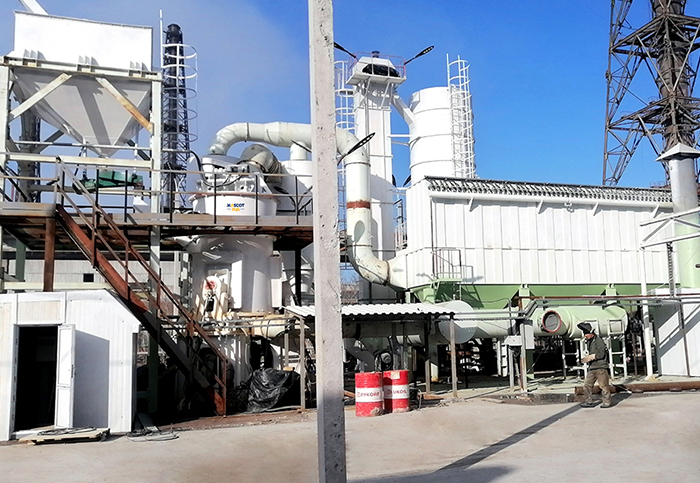
The production line of the vertical roller mill is a cost-effective and energy-efficient solution for processing powder, which is widely used in many industries, such as metallurgy, building materials, industrial solid waste treatment, thermal power plants, cement plants, and environmental protection fields. The primary purpose of this project is to finely grind raw materials through a vertical roller mill to meet the requirements of different industries for particle size, purity, and output of powder products.

The MTW series European grinding mill production line includes high-efficiency crushers, elevators, electromagnetic vibration feeders, milling machines, classifiers, and collectors. These pieces of equipment work together to achieve efficient crushing, grinding, and classification of various non-metallic ores, coal powder, slag, and other materials. It can meet the diverse needs of various industries for powder particle size, uniformity, shape, etc., and offer enterprises high-quality grinding products.

The high-pressure grinding mill production line is a project specially designed for efficient grinding operations. It is widely used in metallurgy, building materials, the chemical industry, highways, water conservancy hydropower, and other industries. It is a suspended roller mill that uses springs to increase pressure. It can achieve efficient grinding processing of various non-metallic raw materials. It has high efficiency, stability, and environmental protection characteristics.
Green and Intelligent Mining Machinery
Manufacturing and Export Base
Based on high quality and perfect after-sales service, our products have been
exported to more than 120 countries and regions.
Copyright © 2023 Zhengzhou Mascot Environmental Technology Co., Ltd Record number: Yu ICP No. 13021523-4





 WhatsApp