
| Product Series | YGM High Pressure Grinding Mill |
|---|---|
| Available Models | YGM65 / YGM75 / YGM85 / YGM85B / YGM95 / YGM130 / YGM160 / YGM190 |
| Focus of This Guide | How to select the correct YGM model based on production requirements, material properties, and operational constraints |
| Capacity Range | 0.4 – 36 t/h across 8 models |
| Output Fineness | 0.613-0.033mm (30-425 mesh) |
| Brand | Mascot Heavy Industry |
| Note: Contact our engineers for a customized model recommendation based on your specific project requirements. | |
1. Why Model Selection Matters
Selecting the correct YGM High Pressure Grinding Mill model is the single most consequential decision in setting up a grinding production line. An undersized mill creates a bottleneck that caps revenue from day one. An oversized mill ties up capital in underutilized equipment and inflates operating costs through excessive power consumption.
This guide provides a structured, data-driven framework for matching your production requirements to the correct YGM model. Rather than presenting specifications in isolation, it maps each model to real-world application scenarios, material types, and business scales so you can make a confident selection.

2. Five Key Decision Factors for YGM Mill Selection
Every YGM model selection should be evaluated against five interconnected factors. Treating any single factor in isolation leads to suboptimal choices. The following framework ensures all variables are weighed together.
2.1 Required Production Capacity (t/h)
This is the primary driver. Define your target throughput clearly — both current needs and projected growth over the next 2-3 years. Selecting a model one tier above current requirements often yields better long-term ROI than upgrading later. The eight YGM models span 0.4 to 36 t/h, providing a continuous capacity spectrum:
| Model | Rollers | Capacity (t/h) | Main Motor (kW) | Feed Size (mm) | Typical Plant Scale |
|---|---|---|---|---|---|
| YGM65 | 3 | 0.4-1.8 | 15 | ≤15 | Laboratory / Pilot |
| YGM75 | 3 | 1-3 | 18.5 | ≤15 | Small Workshop |
| YGM85 | 3 | 1.2-4 | 22 | ≤20 | Small Production Line |
| YGM85B | 3 | 1.2-3.5 | 22 | ≤20 | Fine Powder Specialist |
| YGM95 | 4 | 2.1-5.6 | 45 | ≤25 | Medium-Scale Plant |
| YGM130 | 5 | 2.5-9.5 | 90 | ≤30 | Industrial Production |
| YGM160 | 6 | 8-16 | 132 | ≤35 | Large Production Base |
| YGM190 | 6 | 18-36 | 250 | ≤40 | Ultra-Large Complex |
Table 1: Capacity and power overview of all YGM models. Highlighted rows indicate the four most commonly selected models.
2.2 Material Properties
Not all materials grind the same way. The YGM series handles materials up to Mohs hardness 7 and moisture below 6%, but throughput varies significantly by material type:
| Material Category | Mohs Hardness | Relative Throughput | Example Materials |
|---|---|---|---|
| Soft (Mohs 1-3) | 1-3 | 90-100% of rated capacity | Talc, gypsum, calcite, barite |
| Medium (Mohs 3-4.5) | 3-4.5 | 70-90% of rated capacity | Limestone, dolomite, marble, fluorite |
| Medium-Hard (Mohs 4.5-6) | 4.5-6 | 55-75% of rated capacity | Feldspar, bauxite, phosphate rock |
| Hard (Mohs 6-7) | 6-7 | 40-60% of rated capacity | Quartz, silica sand, iron ore |
Table 2: Capacity adjustment factors by material hardness. Always derate published specifications for materials above Mohs 4.5.
Selection implication: A customer grinding quartz (Mohs 7) who needs 4 t/h output should select a YGM130 rather than a YGM95, even though the YGM95's nominal capacity appears sufficient. At Mohs 7, the YGM95's effective throughput may drop to 1.2-2.2 t/h, while the YGM130 can deliver the target 4 t/h within the 40-60% derating range.
2.3 Target Product Fineness (mesh/micron)
Finer output demands more grinding time and reduces throughput. All YGM models produce 30-425 mesh (0.613-0.033mm), but the capacity at 325 mesh can be 40-50% lower than at 100 mesh. When your target is consistently at or above 325 mesh, select one model tier higher than a capacity-only calculation suggests.
2.4 Site and Infrastructure Constraints
Each YGM model has specific space, power, and foundation requirements that may limit your options:
2.5 Budget and ROI Timeline
The optimal model is the one that recovers investment fastest, not necessarily the cheapest or the largest. Consider the total cost of ownership (TCO) rather than purchase price alone:

3. Step-by-Step Model Selection Methodology
Follow this five-step process to narrow the eight YGM models to the single best match for your operation:
Step 1: Define Your Target Output
Document your required daily or hourly throughput. Include a 15-20% buffer for peak demand periods and future growth. Example: "We need 40 tons per 8-hour shift = 5 t/h base; with buffer, target 6 t/h."
Step 2: Characterize Your Material
Identify hardness (Mohs scale), moisture content, feed size, and any abrasive or sticky characteristics. Apply the derating factors from Table 2 to calculate the effective capacity requirement. Example: Limestone at Mohs 3.5 with 6 t/h target needs ~6/0.80 = 7.5 t/h nominal capacity.
Step 3: Set Fineness Parameters
Confirm your target mesh size. If 80% or more of your product is at 325 mesh or finer, apply an additional 20-30% capacity derating. Example: Target 325 mesh limestone at 7.5 t/h nominal → effective need ~9.5-10 t/h.
Step 4: Cross-Reference with the Selection Table
Match your adjusted capacity requirement to the model table. Always round up, not down. Example: 10 t/h adjusted capacity points to YGM160 (8-16 t/h) rather than YGM130 (2.5-9.5 t/h).
Step 5: Validate Against Site Constraints
Confirm power availability, floor space, ceiling height, and foundation requirements for the selected model. If constraints cannot be met, evaluate the next lower model or request a site-specific customization.

4. Model-by-Model Selection Guidance
4.1 YGM65 & YGM75 — Entry-Level and Pilot-Scale
| Choose YGM65 When | You need a laboratory or R&D pilot unit; processing < 1 t/h; testing new materials before scaling up; producing high-value specialty powders in small batches |
| Choose YGM75 When | You need 1-3 t/h in a constrained space; launching a small grinding workshop with limited initial capital |
| Avoid When | You anticipate scaling beyond 3 t/h within 2 years; skip directly to YGM85 for better long-term economics |
| Upgrade Path | YGM65 → YGM85; YGM75 → YGM85 or YGM95 |
4.2 YGM85 & YGM85B — The Small Production Standard
| Choose YGM85 When | You need 1.2-4 t/h output for small-scale commercial production; processing soft to medium materials (calcite, limestone, dolomite, barite) at 100-325 mesh; available floor space is limited (~22 m²); budget is the primary constraint but you still need production-grade reliability |
| Choose YGM85B When | Your application consistently requires output at 325-425 mesh; you are willing to trade ~0.5 t/h of capacity for improved fineness consistency; serving customers in high-grade filler, paint, or pharmaceutical-grade powder markets |
| Avoid When | Your target exceeds 4 t/h (move to YGM95); material hardness exceeds Mohs 5 at >2 t/h (capacity will drop below viable levels); you need 24/7 continuous operation (consider YGM95 or YGM130 for better durability margins) |
Selection Insight: The YGM85 is the most frequently ordered entry model worldwide. Its 22kW main motor delivers the lowest per-ton energy cost in its class, and its 3-roller design with 830mm grinding ring provides proven reliability. For most small operators processing limestone or calcite at 200 mesh, the YGM85 hits the sweet spot between investment and output. The YGM85B variant adds a finer classifier — choose it only when your customer base demands sub-325-mesh consistency; otherwise the standard YGM85 delivers better capacity economics.

4.3 YGM95 — The Medium-Scale Sweet Spot
| Choose YGM95 When | You need 2.1-5.6 t/h; operating a regional powder supply business; processing gypsum, bentonite, or calcium carbonate for construction materials; your power budget supports a ~70-85kW total system load |
| Best Applications | Gypsum powder (building materials), calcium carbonate (paint/plastic filler), barite (oil drilling), bentonite (foundry/civil engineering) |
| Avoid When | Your target exceeds 5.6 t/h at Mohs <4 (move to YGM130); you are grinding hard materials (Mohs >5) at over 3 t/h (YGM130 provides better margin) |
Selection Insight: The YGM95's 4-roller configuration and 45kW main motor represent the optimal price-to-capacity ratio in the YGM series. The fourth roller increases throughput by approximately 40% over the YGM85 while requiring only about double the power, making it the most energy-efficient model per ton of output for mid-range applications. It is the recommended starting point for any serious commercial grinding operation that has outgrown the YGM85.
4.4 YGM130 — The Industrial Workhorse
| Choose YGM130 When | You need 2.5-9.5 t/h for industrial-scale continuous production; processing petroleum coke, coal, or medium-hard minerals at 5+ t/h; 24/7 operation is required with minimal downtime; your facility has 380V/50Hz three-phase power and adequate foundation space |
| Best Applications | Petroleum coke grinding (cement/steel industry), coal powder (thermal/brick manufacturing), large-scale limestone powder, industrial dolomite processing |
| Avoid When | Your power infrastructure cannot support a ~130-160kW total system load; floor space is under ~64 m²; target output is consistently below 3 t/h (YGM95 is more economical at this scale) |
Selection Insight: The YGM130 is the go-to model for established mineral processing companies. Its five 410x230mm rollers and 1280mm grinding ring provide the robust construction needed for sustained heavy-duty operation. The 90kW motor delivers ample torque for petroleum coke and medium-hard materials that would challenge smaller models. If your operation runs multiple shifts, the YGM130's reinforced frame and larger wear surfaces translate directly to fewer maintenance interruptions and lower long-term cost per ton.

4.5 YGM160 — The High-Capacity Solution
| Choose YGM160 When | You need 8-16 t/h; serving as a regional powder production hub supplying multiple downstream customers; processing high volumes of limestone or calcite at 200-325 mesh; your capital budget and power infrastructure support a ~200-230kW system |
| Best Applications | Large limestone powder bases, regional calcite processing hubs, high-volume dolomite mills, dedicated desulfurization powder lines |
| Avoid When | Your target is under 8 t/h (YGM130 is more cost-effective); material hardness is Mohs 6+ at full capacity (consider a specialized vertical mill instead); site ceiling height is below 9m |
Selection Insight: The YGM160 with its six 450x300mm rollers and 1600mm grinding ring is engineered for high-volume continuous production. Its 8-16 t/h capacity range places it firmly in the large-scale production category. The model is particularly well-suited for limestone and calcite operations where throughput directly determines revenue. Many customers pair two YGM160 units for 25+ t/h combined output, creating a flexible, redundant production setup that a single larger mill cannot match.
4.6 YGM190 — The Flagship for Ultra-Large Operations
| Choose YGM190 When | You need 18-36 t/h from a single mill; operating a centralized powder production base serving national or export markets; throughput demands clearly justify the 250kW power draw and substantial investment |
| Avoid When | A parallel setup of two YGM160 units (16-32 t/h combined, with built-in redundancy) would better serve your operational reliability needs |
5. Application-Specific Model Recommendations
| Application | Common Materials | Typical Fineness | Recommended Model | Why |
|---|---|---|---|---|
| Desulfurization powder | Limestone | 200-325 mesh | YGM130 / YGM160 | High, steady throughput; 24/7 reliability critical |
| Construction gypsum powder | Gypsum | 100-200 mesh | YGM95 / YGM130 | Soft material; high capacity at moderate fineness |
| Paint & plastic filler | Calcite, CaCO3 | 325-425 mesh | YGM85B / YGM95 | Fineness consistency over raw throughput |
| Oil drilling additive | Barite | 200-325 mesh | YGM95 / YGM130 | High-density material needs motor torque margin |
| Cement plant fuel | Petroleum coke | 100-200 mesh | YGM130 | Moderate hardness; sustained large-volume output |
| Ceramic raw material | Feldspar, quartz | 200-325 mesh | YGM130 / YGM160 | Hard materials (Mohs 6-7) require motor and frame reserve |
| Foundry & drilling mud | Bentonite | 100-200 mesh | YGM85 / YGM95 | Soft, high-moisture material; moderate capacity needs |
| Thermal power coal powder | Coal | 80-200 mesh | YGM130 | Balanced capacity and safety; explosion-proof options available |
Table 3: Application-specific YGM model recommendations. These are starting points; always validate against your exact material properties and capacity targets.

6. Selection Case Studies: Getting It Right
Case 1: Southeast Asian Limestone Powder Plant — From YGM95 to YGM130
A building materials company initially requested a YGM95 for limestone grinding at 200 mesh targeting 5 t/h. During Mascot's pre-sales engineering review, the team identified that the customer's limestone sample had above-average silica content (Mohs ~4.2), which would reduce YGM95 throughput by approximately 15-20%. The team recommended the YGM130 instead.
Result: The YGM130 consistently delivered 7.5 t/h at 200 mesh with capacity headroom for peak demand periods. Had the customer proceeded with the YGM95, the effective output would have been ~3.5-4 t/h — a 20-30% shortfall against target. The correct selection decision, made before installation, saved an estimated 3-4 months of lost production and the cost of mid-life equipment replacement.
Case 2: Middle Eastern Calcite Processor — Right-Sizing for Fineness
A calcite powder producer required 10 t/h at 325 mesh for export-grade filler material. A capacity-only calculation suggested the YGM130 (up to 9.5 t/h) might suffice at the upper end of its range. However, at 325 mesh, the YGM130's effective output typically drops to 4-6 t/h for calcite. Mascot recommended the YGM160.
Result: The YGM160 delivered 12-14 t/h at 325 mesh, exceeding the target and providing growth headroom. The customer added a second YGM160 within 18 months, reaching 25+ t/h combined output. The initial selection avoided the costly mistake of installing a mill that looked adequate on paper but could not meet the target at the required fineness.

7. Common Selection Mistakes to Avoid
Mistake 1: Selecting by Capacity Alone
Published capacity figures assume ideal conditions — soft materials (Mohs <3), moderate fineness (100-200 mesh), and consistent feed quality. Real-world capacity is always lower. Always apply material hardness and fineness derating factors before matching to a model.
Mistake 2: Ignoring Total System Power
The main motor power on the specification table is only part of the story. A complete YGM system includes the classifier motor, blower, feeder, elevator, and dust collector. For example, the YGM130's 90kW main motor is part of a ~130-160kW total system. Verify that your site's electrical infrastructure supports the full system load before ordering.
Mistake 3: Underestimating Site Requirements
Foundation depth, ceiling height, and access for installation and maintenance vary significantly between models. A YGM160 requires a substantially different site preparation than a YGM95. Request dimensional drawings early in the selection process and validate against your facility.
Mistake 4: Choosing the Cheapest Model
The lowest purchase price rarely delivers the lowest total cost of ownership. A YGM85 costs less upfront than a YGM95, but if you outgrow it within 12 months, the cost of replacement (downtime, reinstallation, lost production) far exceeds the initial savings. Factor in a 2-3 year growth projection when selecting.
Mistake 5: Overlooking After-Sales Support Availability
A mill is a long-term investment. Confirm that the manufacturer provides wear parts, technical support, and engineer availability in your region. Mascot maintains a global service network with remote diagnostics and on-site support for all YGM models.
8. YGM Model Selection Checklist
Use this checklist before finalizing your model choice:
| # | Check Item | Confirmed? |
|---|---|---|
| 1 | Required throughput (t/h) defined with 15-20% growth buffer | [ ] |
| 2 | Material hardness tested and classified (Mohs scale) | [ ] |
| 3 | Moisture content verified (<6% or pre-drying planned) | [ ] |
| 4 | Target fineness (mesh/micron) specified | [ ] |
| 5 | Capacity derated for material hardness and fineness | [ ] |
| 6 | Model selected based on adjusted (not nominal) capacity | [ ] |
| 7 | Floor space and ceiling height verified against model dimensions | [ ] |
| 8 | Power supply confirmed for total system load (not just main motor) | [ ] |
| 9 | Foundation requirements reviewed and budgeted | [ ] |
| 10 | 2-3 year growth projection factored into model choice | [ ] |
| 11 | Wear-part availability and maintenance schedule understood | [ ] |
| 12 | Manufacturer's engineering team consulted for final validation | [ ] |
9. What Is Included in a Complete YGM System?
Regardless of which model you select, every complete YGM grinding system includes the following core components:
10. Frequently Asked Questions About YGM Selection
Q1: I am torn between YGM85 and YGM95. How do I decide?
If your target is above 3 t/h or you are processing materials with Mohs hardness above 3.5, choose the YGM95. The price difference is modest, but the YGM95's 4-roller design delivers ~40% more capacity and better long-term durability. If your target is 1-2.5 t/h with soft materials in a space-constrained site, the YGM85 is the more economical choice.
Q2: Can I start with a smaller model and add rollers later?
No. The roller count is fixed by the model's frame and grinding ring design. A 3-roller YGM85 cannot be upgraded to a 4-roller configuration. Plan for your 2-3 year capacity target upfront and select the model that matches it.
Q3: Should I buy one large mill or two medium mills?
Two medium mills (e.g., two YGM130 units instead of one YGM190) provide built-in redundancy: if one unit requires maintenance, the other continues production at 50% capacity. This is often the preferred strategy for operations where uninterrupted supply to customers is critical. The trade-off is higher total investment and larger floor space. Discuss this with Mascot's engineering team based on your specific operational priorities.
Q4: How does moisture content affect model selection?
Materials with moisture above 6% require pre-drying, which adds equipment cost and operational complexity regardless of model. If your raw material consistently exceeds 6% moisture and pre-drying is not feasible, consult Mascot about alternative grinding solutions. Within the YGM series, all models have the same moisture limit; the selection impact is on total system design, not model choice.
Q5: What if my material is not listed in the application table?
The YGM series processes over 100 types of non-metallic minerals. Send a material sample and your target specifications to Mascot's technical team for a free grindability test and model recommendation. This is the most reliable way to validate model selection for non-standard materials.

About of Mascot
Zhengzhou Mascot Industry is a high-tech mining equipment company integrating R&D, manufacturing, sales, and after-sales service. Focusing on crushing, grinding, and mineral processing equipment, we provide professional solutions to our customers. We are ISO9001:2015、certified, and our products include mobile crushing palnts, crawler crushing plant,construction waste crushing plants, jaw crushers, sand making machines, cone crushers, fine crushers,grinding mills, ball mills, etc., all with reliable performance to meet diverse project needs.
• Professional pre-sales support: Free project design and comprehensive solutions to help you accurately select the right equipment;
• Comprehensive on-site service: Providing installation guidance and worker training to ensure smooth equipment commissioning;
• Reliable after-sales guarantee: A complete after-sales system, timely response to technical inquiries and equipment maintenance, ensuring long-term stable operation.
To protect your rights, please contact us through the following official channels for professional service:
WhatsApp: 0086-16650273865
Email: mascot@mascotenv.com
We are committed to providing high-quality equipment and full-cycle services to deliver comprehensive intelligent solutions for the global mining industry!

The ball mill production line is a comprehensive production line that integrates material crushing, grinding, grading, and collection. This production line is mainly used to process various materials, including sand and gravel, cement, new building materials, silicates, refractory materials, fertilizers, ferrous metal beneficiation, non-ferrous metals, glass ceramics, etc.

YGMX Enhanced High-Pressure Mill is a new type of high-performance grinding equipment, and the biggest improvement of this milling equipment lies in the increase of the high-pressure spring system in the grinding roller part. Compared with the traditional high-pressure roller mill, it has a wider scope of application and excellent performance to meet the production needs of a variety of powder fineness. It is widely used in non-metallic minerals, chemicals, building materials, metallurgy, environmental protection, etc. Multiple areas.

This production line utilizes a three-ring medium-speed micro-grinding mill as the central equipment, complemented by other auxiliary equipment like hammer crushers, bucket elevators, and storage silos to establish a comprehensive grinding operation system. It has demonstrated strong potential for application and market competitiveness in industries such as construction, chemical industry, and new materials.
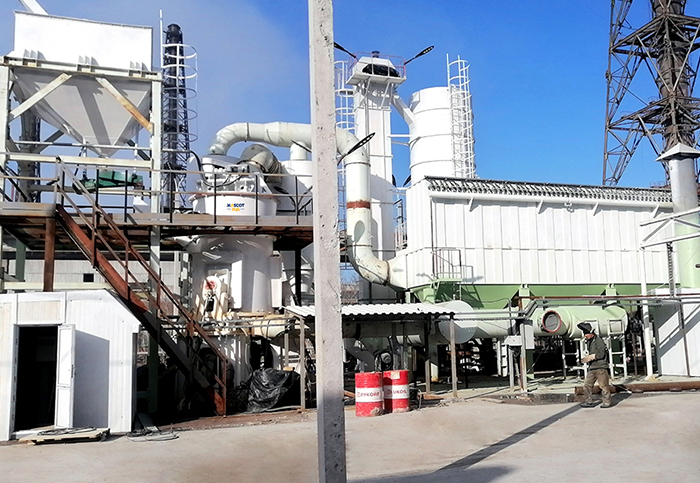
The production line of the vertical roller mill is a cost-effective and energy-efficient solution for processing powder, which is widely used in many industries, such as metallurgy, building materials, industrial solid waste treatment, thermal power plants, cement plants, and environmental protection fields. The primary purpose of this project is to finely grind raw materials through a vertical roller mill to meet the requirements of different industries for particle size, purity, and output of powder products.

The high-pressure grinding mill production line is a project specially designed for efficient grinding operations. It is widely used in metallurgy, building materials, the chemical industry, highways, water conservancy hydropower, and other industries. It is a suspended roller mill that uses springs to increase pressure. It can achieve efficient grinding processing of various non-metallic raw materials. It has high efficiency, stability, and environmental protection characteristics.
Green and Intelligent Mining Machinery
Manufacturing and Export Base
Based on high quality and perfect after-sales service, our products have been
exported to more than 120 countries and regions.
Copyright © 2023 Zhengzhou Mascot Environmental Technology Co., Ltd Record number: Yu ICP No. 13021523-4





 WhatsApp