
Mascot offers two grinding platforms that both trace their ancestry to the classic Raymond mill: the YGM High Pressure Suspension Mill and the MTW Trapezium Grinding Mill. Buyers comparing quotes often meet both names and ask the obvious question: which one do I need? The honest answer is that they serve different points on the same spectrum, and this article explains the real difference so the choice can be made on production logic, not on marketing.
For full specifications of each series, see the YGM product page and the MTW product page; this article focuses on where they differ and how to choose between them.
The YGM High Pressure Suspension Mill is the first-generation upgrade of the classic Raymond mill: it keeps the multi-roller layout but adds a high-pressure spring mechanism that presses the rollers harder against the ring, raising output and fineness capability above the old Raymond. It is a proven, economical workhorse for medium-fine powder production and remains one of the most widely ordered grinding machines in the industry — Mascot's YGM series spans several models and is documented in the company's news center, including guides on buying a YGM mill and how YGM compares with traditional Raymond mills.
The MTW Trapezium Grinding Mill is the second-generation platform: a full European-type redesign rather than an upgrade of the Raymond layout. It replaces flat rollers with trapezoidal ones, split transmission with an integral bevel gear, grease lubrication with an internal dilute oil system, and straight air ducts with a curved design — a new cost structure built for higher capacity, finer and more consistent powder, and lower operating costs.

Capacity and efficiency. The MTW trapezoidal roller and ring enlarge the effective grinding area, lifting efficiency 20%-30% over traditional designs at the same power, with a capacity range from 3 to 50 t/h across its four models. The YGM's high-pressure spring design delivers solidly higher output than a Raymond mill but remains below the MTW's scale and efficiency at the same installed power. In short: the MTW is the higher-capacity, higher-efficiency platform.
Fineness and consistency. Both series adjust finished fineness in the medium-fine range through their classifiers, but the MTW's frequency-conversion classifier holds a more precise cut under heavier recirculation — the reason its field pass rate reached 99.6% at 250 mesh. For applications that demand uniform specification-grade powder at volume, the MTW is the closer fit.
Energy and maintenance structure. The MTW's integral bevel gear recovers about 15% of the energy split drives waste, its dilute oil system runs four months between changes instead of constant grease service, and its curved duct eliminates blockage stops. The field result — 22% lower energy per ton and 20% lower maintenance — was measured against traditional mills, and the same design advantages apply relative to the older YGM platform, whose structure retains the classic multi-roller and spring layout.

The choice follows your production profile, not the price tag alone. Choose the YGM High Pressure Suspension Mill when your operation is small-to-medium scale, your fineness requirement sits in the standard medium range, your budget is the deciding constraint, and you want the proven, economical Raymond-lineage workhorse — the series that Mascot has shipped for years to barite, limestone, talc and gypsum plants around the world, including barite processing lines.
Choose the MTW Trapezium Grinding Mill when your operation is medium-to-large scale, your powder must be fine and consistent (250-425 mesh grade), your electricity cost matters, and your growth plan points upward — because the MTW's higher capacity and lower cost per ton repay its higher investment as volume grows. If your target sits between the two, Mascot's free project design will run your material through the comparison and recommend the right platform.
A practical note for buyers comparing both: ask for specifications in the same format from the two product pages, and request a project design for each series on your own material. The machines are different tools for different jobs — the correct comparison is against your production profile, not against each other in the abstract.

Because both platforms come from Mascot, the choice does not change the support you receive. Both series are manufactured under ISO9001:2015, both are installed by the company's engineers with operator training included, and both draw on the same spare-parts and after-sales system. In the reference case, an MTW175 line was produced in 18 working days and commissioned 28 days after arrival on site — the same project execution applies to YGM lines. A plant can even run both platforms side by side: a YGM handling standard grades and an MTW producing the fine, high-volume fraction.
The internal coherence matters for a buyer too: choosing either series keeps you inside one supplier's product family, one service channel and one spare-parts inventory — which is why Mascot's YGM series and MTW series pages are best read as two chapters of the same catalog rather than two unrelated products.

Q1: Is the MTW always better than the YGM?
A: Not always — it depends on scale and budget. For small-to-medium production at standard fineness, the YGM offers the economical path; for higher capacity and finer, consistent powder, the MTW's efficiency advantages justify its higher investment.
Q2: Can I upgrade from a YGM to an MTW later?
A: Yes, and the same site is typically reusable — foundation, building and utilities can often serve the larger machine after verification. Many plants run the YGM while planning the MTW expansion.
Q3: Are spare parts and service the same for both?
A: Yes. Both series are supported by the same Mascot after-sales system, with spare parts and engineer support available for the full service life.
Q4: Which series is better for barite for drilling fluids?
A: Both can process barite; Mascot's barite processing guide covers the YGM path, while the MTW suits higher-volume barite lines with its larger capacity range. Send your target output for a recommendation.
The real difference between the YGM High Pressure Suspension Mill and the MTW Trapezium Grinding Mill is a generation and a scale: the YGM is the proven, economical Raymond-lineage workhorse for medium production, and the MTW is the European-type redesign for higher capacity, finer consistency and lower cost per ton. Both are Mascot machines with the same support, so the choice is purely a production decision. Read the two product pages, send your material and target to Mascot, and let the project design pick the platform for your numbers.

About of Mascot
Zhengzhou Mascot Industry is a high-tech mining equipment company integrating R&D, manufacturing, sales, and after-sales service. Focusing on crushing, grinding, and mineral processing equipment, we provide professional solutions to our customers. We are ISO9001:2015 certified, and our products include mobile crushing plants, crawler crushing plant, construction waste crushing plants, jaw crushers, sand making machines, cone crushers, fine crushers, grinding mills, ball mills, etc., all with reliable performance to meet diverse project needs.
• Professional pre-sales support: Free project design and comprehensive solutions to help you accurately select the right equipment;
• Comprehensive on-site service: Providing installation guidance and worker training to ensure smooth equipment commissioning;
• Reliable after-sales guarantee: A complete after-sales system, timely response to technical inquiries and equipment maintenance, ensuring long-term stable operation.
To protect your rights, please contact us through the following official channels for professional service:
WhatsApp: 0086-16650273865
Email: mascot@mascotenv.com
We are committed to providing high-quality equipment and full-cycle services to deliver comprehensive intelligent solutions for the global mining industry!
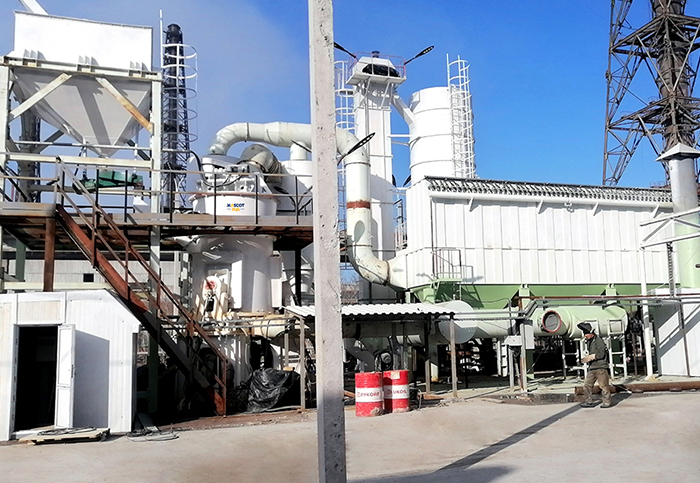
The production line of the vertical roller mill is a cost-effective and energy-efficient solution for processing powder, which is widely used in many industries, such as metallurgy, building materials, industrial solid waste treatment, thermal power plants, cement plants, and environmental protection fields. The primary purpose of this project is to finely grind raw materials through a vertical roller mill to meet the requirements of different industries for particle size, purity, and output of powder products.

The high-pressure grinding mill production line is a project specially designed for efficient grinding operations. It is widely used in metallurgy, building materials, the chemical industry, highways, water conservancy hydropower, and other industries. It is a suspended roller mill that uses springs to increase pressure. It can achieve efficient grinding processing of various non-metallic raw materials. It has high efficiency, stability, and environmental protection characteristics.

The Raymond mill production line is a highly efficient system designed for grinding operations, with a focus on energy efficiency, durability, and productivity. It caters to the needs of users by offering fine powder products in non-metallic ores, coal powder, and slag processing, aiding enterprises in achieving sustainable growth.

The gypsum grinding production line is an efficient, stable, and environmentally friendly production solution, which is widely used in construction, decoration, the chemical industry, and other fields. In addition, the grinding process is particularly critical, which directly affects the quality and particle size of the final product. With the continuous development of science and technology, the technical level and production efficiency of gypsum grinding production lines will be further improved, providing strong support for the development of the gypsum processing industry.

The ball mill production line is a comprehensive production line that integrates material crushing, grinding, grading, and collection. This production line is mainly used to process various materials, including sand and gravel, cement, new building materials, silicates, refractory materials, fertilizers, ferrous metal beneficiation, non-ferrous metals, glass ceramics, etc.
Green and Intelligent Mining Machinery
Manufacturing and Export Base
Based on high quality and perfect after-sales service, our products have been
exported to more than 120 countries and regions.
Copyright © 2023 Zhengzhou Mascot Environmental Technology Co., Ltd Record number: Yu ICP No. 13021523-4





 WhatsApp