 27
27
 27
27
 25
25
YGM High Pressure Grinding Mill: The Complete Buyer's Guide for 2026
Purchasing a grinding mill is one of the most consequential capital decisions in mineral processing. The difference between a mill that delivers nameplate capacity year after year and one that becomes a bottleneck is not visible in a brochure or a price list — it is embedded in the machine's design architecture, the quality of its wear components, and the support infrastructure behind it. The YGM High-Pressure Grinding Mill from Mascot Heavy Industry, with over 500 installations across 30-plus countries, represents the current state of the art in suspension roller mill technology. But selecting the right model, configuring the right auxiliary equipment, and negotiating the right commercial terms requires more than a specification sheet.
This buyer's guide provides the decision framework that experienced purchasers use to evaluate YGM grinding mills: how to match a model to your material and production targets, how to read a total cost of ownership projection, what questions to ask suppliers before signing, and which mistakes most commonly undermine the economics of a grinding line investment. No single piece of information in this guide substitutes for a formal quotation and engineering consultation — but taken together, it equips you to evaluate that quotation with the same rigor your supplier applies to preparing it.

1. What a YGM High Pressure Grinding Mill Is — And Is Not
Before evaluating models and prices, clarify what you are buying at the architectural level. The YGM is a high-pressure suspension roller mill: material is fed into a grinding chamber where spring-loaded rollers press against a stationary ring, crushing particles through compression and inter-particle attrition. The ground powder is carried by airflow into a variable-frequency classifier; on-spec powder passes to collection; oversize returns for re-grinding. The entire circuit operates under negative pressure with pulse-jet dust collection.
What distinguishes YGM from a traditional Raymond Mill is the grinding force generation mechanism. A Raymond Mill uses centrifugal force — rollers are thrown outward by rotation, and force depends on roller mass and speed. YGM uses a high-pressure spring system delivering 1,000–1,500 kg of constant mechanical force per roller, independent of mass and speed. This single design difference drives every performance advantage YGM claims: flat throughput across the wear cycle, higher output at matched motor power, extended wear-part life, and consistent product fineness.
What YGM is not: it is not a ball mill for ultra-fine grinding (sub-10 micron), not a vertical roller mill for 30+ t/h cement-scale production, and not an impact mill for materials requiring shattering rather than compression fracture. YGM is optimized for non-metallic minerals (Mohs hardness up to 7, moisture below 6%) in the 80–425 mesh range at production scales from 0.3 to 22.0 t/h. Within this envelope, it is among the most cost-effective mechanical grinding platforms available.

2. Model Selection: Matching YGM to Your Material and Production Targets
Model selection is not as simple as choosing the mill whose maximum capacity exceeds your target throughput. Three variables interact to determine real-world performance: feed material hardness (Mohs), target fineness (mesh), and required throughput (t/h). A mill rated for 9.5 t/h on limestone at 200 mesh may deliver 7.0 t/h on the same limestone at 325 mesh, or 5.5 t/h on feldspar at 200 mesh. The numbers below are guidelines based on mid-range limestone (Mohs 3). Harder or softer materials shift the throughput range up or down proportionally.
| Model | YGM65 | YGM95 | YGM130 | YGM160 |
|---|---|---|---|---|
| Grinding Rollers | 3 pcs | 4 pcs | 5 pcs | 6 pcs |
| Max Feed Size | <15 mm | <25 mm | <30 mm | <35 mm |
| Capacity (Limestone) | 0.3-2.0 t/h | 1.1-5.6 t/h | 2.2-9.5 t/h | 8.0-22.0 t/h |
| Main Motor Power | 18.5 kw | 37 kw | 75 kw | 132 kw |
| Finished Fineness | 80-425 mesh | 80-425 mesh | 80-425 mesh | 80-425 mesh |
| Typical Buyer Profile | Pilot plant, specialty minerals, startup operation | Regional processor, single-shift operation, entry-level commercial | Mid-scale processor, multi-grade production, best cost-per-ton | Large-volume commodity producer, multi-shift operation, export scale |
Throughput Adjustment by Material Hardness (approximate multipliers relative to limestone baseline):
Talc (Mohs 1): 1.4–1.6×
Gypsum (Mohs 2): 1.2–1.4×
Calcite / Dolomite (Mohs 3–3.5): 1.0–1.1×
Barite (Mohs 3–3.5): 0.85–0.95× (density effect)
Fluorite (Mohs 4): 0.80–0.90×
Feldspar (Mohs 6): 0.65–0.75×
Quartz / Silica (Mohs 7): 0.50–0.65×
Throughput Adjustment by Target Fineness (approximate, from 200-mesh baseline):
80–100 mesh: 1.3–1.5×
200 mesh: 1.0× (baseline)
325 mesh: 0.55–0.70×
400–425 mesh: 0.40–0.55×
For a YGM160 processing feldspar (Mohs 6) at 325 mesh, the throughput estimate would be: 22.0 t/h (max limestone baseline at 200 mesh) × 0.70 (feldspar hardness) × 0.63 (325-mesh adjustment) ≈ 9.7 t/h. This is the kind of calculation your supplier should be able to validate with reference to existing installations processing similar material.

3. The Total Cost of Ownership Framework: Beyond the Purchase Price
The purchase price of a grinding mill is the first number in a long equation. Buyers who optimize for purchase price alone typically pay more over the equipment's service life. A YGM mill carries a purchase premium over a traditional Raymond Mill of equivalent motor class, but the total cost of ownership (TCO) over five years consistently favors YGM for any operation where energy cost or maintenance frequency is material to profitability.
| Cost Category | Typical Range (YGM130, Limestone, 200 mesh) | As % of 5-Year TCO | Notes |
|---|---|---|---|
| Equipment Purchase (FOB) | USD 50,000 — 75,000 | 15–20% | Includes main mill, classifier, blower, basic controls |
| Auxiliary Equipment | USD 25,000 — 60,000 | 10–15% | Crusher, dryer, feeders, conveyors, baghouse, silos |
| Installation & Commissioning | USD 10,000 — 25,000 | 3–6% | Engineer-guided installation included in Mascot quotes |
| Energy (5 years, 6,000 h/yr, USD 0.08/kWh) | USD 158,000 — 180,000 | 50–55% | The dominant cost category; YGM's 28% efficiency advantage matters here |
| Wear Parts (5 years) | USD 21,000 — 35,000 | 8–10% | High-chromium rollers/rings; 13-month avg. replacement interval |
| Maintenance Labor (5 years) | USD 15,000 — 25,000 | 5–7% | Includes scheduled PM and unscheduled repairs |
| 5-Year TCO Estimate | USD 279,000 — 400,000 | 100% | Energy alone exceeds equipment cost by 2–3× |
The key insight from the TCO table is that energy is 2–3 times larger than the equipment purchase price over five years. A buyer who saves USD 10,000 on purchase price by choosing a less efficient mill may pay USD 40,000–60,000 more in energy over the same period. The purchase price is visible on day one; the energy cost arrives every month for the life of the equipment.

4. Eight Questions to Ask Every YGM Supplier Before Signing
A qualified supplier should be able to answer each of the following questions with specific, verifiable information — not general assurances. If a supplier cannot answer a question, cannot provide supporting data, or deflects to a different topic, treat the gap as a risk factor in your evaluation.
Q1: "Can you provide throughput data from an existing installation processing the same material at the same target fineness?"
Why it matters: Every supplier claims their mill can process your material. Only a supplier with a relevant installation can prove it. Ask for the installation location, material type, target mesh, sustained throughput, and contact period. Third-party installations carry more weight than the supplier's own demonstration plant.
Q2: "What is the standard wear-part replacement interval for this model processing my material?"
Why it matters: Wear-part life varies dramatically by material. A supplier quoting 18-month roller life on limestone may mean 8-month life on feldspar. The answer should be material-specific. High-chromium alloy rollers on YGM typically deliver 2–3× the service life of standard manganese or carbon steel equivalents.
Q3: "Is engineer-guided installation and commissioning included in your quotation?"
Why it matters: Many suppliers quote the mill price alone, then charge separately for installation supervision, commissioning, and operator training. The difference between an inclusive quote and an itemized one can be USD 10,000–25,000. Mascot quotes include engineer-guided installation as standard.
Q4: "What is the guaranteed throughput at my target fineness, and what happens if the mill does not meet it?"
Why it matters: A performance guarantee with defined remedies separates equipment manufacturers from equipment exporters. Ask whether the guarantee covers sustained throughput (after commissioning and ramp-up) or only peak throughput under ideal conditions. Ask what remedy applies if the mill underperforms: spare parts credit, partial refund, or on-site re-engineering.
Q5: "What auxiliary equipment is required for a complete processing line, and is it included in your scope of supply?"
Why it matters: A mill alone is not a processing line. A complete line requires a crusher (if feed size exceeds 15–35 mm), a dryer (if feed moisture exceeds 6%), belt scale feeder, bucket elevator, cyclone collector, baghouse, blower, and control cabinet. A supplier quoting the mill only may appear cheaper until you price the missing components.
Q6: "What is your spare parts availability policy and typical delivery lead time to my country?"
Why it matters: Production stops when critical spares run out. Ask whether the supplier maintains a recommended spare parts list for the first year of operation, whether those spares ship with the mill or must be ordered separately, and what the typical lead time is for emergency orders to your port.
Q7: "Can you provide references from buyers in my region or industry?"
Why it matters: A supplier with regional references has dealt with your logistics, your customs procedures, your power supply characteristics, and your local workforce. A supplier without regional experience is learning these on your project timeline and budget. Mascot has installations in Southeast Asia, Central Asia, the Middle East, Africa, and South America.
Q8: "What is the PLC control system capability, and does it include remote diagnostics?"
Why it matters: The PLC is the operator's primary interface with the mill. YGM's PLC provides one-key start/stop, automatic amperage and temperature monitoring, fault alarm logging, and the ability to save and recall classifier RPM profiles for different product grades. Ask whether the PLC supports remote access for supplier-assisted troubleshooting — this can reduce downtime from days to hours when a problem requires expert diagnosis.

5. Common Buyer Mistakes That Undermine Grinding Line Economics
The following mistakes recur across grinding mill purchases regardless of geography, material, or production scale. Each is preventable with the information in this guide.
1. Choosing by price rather than by TCO. A USD 10,000 savings on purchase price that costs USD 40,000 in additional energy over five years is not a saving — it is a deferred cost with interest. Calculate the five-year TCO before comparing quotations. If a supplier will not provide the data to complete the TCO calculation, treat the absence of data as a risk factor.
2. Oversizing the mill "for future growth." A YGM160 running at 40–50% of rated capacity for two years while waiting for market demand to materialize is an underloaded asset consuming fixed overhead (space, power infrastructure, maintenance) without generating proportional revenue. It is generally more economical to purchase the correctly sized mill for current demand and add a second unit when demand justifies it, rather than over-purchasing capacity that may take years to utilize.
3. Under-budgeting auxiliary equipment. The most common post-purchase surprise is discovering that the mill needs a crusher, a dryer, or a baghouse that was not in the original budget. A complete line quote prevents this. If comparing supplier quotes, ensure each quote includes the same scope of supply before comparing numbers.
4. Neglecting operator training. A YGM mill operated by a team trained on a centrifugal Raymond Mill will be run with settings and habits calibrated for the wrong grinding mechanism. Feed rates, classifier speeds, and maintenance schedules differ between platforms. The two-week operator training included in Mascot's commissioning service is not a courtesy — it is the difference between achieving designed performance in weeks versus months.
5. Ignoring feed moisture as a throughput variable. A buyer who does not measure the moisture content of their raw material before specifying a mill risks discovering, after installation, that output is 20–30% below expectations because the YGM's 6% moisture limit is being exceeded. If raw material moisture exceeds 6%, a rotary dryer should be included in the capital budget as a non-optional line item.

6. Commercial Terms: What to Negotiate Beyond Price
Price is the most visible negotiation point, but the following terms often have greater financial impact over the equipment's service life:
Payment Structure: Standard terms for YGM purchases are T/T (30% deposit, 70% before shipment) or L/C at sight. For larger projects, staged payments linked to milestones — deposit, factory acceptance test, shipment, commissioning — reduce the buyer's financial exposure during the manufacturing and delivery period. Mascot accepts T/T, L/C, and PayPal with flexible terms negotiable per project.
Warranty Period and Scope: The industry standard for grinding mills is 12 months from commissioning or 18 months from shipment, whichever occurs first. Clarify what is covered: manufacturing defects only, or also premature wear under specified operating conditions? Ask whether warranty claims require return of the defective part (slow and expensive) or can be resolved with photographic evidence and the supplier shipping a replacement (fast and practical).
Spare Parts Package: A start-up spare parts package covering the first 12 months of operation — typically one set of grinding rollers, one grinding ring, classifier blades, bearings, belts, and filter bags — costs USD 5,000–12,000 depending on model and should ship with the main equipment. Negotiating this package as part of the initial purchase is significantly cheaper than ordering the same parts individually under emergency lead times later.
Delivery Timeline: Standard manufacturing lead time for YGM mills is 25–45 days from deposit receipt, subject to model and factory workload. Sea freight transit time to destination port adds 15–45 days depending on route. Clarify whether the supplier's quoted timeline is manufacturing-only or includes sea freight, customs clearance, and inland transport to your site.
Performance Guarantee: A credible supplier should commit to specific throughput and fineness targets for your material, with defined remedies if the mill does not achieve them after proper commissioning. The guarantee should reference sustained output (not peak) at your target mesh, under your specified feed size and moisture conditions.

7. After the Purchase: Installation, Commissioning, and First-Year Operations
The purchase order is the beginning, not the end, of the buyer's engagement. The first year of operation determines whether the mill delivers its designed economics.
Site Preparation: Before the mill arrives, prepare the foundation according to the supplier's civil engineering drawings. YGM mills require a reinforced concrete foundation sized to the model's static and dynamic load specifications. Foundation errors — inadequate depth, poor leveling, insufficient curing time — cause vibration, accelerated wear, and premature bearing failure. If in doubt, request the supplier's engineer to review foundation plans before concrete is poured.
Installation and Commissioning: Mascot provides engineer-guided installation as a standard service. The engineer supervises mechanical assembly, electrical connection, and initial no-load testing, then conducts load testing with the buyer's material to verify throughput, fineness, and energy consumption against the performance guarantee. Commissioning typically takes 15–30 days from the engineer's arrival to signed acceptance.
Operator Training: Mascot's commissioning engineer trains the buyer's operators on daily start-up and shutdown procedures, PLC operation, feed rate and classifier speed adjustment, amperage trend interpretation, and routine maintenance tasks including spring tension calibration. The training period is typically 3–5 days within the commissioning window. Operators who complete this training achieve designed performance parameters within two weeks on average; untrained operators learning from manuals may take 2–3 months to reach the same level.
First-Year Spare Parts Management: The start-up spares package should be unpacked, inventoried, and stored in a clean, dry location before the mill begins production. The most common first-year procurement mistake is waiting until a wear part is needed to order it. Rollers, rings, classifier blades, and filter bags should be on-site or in transit to your facility at least 30 days before the scheduled replacement interval.

8. YGM vs. Alternative Grinding Technologies: When to Consider Something Else
YGM is not the optimal choice for every grinding application. Understanding its boundaries prevents an expensive mismatch:
| If Your Requirement Is... | YGM Is... | Consider Instead... |
|---|---|---|
| 80–425 mesh non-metallic mineral powder | The optimal choice | -- |
| Ultra-fine powder (<10 micron / >1,250 mesh) | Not suitable as a finish mill | Ball mill, vertical mill, or HGM ultra-fine mill |
| Production above 25 t/h (single mill) | Beyond single-unit capacity | Multiple YGM units in parallel, or VRM |
| Material hardness above Mohs 7 | Accelerated wear; economically marginal | Ball mill with ceramic or high-chrome media |
| Feed moisture consistently above 8% | Throughput penalty without pre-drying | YGM + rotary dryer; or wet grinding ball mill |
| Metallic ores requiring liberation grinding | Not designed for ore processing | Ball mill, SAG mill, or rod mill |
9. Final Checklist Before Signing a YGM Purchase Order
| # | Checklist Item | Verified? |
|---|---|---|
| 1 | Material hardness (Mohs) has been measured and is within YGM's effective range (≤7) | |
| 2 | Feed moisture has been measured; a dryer is in the budget if moisture exceeds 6% | |
| 3 | Feed size after crushing will not exceed the selected model's maximum (<15–35 mm) | |
| 4 | Target throughput at target fineness has been adjusted for material hardness using the multipliers in Section 2 | |
| 5 | The supplier has provided throughput data from an existing installation processing the same material | |
| 6 | The quotation includes all auxiliary equipment required for a complete processing line (crusher, dryer if needed, feeder, elevator, baghouse, blower, controls) | |
| 7 | The quotation includes engineer-guided installation, commissioning, and operator training | |
| 8 | A 5-year TCO projection has been calculated, confirming that YGM's purchase premium is recovered through energy and maintenance savings | |
| 9 | The performance guarantee covers sustained throughput at your target fineness, with defined remedies | |
| 10 | A start-up spare parts package covering the first 12 months is included in the order | |
| 11 | Payment terms and delivery timeline are documented, including sea freight and inland transport milestones | |
| 12 | Warranty period, scope, and claims procedure are specified in writing |
Frequently Asked Questions (FAQs)
Q1: What is the typical payback period for a YGM grinding mill?
A: Based on aggregated operational data from over 500 installations, YGM-equipped grinding lines recover their full investment within 8–18 months under normal market conditions. The payback is driven by the combination of higher throughput at matched motor power, lower energy consumption per ton (typically 28% less than centrifugal mills), and extended wear-part life (2–3× standard alloys). The payback period shortens when the YGM replaces a significantly underperforming existing mill, as the recovered throughput alone may represent six figures in annual revenue.
Q2: Should I buy a single larger YGM model or two smaller ones?
A: Two smaller mills provide redundancy — if one requires maintenance, the other continues producing at partial capacity. A single larger mill provides better capital efficiency, lower per-ton energy cost, and simpler operation. The trade-off decision depends on your tolerance for production downtime. If your buyers accept intermittent supply disruptions, a single mill is more economical. If contract delivery reliability is critical, two smaller mills in parallel are the safer configuration, though they will cost approximately 30–40% more in total equipment expenditure.
Q3: How long does it take from placing an order to producing powder?
A: A realistic timeline is 3–5 months from deposit to production. Manufacturing: 25–45 days. Sea freight: 15–45 days. Customs clearance and inland transport: 7–14 days. Foundation preparation (if not already complete): 14–30 days (can overlap with shipping). Installation and commissioning: 15–30 days. The total timeline is sensitive to port congestion, customs procedures, and site readiness. Buyers should plan for the longer end of each range and treat earlier completion as a positive variance.
Q4: Can YGM process multiple materials on the same line?
A: Yes, and this is one of YGM's operational strengths. The variable-frequency classifier allows the same mill to produce different fineness grades of the same material (e.g., 200-mesh filler and 400-mesh coating-grade calcium carbonate) through PLC speed adjustment alone. Processing different materials (e.g., switching from limestone to dolomite) requires cleaning the grinding chamber and classifier to prevent cross-contamination, but does not require mechanical component changes. For buyers serving multiple markets from a single processing line, YGM's grade flexibility is a significant commercial advantage.
Q5: What is the minimum order quantity? Can I buy a single YGM mill?
A: Yes. Mascot accepts single-unit orders. There is no minimum order quantity. However, the per-unit freight cost for a single mill is higher than for a container-load order, and the start-up spare parts package is strongly recommended for single-mill operations because there is no second mill to maintain production during a spare-parts wait.
Mascot Heavy Industry is a high-tech enterprise integrating R&D, manufacturing, sales and service of mining and grinding equipment. We provide customized YGM High-Pressure Grinding Mill solutions, including project design, equipment manufacturing, installation guidance and after-sales support. Welcome global customers to contact us for cooperation.

About of Mascot
Zhengzhou Mascot Industry is a high-tech mining equipment company integrating R&D, manufacturing, sales, and after-sales service. Focusing on crushing, grinding, and mineral processing equipment, we provide professional solutions to our customers. We are ISO9001:2015.ertified, and our products include mobile crushing plants, crawler crushing plant, construction waste crushing plants, jaw crushers, sand making machines, cone crushers, fine crushers, grinding mills, ball mills, etc., all with reliable performance to meet diverse project needs.
• Professional pre-sales support: Free project design and comprehensive solutions to help you accurately select the right equipment;
• Comprehensive on-site service: Providing installation guidance and worker training to ensure smooth equipment commissioning;
• Reliable after-sales guarantee: A complete after-sales system, timely response to technical inquiries and equipment maintenance, ensuring long-term stable operation.
To protect your rights, please contact us through the following official channels for professional service:
WhatsApp: 16650273865
Email: mascot@mascotenv.com
We are committed to providing high-quality equipment and full-cycle services to deliver comprehensive intelligent solutions for the global mining industry!
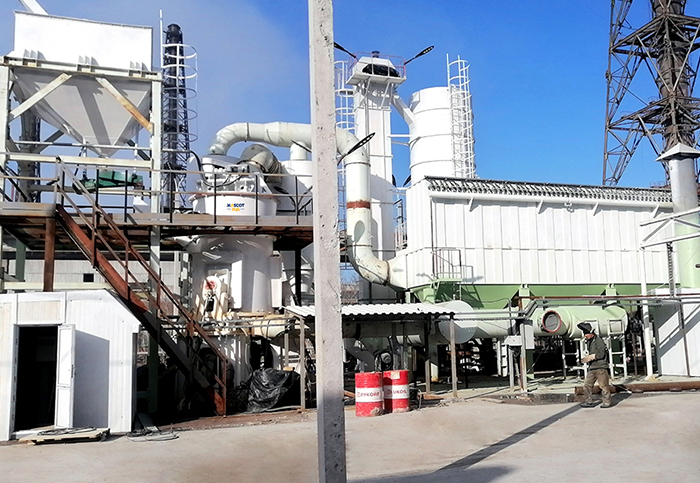
The production line of the vertical roller mill is a cost-effective and energy-efficient solution for processing powder, which is widely used in many industries, such as metallurgy, building materials, industrial solid waste treatment, thermal power plants, cement plants, and environmental protection fields. The primary purpose of this project is to finely grind raw materials through a vertical roller mill to meet the requirements of different industries for particle size, purity, and output of powder products.

This production line utilizes a three-ring medium-speed micro-grinding mill as the central equipment, complemented by other auxiliary equipment like hammer crushers, bucket elevators, and storage silos to establish a comprehensive grinding operation system. It has demonstrated strong potential for application and market competitiveness in industries such as construction, chemical industry, and new materials.

YGMX Enhanced High-Pressure Mill is a new type of high-performance grinding equipment, and the biggest improvement of this milling equipment lies in the increase of the high-pressure spring system in the grinding roller part. Compared with the traditional high-pressure roller mill, it has a wider scope of application and excellent performance to meet the production needs of a variety of powder fineness. It is widely used in non-metallic minerals, chemicals, building materials, metallurgy, environmental protection, etc. Multiple areas.

The MTW series European grinding mill production line includes high-efficiency crushers, elevators, electromagnetic vibration feeders, milling machines, classifiers, and collectors. These pieces of equipment work together to achieve efficient crushing, grinding, and classification of various non-metallic ores, coal powder, slag, and other materials. It can meet the diverse needs of various industries for powder particle size, uniformity, shape, etc., and offer enterprises high-quality grinding products.

The Raymond mill production line is a highly efficient system designed for grinding operations, with a focus on energy efficiency, durability, and productivity. It caters to the needs of users by offering fine powder products in non-metallic ores, coal powder, and slag processing, aiding enterprises in achieving sustainable growth.
Green and Intelligent Mining Machinery
Manufacturing and Export Base
Based on high quality and perfect after-sales service, our products have been
exported to more than 120 countries and regions.
Copyright © 2023 Zhengzhou Mascot Environmental Technology Co., Ltd Record number: Yu ICP No. 13021523-4





 WhatsApp