 27
 23
 25
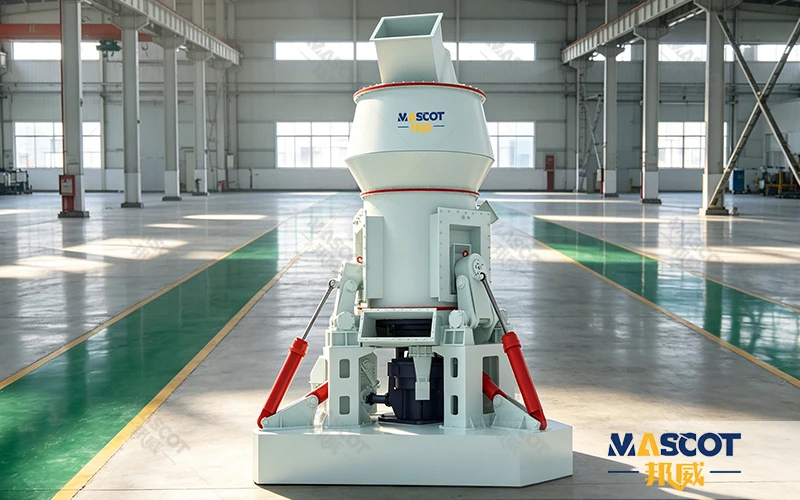
A slag powder station is judged on two numbers, and neither of them is the purchase price. The first is the tonnage the mill holds at the grade the plant actually sells — and in slag that means a Blaine target, not a mesh range. The second is how long the grinding parts last on a feed that is hard, abrasive and wet. This guide covers both on the Vertical Roller Mill: what the published output really means for S95 and S105, how the wear parts are built and how long they are published to last, and what a station should send before a model is fixed.
Granulated blast furnace slag is hard, abrasive and carries 10-20% moisture from water granulation. Those three properties are the reason a traditional dryer plus ball mill circuit is expensive to run on slag: the drying has to be paid for as a separate stage, the grinding has to be paid for with steel media, and the abrasive feed keeps both of them in the maintenance budget.
The SRM vertical roller mill answers the first two in one machine. Material is ground by material‑bed compression between hydraulically loaded rollers and a rotating table, and hot air circulated through the mill removes the moisture in the same pass. The published comparison is that material‑bed grinding consumes 30-50% less energy than a ball mill circuit at equal capacity, and the published dryer statement is equally direct: feed moisture in the working band is dried to 1% or below inside the mill, so no separate dryer is needed.
What comes out is S95 grade slag powder — 400-500 m²/kg Blaine with low residue on 45 micron — for concrete admixtures, blended cement and GGBS supply. What remains from the three original properties is abrasion, and that is where the second half of the specification lives. On a slag duty the rollers and the table liners are the recurring cost line, not a spare part to be thought about later.
The mechanism behind the energy claim, and the flowsheet question of whether the station needs a dryer at all, are set out in the comparison of a vertical roller mill and a ball mill for cement and slag. This article stays on the two numbers a slag producer is asked for.

Slag powder is not specified in mesh. It is specified in specific surface area and in the residue left on a 45 micron sieve, and the two common grades in the market are S95 and S105. That distinction matters for output planning in a way that is easy to miss.
S95 is the volume grade. The published target is 400‑500 m²/kg Blaine, and the common commercial target inside that band is roughly 400‑450 m²/kg. It is what ready‑mix concrete producers and blended cement plants buy in bulk, and it is the grade a station is normally sized around.
S105 is a demand grade. It is achievable on the same mill by raising the classifier speed — fineness on this series is set by the dynamic classifier and adjusted during normal running, so the change is a control action rather than a shutdown. The published note is that raising the grade carries a capacity trade‑off, which is simply the general rule of roller mills applied to slag: the finer the product, the lower the tonnage at the same machine.
Slag type changes the balance between drying and grinding. Water‑granulated slag arrives wet and needs the drying circuit to work; air‑cooled slag is harder and drier, so it needs less drying but more grinding power. The published answer is that the system adjusts air temperature and hydraulic pressure to suit either type. For a station buying slag from more than one source, that flexibility is worth confirming at the enquiry stage rather than discovering at the first shipment.
The practical reading of all three points is the same: the tonnage to plan on is the tonnage at the grade you are actually selling. The range headline belongs in a brochure; the S95 number belongs in the feasibility study.

The table below is the published specification for the five models. Two columns deserve attention before the capacity figure: the input moisture band, which decides whether drying is a problem to be solved inside the mill, and the feed size limit, which is the same across the whole series and therefore removes secondary fine crushing from the flowsheet.
| Model | Grinding Table Dia. (mm) | Max. Feed Size (mm) | Output Size | Input Moisture | Final Moisture | Capacity (t/h) | Motor Power (kW) |
|---|---|---|---|---|---|---|---|
| SRM1300 | 1300 | ≤ 38 | 212‑45 micron (70‑325 mesh) | 4‑15% | ≤ 1% | 10‑35 | 185‑250 |
| SRM1500 | 1500 | ≤ 38 | 212‑45 micron (70‑325 mesh) | 4‑15% | ≤ 1% | 13‑48 | 250‑355 |
| SRM1700 | 1700 | ≤ 38 | 212‑45 micron (70‑325 mesh) | 4‑15% | ≤ 1% | 18‑68 | 355‑600 |
| SRM1900 | 1900 | ≤ 38 | 212‑45 micron (70‑325 mesh) | 4‑15% | ≤ 1% | 23‑85 | 450‑600 |
| SRM2200 | 2200 | ≤ 38 | 212‑45 micron (70‑325 mesh) | 4‑15% | ≤ 1% | 36‑135 | 710‑1000 |
How to read this table: the capacity column is published for slag grinding at 70‑325 mesh, which is a mesh band rather than a Blaine grade. For an S95 target the output per model is confirmed by a grinding test on your own slag sample, and that test is offered free of charge for project quotation — so the honest way to read the table is as the ladder that selects the frame, with the S95 tonnage verified afterwards. The SRM1700 row is highlighted because it is the mid‑size step at which a slag station moves above 20 t/h while keeping a modest power draw, and it is the frame used in the published S95 field reference described in section 6.
Two further published points complete the sizing picture. All five models accept feed up to 38 mm, so a station can feed directly off a crusher without a secondary fine‑crushing stage. And where a station is specified as a complete 40‑80 t/h line rather than as a single machine, the published line parameters are a feed size up to 50 mm, fineness adjustable from 80 to 2500 mesh, raw material moisture up to 18%, a main motor of 220‑450 kW, a floor space of 80‑120 m², noise of 85 dB or below and sealed dust‑free operation. Projects above the largest single frame are served by running more than one unit as a matched set.
On a slag duty the consumables are the roller sleeves and the table liners, and the design decision that matters most is not the alloy name but how the parts are replaced. Both are high‑chrome alloy and both are built as modular segments, so a wear change means replacing the worn piece rather than a complete assembly — a difference that shows up in both the parts bill and the downtime.
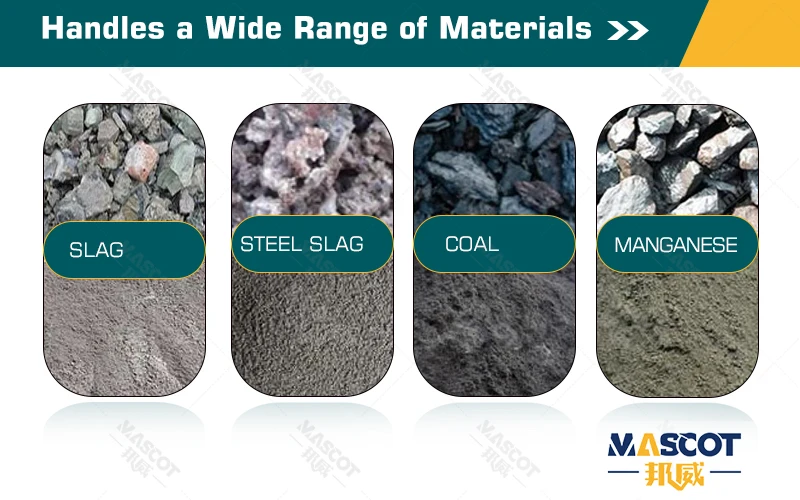
The published life figures are worth reading closely, because they are the only hard number a slag producer can put into a cost per ton model. Standard high‑chromium alloy roller sleeves are published at 8,000‑12,000 operating hours, and the sleeves can be flipped for secondary use, which doubles the service life of the set. Wear parts are stated to be covered by a 12‑month warranty alongside the whole‑machine warranty, and rollers, table liners and classifier parts are held as standard stock items in modular form, so a wear change is a planned stop rather than a wait.
Two design details keep that life from being eroded in service. Where the material is harder than Mohs 6, the mill is equipped with specialised high‑chromium Cr28 roller sleeves instead of the standard grade — which is the answer for a station taking slag from a source that runs harder than average. And slag carries scrap iron: ungrindable metal that reaches the grinding bed is discharged automatically rather than forced through the rollers, with a metal detector protecting the mill at the feed end. On an abrasive duty, that is what keeps unexpected breakdowns and unplanned stops out of the production plan rather than merely making them cheaper to repair.
| Wear Item | Published Detail | Why It Matters on Slag |
|---|---|---|
| Roller sleeves | High‑chromium alloy, 8,000‑12,000 operating hours, and can be flipped for secondary use to double service life | Sets the replacement interval and therefore the dominant recurring cost line on an abrasive feed |
| Table liners | High‑chrome alloy, built as modular segments | Only the worn piece is replaced rather than a whole assembly, so a wear change is a short planned stop |
| Cr28 sleeve option | Supplied where material hardness exceeds Mohs 6 | The harder the slag source, the more this specification decides the wear interval |
| Metal rejection and feed detector | Ungrindable metal is auto‑discharged; a metal detector protects the mill at the feed | Slag carries scrap iron, and forced‑through metal is how an abrasive duty becomes an unplanned outage |
| Classifier parts | Standard stock items in modular form | Fineness control stays available, which is what protects the S95 specification between wear changes |
How to read this table: the roller‑sleeve interval, the flip‑for‑secondary‑use provision, the Cr28 option and the automatic metal rejection are the published specification for this series; the third column explains what each one changes in service rather than restating a number. The design context behind those choices — hydraulically loaded rollers, the table‑and‑roller bed, and the lubrication and control package around them — is set out in the description of the core advantages of the SRM vertical roller mill.
Moisture is the clause that decides the shape of a slag station, because it determines whether the flowsheet needs a separate dryer. On this series the published model band is an input moisture of 4‑15% with a final product moisture of 1% or below, and the published guidance is that feed well above that band should be drained or blended first so throughput stays steady. Where the station is specified as a complete 40‑80 t/h line, the published raw‑material moisture limit is 18%.
The mechanical answer is the hot‑air circuit: air is introduced at up to 350 °C and leaves the mill in the 70‑95 °C range, sweeping the material bed, drying the slag and lifting the fine powder upward in the same pass that grinds it. Because drying and grinding share the circuit, the moisture decision has to be made before the layout is drawn rather than after the mill is ordered — it is the difference between a station with a dryer building and one without.
Seasonality belongs in the same conversation. Water‑granulated slag from an open stockpile does not arrive at a constant moisture content, and a station sized on the dry‑season figure will behave differently in a wet month. The published answer on this series for water‑granulated slag inside the working band is no separate dryer at all, which makes the seasonal survey worth taking before the enquiry rather than after the first wet shipment.
The published field record that answers both halves of this article is a grinding station in Da Nang, Vietnam, which supplies S95 ground granulated blast furnace slag to ready‑mix concrete plants along the central coast. The requirement was one energy‑saving unit able to dry and grind water‑granulated slag arriving at 10‑18% moisture to S95 grade at a stable output above 30 t/h, replacing an ageing dryer plus ball mill circuit.
The published solution was an SRM1700 system with in‑mill hot air drying, high‑chrome wear parts and a high‑efficiency dynamic classifier, arranged for direct belt feeding from the granulated slag stockpile. The reported results are the two numbers this article is about: wet granulated slag at 14% moisture was dried to 1% or below inside the mill in the same pass as grinding, with no separate dryer in the flowsheet; and the specific power for S95 powder ran about 40% lower than the former ball mill circuit, cutting the monthly electricity bill by roughly a third. Mascot's engineers managed installation and commissioning on site over 40 days and trained the shift operators on the S95 fineness settings.
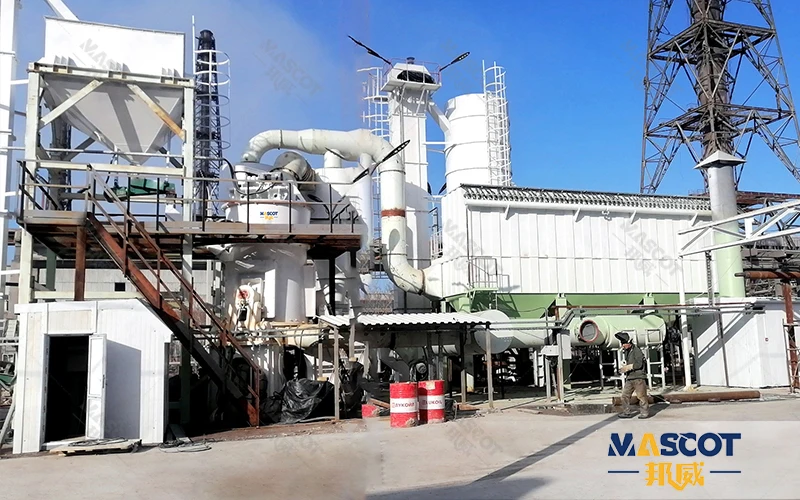
Two readings of that record are worth keeping. The first is that the drying claim is not a laboratory statement — it is the flowsheet of a working station, and a station without a dryer building is a station with a smaller capital scope and a smaller maintenance surface. The second is that the wear parts and the tonnage were specified together from the same grinding test, which is the pattern any slag project should follow: the model is chosen on the ladder, and the S95 output and the wear grade are then confirmed on the actual material.
A slag enquiry is answered quickly when it arrives with seven inputs, and each one removes a guess from the specification. Slag varies between sources and between seasons, so the sample and the moisture range carry more weight here than in most grinding projects.
| Input | Why It Decides the Specification |
|---|---|
| A slag sample, with its type: water‑granulated or air‑cooled | Decides how the drying and grinding loads split, and whether the Cr28 sleeve option is needed for a hardness above Mohs 6 |
| The grade and its Blaine target, with the 45 micron residue | The published capacity band is stated at 70‑325 mesh; the S95 or S105 tonnage has to be confirmed by a grinding test |
| Tonnes per hour at that grade | Selects the frame from the 10‑135 t/h ladder, and above the largest frame decides how many units run in parallel |
| A seasonal moisture range, not a single figure | 4‑15% runs directly; above that band the feed should be drained or blended so throughput stays steady |
| Feed size the crushing stage will deliver | The published limit is 38 mm across all five models, which is what removes secondary fine crushing from the flowsheet |
| The available hot‑air source or fuel | The in‑mill drying circuit needs heat; the 40‑80 t/h line accepts raw moisture up to 18% |
| Whether the station will also grind blended‑cement additives | The same mill handles clinker, limestone, gypsum and fly ash, so one investment can serve more than one product |
Where the project is a complete station rather than a single machine, three published references are worth reading before the layout meeting. The equipment list of a delivered vertical mill line — from the mill and its separator through to the dust collection and product silos — is documented in the 40 t/h vertical mill production line case, and it is the checklist any two quotations should be compared against. The electricity line that decides the payback, and how to build that calculation rather than accepting a claim, is worked through in the vertical roller mill ROI model for cement plants. And where a plant is weighing this mill class against the trapezium mill family, the boundary between them is set out in the key differences between the MTW mill and the vertical roller mill.
Q1: Which model do I need for an S95 slag powder station?
A: Start from the tonnage at the grade, not from the range. The published ladder runs 10‑35 t/h on the SRM1300, 13‑48 t/h on the SRM1500, 18‑68 t/h on the SRM1700, 23‑85 t/h on the SRM1900 and 36‑135 t/h on the SRM2200, and the capacity band is published for slag at 70‑325 mesh. For an S95 target the output per model is confirmed by a grinding test on your slag, which Mascot provides free of charge for a project quotation.
Q2: How long do the roller sleeves and table liners last on slag?
A: Standard high‑chromium alloy roller sleeves are published at 8,000‑12,000 operating hours, and the sleeves can be flipped for secondary use, which doubles the service life of the set. Table liners are high‑chrome alloy in modular segments, so only the worn piece is replaced. Where the material hardness exceeds Mohs 6, the mill is supplied with specialised Cr28 roller sleeves to hold that life on a harder source.
Q3: Do I need a separate dryer for water‑granulated slag?
A: Not inside the published working band. The model table covers an input moisture of 4‑15% with a final product moisture of 1% or below, dried inside the mill by hot air at up to 350 °C in the same pass as grinding; the 40‑80 t/h line version accepts raw moisture up to 18%. Feed well above that band should be drained or blended first, and because the answer changes the capital scope of the station it should be decided on a seasonal moisture survey of the actual slag.
Q4: Can the same mill produce S105, or grind air‑cooled slag?
A: Yes to both, with one qualification each. S105 is reached by raising the classifier speed, which on this series is adjusted while the mill is running, and the published note is that the finer grade carries a capacity trade‑off. Air‑cooled slag needs less drying but more grinding power, and the system adjusts air temperature and hydraulic pressure to suit either slag type.

About of Mascot
Zhengzhou Mascot Industry is a high‑tech mining equipment company integrating R&D, manufacturing, sales, and after‑sales service. Focusing on crushing, grinding, and mineral processing equipment, we provide professional solutions to our customers. We are ISO9001:2015 certified, and our products include mobile crushing plants, crawler crushing plant, construction waste crushing plants, jaw crushers, sand making machines, cone crushers, fine crushers, grinding mills, ball mills, etc., all with reliable performance to meet diverse project needs.
• Professional pre‑sales support: Free project design and comprehensive solutions to help you accurately select the right equipment;
• Comprehensive on‑site service: Providing installation guidance and worker training to ensure smooth equipment commissioning;
• Reliable after‑sales guarantee: A complete after‑sales system, timely response to technical inquiries and equipment maintenance, ensuring long‑term stable operation.
To protect your rights, please contact us through the following official channels for professional service:
WhatsApp: 0086‑16650273865
Email: mascot@mascotenv.com
We are committed to providing high‑quality equipment and full‑cycle services to deliver comprehensive intelligent solutions for the global mining industry!

The Raymond mill production line is a highly efficient system designed for grinding operations, with a focus on energy efficiency, durability, and productivity. It caters to the needs of users by offering fine powder products in non-metallic ores, coal powder, and slag processing, aiding enterprises in achieving sustainable growth.

The MTW series European grinding mill production line includes high-efficiency crushers, elevators, electromagnetic vibration feeders, milling machines, classifiers, and collectors. These pieces of equipment work together to achieve efficient crushing, grinding, and classification of various non-metallic ores, coal powder, slag, and other materials. It can meet the diverse needs of various industries for powder particle size, uniformity, shape, etc., and offer enterprises high-quality grinding products.

YGMX Enhanced High-Pressure Mill is a new type of high-performance grinding equipment, and the biggest improvement of this milling equipment lies in the increase of the high-pressure spring system in the grinding roller part. Compared with the traditional high-pressure roller mill, it has a wider scope of application and excellent performance to meet the production needs of a variety of powder fineness. It is widely used in non-metallic minerals, chemicals, building materials, metallurgy, environmental protection, etc. Multiple areas.

The ball mill production line is a comprehensive production line that integrates material crushing, grinding, grading, and collection. This production line is mainly used to process various materials, including sand and gravel, cement, new building materials, silicates, refractory materials, fertilizers, ferrous metal beneficiation, non-ferrous metals, glass ceramics, etc.
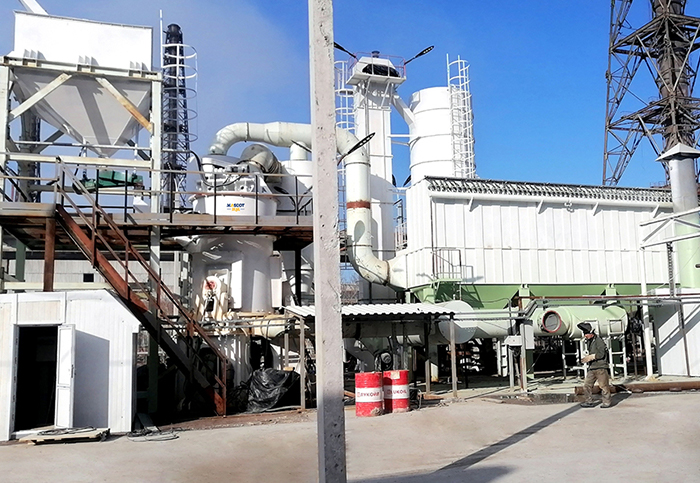
The production line of the vertical roller mill is a cost-effective and energy-efficient solution for processing powder, which is widely used in many industries, such as metallurgy, building materials, industrial solid waste treatment, thermal power plants, cement plants, and environmental protection fields. The primary purpose of this project is to finely grind raw materials through a vertical roller mill to meet the requirements of different industries for particle size, purity, and output of powder products.
Green and Intelligent Mining Machinery
Manufacturing and Export Base
Based on high quality and perfect after-sales service, our products have been
exported to more than 120 countries and regions.
Copyright © 2023 Zhengzhou Mascot Environmental Technology Co., Ltd Record number: Yu ICP No. 13021523-4





 WhatsApp
