 27
27
 27
27
 27
27

Enamel frit is a glassy material sold on the promise of what it looks like after firing, and that promise is decided long before the furnace: in a wet batch inside a Ceramic Ball Mill, where the lining and the media are the only things standing between clean powder and powder carrying iron. A steel-lined mill does not fail loudly. It leaches iron slowly into every batch, and the plant discovers the problem when a customer does — as specks in a white glaze, or as a colour that will not fire true. The published numbers make the choice concrete: 0.05-0.15% typical iron contamination from a steel-lined mill against 0.008% from a ceramic one. This article covers the two decisions that hold that number: how the batch is loaded, and which liner carries it.
Frit and glaze are ground wet in ceramic plants because the powder has to be pumped, screened and applied as a slurry, and because wet grinding keeps the particle size distribution tight. In that circuit the grinding machine is also a contamination source, and the contamination is not a wear nuisance — it is the product.
The published comparison between a steel-lined mill and a ceramic one runs along one axis: what the lining contributes to the batch. Steel linings and steel media wear into the powder, and the resulting iron content is published at 0.05-0.15% typical. A ceramic-lined mill with ceramic media, by contrast, is published at 0.008% iron contamination, with the risk of a rejected batch described as near zero rather than moderate-to-high.
What makes that difference structural rather than cosmetic is that on this series the entire material contact zone is ceramic — cylinder lining, end covers, discharge grate and grinding media. There is no point in the powder path where the material meets steel, which is why the output holds its purity from the first ton of a lining's life to the last rather than drifting as the liner wears.

The machine that does this work is a low-speed rotary mill positioned between a conventional ball mill and an ultra-fine grinding machine. Material and alumina grinding media are loaded into the ceramic-lined cylinder, which rotates at 65-80% of critical speed; the cascading media fractures particles by impact while the sliding motion produces the fine attrition that sets the top cut, all inside a sealed, zero-metal environment.
The published product window is 100-800 mesh, or 0.015-0.154 mm, freely adjustable, and the adjustment is made by tuning residence time and media size rather than by changing parts. Two practical consequences follow for a frit line.
One machine covers a family of batches. Residence time and media size are the variables that move the batch from a coarser frit grind to a fine glaze grind, which is why the same model line can be used for wet glaze preparation and for dry body preparation — a dual-mode flexibility that tile and sanitary-ware plants use to avoid buying two mills.
Consistency is the deliverable, not fineness alone. A frit batch is judged against the previous batch as much as against a specification, because the downstream firing behaviour has to repeat. That is why the published value proposition of the ceramic mill is described as the consistency and purity of the output rather than its fineness.

Loading a frit batch is a short operation with four decisions in it, and each one is visible in the powder before the batch is discharged.
| Batch Decision | What It Sets | Where You Read the Result |
|---|---|---|
| Media material — alumina, not steel | Whether the grinding path introduces iron at all; alumina media is what makes the 0.008% iron figure achievable | Batch analysis for iron content, and the fired colour of the finished article |
| Media size | The balance between impact and attrition, and therefore which end of the 100-800 mesh window the batch lands in | Particle size distribution and top cut on the discharge sample |
| Batch load and residence time | How long the charge has to work, and how much material is in the mill while it does | Batch cycle time against the plant's production schedule |
| Cylinder speed | The media motion itself; this series runs at 65-80% of critical speed, the band where cascading and sliding are combined | Media behaviour in the mill and the fineness the batch reaches in the planned cycle |
How to read this table: the mechanisms and the 65-80% critical-speed band are published properties of this mill series. The specific media size, batch load and cycle time for a given frit are set in the project design against your material and your target residue, so treat the middle columns as the direction of adjustment rather than as fixed numbers to copy. The first row is the non-negotiable one: no other setting repairs a steel contact surface.
The standard lining on this series is 92% high-alumina (Al2O3), with a 95% ultra-high-alumina option for the most demanding duties; a silica lining is offered where the chemistry of the process calls for it. The choice is made against the material's Mohs hardness, and the published wear picture explains why alumina is the default: with Mohs below 7, the 92% alumina lining is published to last 3-5 years before replacement, against 1-2 years for rubber liners and 12-18 months for manganese steel in abrasive service.
Three engineering details are worth knowing when a liner is specified, because they are what separates an industrial ceramic lining from a pottery product.
The liners are made to take impact. Alumina ceramic in a mill is not the same as household pottery: the liners are published with a compressive strength exceeding 850 MPa, and they are precision-cut to interlock within a steel shell that absorbs the impact loads the ceramic itself should not.
They are made in-house. Mascot formulates, casts and fires its own 92% and 95% alumina liners rather than reselling them, which is also why standard liner sets and grinding media are held in stock for express dispatch instead of an eight-week factory lead time.
They are covered by the warranty. The 12-month full-machine warranty on this series explicitly covers the ceramic lining together with the drive system and bearings — a component many suppliers exclude, which is worth checking in any quotation you compare.
| Lining Option | Where It Fits | Note |
|---|---|---|
| 92% high-alumina (standard) | Frit, glaze, feldspar, quartz and general high-purity mineral grinding with Mohs below 7 | Published service life 3-5 years; the configuration used in the series' published field reference |
| 95% ultra-high-alumina (option) | Applications where the most demanding wear or purity duty justifies the upgrade | Cast and fired in-house alongside the 92% grade |
| Silica lining (option) | Processes where specific chemical compatibility is the deciding requirement rather than wear | Recommended by the application engineer against the material's properties |
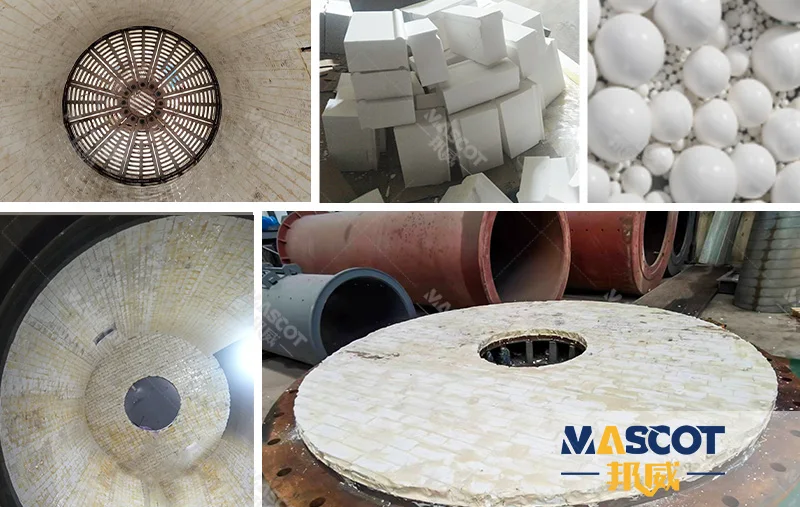
How to read this table: the three options, the 3-5 year life figure and the selection logic are the published liner range for this series. The right column is where the specification has to be made on your material rather than on a catalogue default — and because the liner is the one component you cannot correct after commissioning, it is the specification worth getting reviewed in writing.
The economic case for a ceramic-lined mill in frit and glaze duty is published as a three-year comparison, and it is written entirely in downtime and rejected batches rather than in the mill's purchase price.
| Cost Factor | Steel-Lined Mill | Ceramic Mill |
|---|---|---|
| Lining service life | 12-18 months | 3-5 years |
| Lining replacements over three years | 2-3 times | Zero |
| Downtime per replacement | 5-7 days | None for 3+ years |
| Iron contamination | 0.05-0.15% typical | 0.008% |
| Rejected batch risk | Moderate to high | Near zero |
| Product selling price | Standard grade | Qualifies for premium-purity pricing |
How to read this table: the figures are the series' published comparison between steel-lined and ceramic mills under the conditions described in the source material, and they are the supplier's own claims rather than an audit of your plant. The one line that repays attention is the last: a single rejected container of solar-grade silica is published at $15,000-40,000, which is the arithmetic behind the statement that the lining upgrade pays for itself the first time it prevents a failed shipment. For a frit line the equivalent loss is a batch that fires with specks or an off-colour — smaller per event, and more frequent.
The series' published field reference for purity-critical work is a Vietnamese silica processor supplying the solar glass industry. The starting point was instructive: an existing steel ball mill was leaching iron into 325-mesh silica powder and the batch rejection rate had reached ~12%. The supplied machine was an MCBM-1830 with 92% high-alumina lining and matching alumina media, with the full material path — cylinder, end covers, grate and media — converted to ceramic.
The published results of that change: batch rejection rate fell to 1%; throughput held steady at 2.8 tons per batch, matching the plant's production schedule; annual maintenance spend came down 40% against the previous steel mill; and the lining was still in service after more than three years.
For a frit or glaze line the transferable part is not the tonnage but the ratio. A rejection rate is dominated by contamination and inconsistency, not by fineness: the mill either delivers the same clean powder every batch or it does not, and the parameters that decide this are the contact surfaces and the loading routine rather than the operator's judgement on the day.

Three smaller published facts matter when a frit line is being specified, because each one removes a week of risk from commissioning.
Every mill is run before it ships. Each unit is factory-tested under a partial media load before it is disassembled for shipping — a check that catches drive and lining problems in Zhengzhou rather than on the customer's foundation.
It arrives protected. The machine is shipped with reinforced wooden crating, which matters for a mill whose value sits in a ceramic lining that chips if it is handled like a steel shell.
The consumables are on the shelf. Standard liner sets and alumina grinding media are stocked for express dispatch rather than made to order, and delivery is published at 25-35 business days for standard models from 1200×4500 to 2400×7000, and 45-60 business days for large customized models. The 12-month warranty covers the ceramic lining, the drive system and the bearings.
Before committing, three questions are worth putting to any supplier of a ceramic mill, because the answers separate an in-house ceramic capability from a reseller: do they manufacture their own alumina liners, can they show a field reference running the same material, and does the warranty explicitly cover the ceramic lining.
Q1: Why does a ceramic ball mill matter for enamel frit specifically?
A: Because frit and glaze are sold on fired appearance, and iron that enters the powder during grinding shows up later as specks or as a colour that will not fire true. A steel-lined mill is published at 0.05-0.15% typical iron contamination; a ceramic-lined mill with alumina media is published at 0.008%, with rejected batch risk near zero rather than moderate-to-high.
Q2: What does "full ceramic contact zone" actually cover?
A: Cylinder lining, end covers, the discharge grate and the grinding media — every surface the material touches. If any one of those remains steel, the purity figure is no longer the published one, which is why the specification should name them individually.
Q3: Which lining grade should a frit line use?
A: The standard is 92% high-alumina, which is published to last 3-5 years with material below Mohs 7; a 95% ultra-high-alumina grade is offered for the most demanding duties, and a silica lining where chemical compatibility decides rather than wear. The selection is made against your material, and both alumina grades are cast and fired in-house.
Q4: Can one mill produce both a glaze grind and a body grind?
A: Yes. The published window is 100-800 mesh (0.015-0.154 mm), adjustable by residence time and media size, which is why the same model line is used for wet glaze preparation and dry body preparation and why tile and sanitary-ware plants avoid buying two machines.
Q5: How is the batch consistency held from one batch to the next?
A: By fixing the loading routine and by having contact surfaces that do not change over time. The cylinder runs at 65-80% of critical speed, so media motion is repeatable; the variables are media size, batch load and residence time. In the published field reference the batch rejection rate fell from roughly 12% to 1% after the conversion to an alumina-lined mill with matched alumina media.
Q6: What are the delivery and warranty terms?
A: Standard models from 1200×4500 to 2400×7000 ship in 25-35 business days; large customized models take 45-60 business days. Each mill is factory-tested under partial media load before disassembly and shipped in reinforced wooden crating. The 12-month full-machine warranty covers the ceramic lining, the drive system and the bearings, and standard liner sets and grinding media are held in stock for express dispatch. Contact WhatsApp 0086-16650273865.
In frit and glaze grinding the liner is the specification, and the batch routine is what makes it repeatable. A ceramic-lined mill with alumina media holds a published iron figure of 0.008% against 0.05-0.15% for a steel-lined machine, keeps that figure without drift because every contact surface is ceramic, and works in a 100-800 mesh window adjusted by residence time and media size rather than by parts. The liner option — 92% alumina as standard, 95% ultra-high for the hardest duty, silica where chemistry decides — is the one decision that cannot be corrected after commissioning, and the one worth getting in writing before the order.
The Ceramic Ball Mill covers the alumina-lined range with the full ceramic contact zone and a 12-month warranty that includes the lining. How batch and continuous routes compare, and where the slurry recipe decides the outcome, is set out in ceramic ball mill slurry control: batch vs continuous; the liner grades compared on contamination budget and three-year cost are covered in how to choose liner material for a ceramic ball mill; and the wider glaze and feldspar duty is documented in the ceramic ball mill liner and batch guide. Send your material, the fired-colour requirement and the batch size you run, and the liner grade, the media charge and the cycle time can be specified against your own product rather than a catalogue default.

About of Mascot
Zhengzhou Mascot Industry is a high-tech mining equipment company integrating R&D, manufacturing, sales, and after-sales service. Focusing on crushing, grinding, and mineral processing equipment, we provide professional solutions to our customers. We are ISO9001:2015 certified, and our products include mobile crushing plants, crawler crushing plant, construction waste crushing plants, jaw crushers, sand making machines, cone crushers, fine crushers, grinding mills, ball mills, etc., all with reliable performance to meet diverse project needs.
• Professional pre-sales support: Free project design and comprehensive solutions to help you accurately select the right equipment;
• Comprehensive on-site service: Providing installation guidance and worker training to ensure smooth equipment commissioning;
• Reliable after-sales guarantee: A complete after-sales system, timely response to technical inquiries and equipment maintenance, ensuring long-term stable operation.
To protect your rights, please contact us through the following official channels for professional service:
WhatsApp: 0086-16650273865
Email: mascot@mascotenv.com
We are committed to providing high-quality equipment and full-cycle services to deliver comprehensive intelligent solutions for the global mining industry!

This production line utilizes a three-ring medium-speed micro-grinding mill as the central equipment, complemented by other auxiliary equipment like hammer crushers, bucket elevators, and storage silos to establish a comprehensive grinding operation system. It has demonstrated strong potential for application and market competitiveness in industries such as construction, chemical industry, and new materials.

The MTW series European grinding mill production line includes high-efficiency crushers, elevators, electromagnetic vibration feeders, milling machines, classifiers, and collectors. These pieces of equipment work together to achieve efficient crushing, grinding, and classification of various non-metallic ores, coal powder, slag, and other materials. It can meet the diverse needs of various industries for powder particle size, uniformity, shape, etc., and offer enterprises high-quality grinding products.

The Raymond mill production line is a highly efficient system designed for grinding operations, with a focus on energy efficiency, durability, and productivity. It caters to the needs of users by offering fine powder products in non-metallic ores, coal powder, and slag processing, aiding enterprises in achieving sustainable growth.

The high-pressure grinding mill production line is a project specially designed for efficient grinding operations. It is widely used in metallurgy, building materials, the chemical industry, highways, water conservancy hydropower, and other industries. It is a suspended roller mill that uses springs to increase pressure. It can achieve efficient grinding processing of various non-metallic raw materials. It has high efficiency, stability, and environmental protection characteristics.
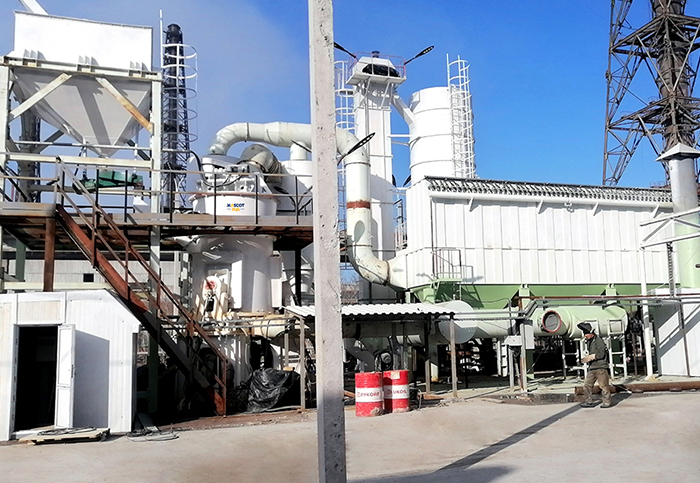
The production line of the vertical roller mill is a cost-effective and energy-efficient solution for processing powder, which is widely used in many industries, such as metallurgy, building materials, industrial solid waste treatment, thermal power plants, cement plants, and environmental protection fields. The primary purpose of this project is to finely grind raw materials through a vertical roller mill to meet the requirements of different industries for particle size, purity, and output of powder products.
Green and Intelligent Mining Machinery
Manufacturing and Export Base
Based on high quality and perfect after-sales service, our products have been
exported to more than 120 countries and regions.
Copyright © 2023 Zhengzhou Mascot Environmental Technology Co., Ltd Record number: Yu ICP No. 13021523-4





 WhatsApp