 25
25
 27
27
 27
27
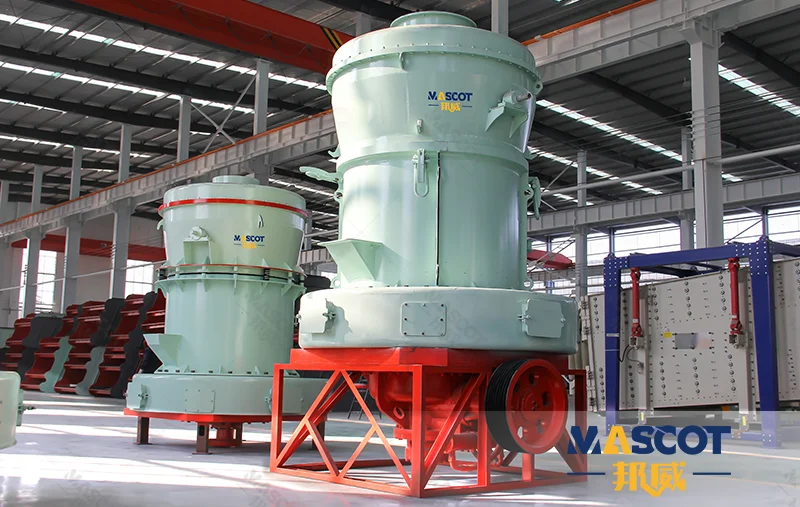
Fineness and output on an MTW Trapezium Grinding Mill are not two settings that can be improved separately. They come off one mechanism — airflow carries the powder to the classifier, the classifier returns everything coarser than the cut, and every particle that goes back is ground again instead of being sold. Turning the cut finer therefore lowers the tonnage, and no adjustment reverses that; what tuning can do is reach the target cut at the best tonnage the material allows, and then hold both numbers. This guide is the procedure for doing that: the order of the adjustments, what each one moves, where you read the result, and what to write down so the next shift can repeat it.
Three different questions get confused in a plant, and they have three different answers. What tonnage should I expect at a given model, mesh and material is a capacity question, and it is the subject of the guide to real tons per hour by model and fineness. My output has dropped and I have not changed anything is a fault question, answered by working through causes and fixes rather than by re-tuning. I need a different product, or more of the same product is a tuning question — the mill is running normally, the target has moved, and the job is to move both numbers deliberately.
That distinction matters because the two procedures interfere. Re-tuning a mill that has lost output hides the fault: the new setting makes the line run again, the worn or blocked component stays in place, and the plant pays for it twice. If the target has not changed, do not tune — diagnose.
One fact makes the tuning procedure workable before it starts. Across this series the published output size is 0.038-0.2 mm, and the working window is 80-400 mesh. Fineness is set by the classifier and adjusted through its speed, and the change is made while the mill keeps running — no shutdown, no mechanical replacement. Everything below follows from that one capability.

A mill in steady state gives you a readable result. Change two controls at once and the sample you take afterwards belongs to neither of them, which is how plants end up with a setting that works but cannot be reproduced. The table below lists the tuning variables, what each one moves, and where the change shows up in the plant's own instruments.
| Tuning Variable | What It Moves First | Where You Read It | The Trade-Off You Accept |
|---|---|---|---|
| Classifier speed | The cut point, and therefore how much material is returned to the grinding zone | Pass rate or residue at the target mesh | A finer cut always costs tonnage; the recirculating load is the mechanism |
| Feed rate (feeder setting) | The depth of the material bed under the rollers and the load on the main motor | Main mill power draw and vibration | Adding feed to raise tonnage at a fixed mesh works only until the bed destabilises |
| Feed uniformity | Whether the roller and ring see an even bed at all | Vibration and power fluctuation | Nothing gained — uneven feed is the usual cause of both, and it is not a fineness problem |
| Airflow (blower and damper) | How much powder reaches the classifier and how fast oversize returns | Throughput at a given power draw | Airflow is the largest auxiliary load, so it is tuned last and deliberately |
| Feed moisture | Whether material moves through the chamber or cakes in it | Chamber loading, lost tonnage | Above the 6% humidity limit the answer is upstream drying, not a mill setting |
| Roller and ring condition | The fineness the mill can hold at a given power | Fineness drift at a constant power reading | Below 6 Mohs the wear interval is long; harder feed shortens it and lowers tonnage |
How to read this table: the variables, the mechanisms and the readouts are drawn from the published operating description of the MTW series; the fourth column states the trade-off that belongs to each. The table is a sequence, not a menu — classifier, then feed rate, then airflow, with feed uniformity and moisture settled before any of them.
"Finer" is not a target, and a mesh number on its own is only half of one. Write the specification as a mesh figure with its micron equivalent and a pass rate or residue figure — for example a stated D97 at 325 mesh — because the micron value is what the downstream customer actually buys, and the pass rate is what the shipper will be paid against. The site's guide to what 325 mesh and 400 mesh mean in practice sets out the market mapping if the specification has not been fixed yet.
Writing it down changes what the tune is for. A target stated as a number tells the operator when to stop: the sample has to hold the cut, and the tonnage recorded at that point becomes the line's achievable number. A target stated as a direction never ends, because there is always a finer setting available.

The single most common reason a tuning exercise produces an unreadable result is a feed that was never stable to begin with. On this mill material is spread into the grinding chamber by a vibrating feeder and pressed against the trapezium ring by the rollers; even feeding is what holds vibration and power draw steady, and uneven feed is the usual cause of both.
The practical consequence is that a plant can spend a shift chasing fineness inside the classifier when the real disturbance is upstream. Before changing the classifier, confirm that the hopper level is under control, that the feeder is delivering a metered supply, and that the main motor current is holding a value rather than swinging around one. Five minutes spent on that check is what makes the next sample meaningful. The same discipline applies to the material itself: limestone and calcite are uniform to grind and the limit is feed consistency, while harder material asks for lower tonnage and shorter wear intervals rather than a cleverer setting.
Now make the change. The classifier speed sets the top cut, powder finer than the cut passes through with the airflow, and coarser particles fall back to the grinding zone for another pass — which is why the setting and the tonnage are linked and why the change can be made without stopping the mill.
Two rules make the result trustworthy. Move the speed in one decisive change toward the target rather than in a series of nudges, so the sample has a single cause. And take the sample after the circuit has reached a steady state under the new setting, not while it is still responding. Anything measured during the transition describes the transition, not the setting.
Then read the sample as a specification, not as an impression: the pass rate or residue at the target mesh, and the shape of the distribution around it. A cut that is correct on average but carries a coarse tail is the setting a downstream filler buyer will reject, and it is also the setting that tells you the classifier is doing its job and the sample simply needs another pass of the loop.

The tonnage that follows a finer setting is not a failure of tuning; it is the price of the grade. The published capacity on this series is given as a range for exactly this reason — the same mill produces less as the target powder gets finer — and the field literature makes the same point from the other side: the series' own model data quotes an MTW215 at a published band of 20-50 t/h, while the model's operating note for medium-hard minerals such as limestone and calcite gives a stable hourly output of 20-32 t.
Both numbers are useful, and neither should be treated as a target in a feasibility study. The published band is what the machine can cover across the materials and cuts it is applied to; the narrower figure is what a limestone or calcite duty looks like in practice. Tuning is the operation of finding where your material sits inside that space at your specification, and the way to record it is as a pair — mesh held, tons per hour achieved — never as one number quoted in isolation.
Two commercial habits follow. Size the mill for the finest grade you intend to sell, because a mill sized for the common grade will be a bottleneck on the fine contract. And price by grade, because a plant that sells a 400 mesh cut at a 325 mesh price is giving away the recirculation the fine grade costs.
Airflow carries the powder from the grinding zone to the classifier, so it is the transport half of the same setting: too little and on-spec powder never reaches the classifier, too much and the cut moves without you changing the speed. On this series the air duct is optimised to reduce resistance and increase throughput, which is the design reason a given power delivers more powder than a conventional duct arrangement.
That matters when you are deciding what to adjust, because the blower is not a small auxiliary. The table below reproduces the published drive ratings for the four models and adds two derived columns.
| Model | Main Mill (kW) | Powder Classifier (kW) | Blower (kW) | Three Drives Combined (kW, computed) | Classifier Share (computed) |
|---|---|---|---|---|---|
| MTW110 | 55 | 18.5 | 55 | 128.5 | 14.4% |
| MTW138 | 90 | 22 | 132 | 244.0 | 9.0% |
| MTW175 | 160 | 37 | 200 | 397.0 | 9.3% |
| MTW215 | 220 | 37 | 250 | 507.0 | 7.3% |
How to read this table: the three drive ratings are the published specification for each model. The combined figure and the classifier share are computed arithmetic, not published specifications or efficiency ratings, and they exist to answer one question: which control should be moved when a result has to be bought with power? The classifier is 7.3 to 14.4% of the grinding circuit's drive power, so a fineness change is cheap at the meter; the blower and the main mill together carry the cost of the tonnage, so airflow is the last variable to touch and the one to touch once.
A plant that has run a high-dust duty will recognise the failure mode that airflow tuning is meant to prevent. On a barite line grinding to API 200 mesh, the heavy dust load had repeatedly clogged conventional ducting; the mill supplied with an arch-shaped duct and reinforced high-manganese wear parts held consistent airflow with zero clogging under continuous operation. Airflow is not a tuning knob to be fiddled with — it is a circuit that has to stay open.
Some tuning requests cannot be granted, and it is better to know that before the shift is spent. This series grinds non-flammable, non-explosive minerals with a humidity below 6% and a Mohs hardness below 9.3, and both limits bite in specific ways.
Feed above the moisture limit does not merely handle badly: it blocks the grinding chamber and drags output down, so the fix is upstream — blending, draining or pre-drying — or an integrated hot-air furnace where the project justifies one. Hardness behaves differently. Material up to 9.3 Mohs is accepted, but above roughly 6 Mohs expect lower tonnage and faster roller and ring wear, which converts a tuning question into a cost-per-ton question: the setting can be reached, and the plant should know what it will pay per ton to hold it.

A tuning exercise that is not written down has to be repeated. The drift to watch for is specific to this machine: wear almost always shows up first as a slow change in fineness at a constant power reading, because the roller and ring geometry is what converts power into powder. Catching it at that point means planning a wear change rather than reacting to a failed one, and the way to catch it is to have written down what normal looked like.
| Log Entry | Why It Matters |
|---|---|
| Material and target specification (mesh, micron value, pass rate) | Fixes the definition of a good result so a later shift can judge the same thing |
| Classifier setting and airflow setting as displayed | Turns the tuning result into a repeatable recipe instead of an afternoon of experiment |
| Feed rate setpoint and main mill power draw | Records the load the setting was proven at; a setting is only valid at the load it was found on |
| Sample result and the time the sample was taken | Separates the steady-state result from the transition, and separates specification drift from measurement drift |
| Vibration note | Uneven feed shows up here first, and it is the disturbance that most often masquerades as a fineness problem |
| Roller, ring and classifier wear inspection dates | Explains fineness drift at constant power, and schedules the wear change before it becomes an outage |
The wear interval itself is a specification point rather than a tuning point, and it is covered together with the fineness window in the guide to MTW fineness and wear parts. For the tuning side, three habits carry most of the value: keep the feed inside the moisture limit, record fineness and main-motor power draw every shift, and treat a fineness change at constant power as a maintenance signal.
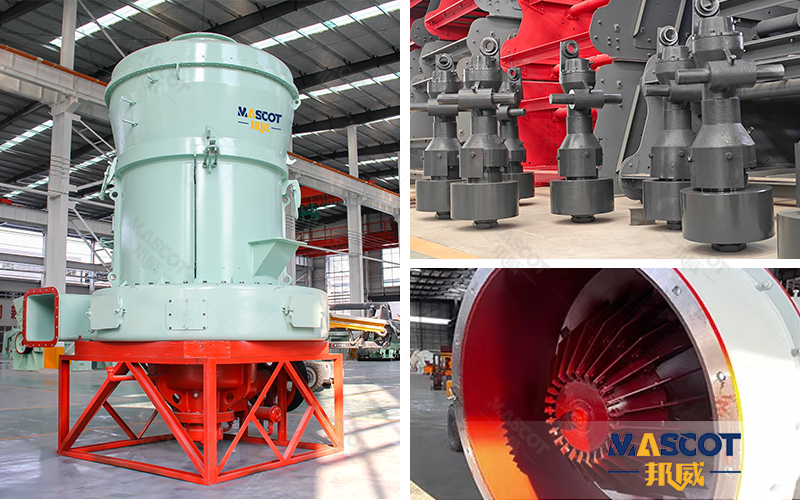
A large cement group in Southeast Asia needed raw material grinding for a 1,200 tpd cement production line, working limestone and additives to 200 mesh. The line had been running on three smaller units, which is the arrangement where tuning becomes a scheduling problem: three machines to hold at one specification, three sets of settings to keep aligned.
The replacement was a single MTW215 with a heavy-duty impact crusher and a centralised control system, supplied to a published capacity of 20-50 t/h at that cut. Consolidating the three units into one cut the plant's footprint and its labour cost by 40%, and it also removed the mismatch problem — one classifier setting now defined the product instead of three.
Two results from the same installation speak to tuning rather than to size. The customer reports that the MTW215 drastically reduced energy consumption per ton compared with the older vertical mills it replaced, and that the thin-oil lubrication system allows the line to run 24/7 without overheating. Both are the behaviour a plant gets when the mill is held at a setting rather than pushed at the edge of one: the classifier does the work of deciding the cut, the feed is steady, and the power per ton reflects grinding rather than recirculation.
Q1: Can fineness be changed without stopping the mill?
A: Yes. The cut is set by the powder classifier and adjusted through its speed while the mill keeps running, so switching grades is an operating adjustment rather than a shutdown, with no mechanical replacement involved. One machine covers 0.038-0.2 mm, or 80-400 mesh.
Q2: Why did my tonnage drop after I made the product finer?
A: Because that is what a finer cut costs. Powder coarser than the cut is returned to the grinding zone and ground again, so the recirculating load rises and the finished tonnage falls. The direction is constant; record the pair of numbers — mesh held and tons achieved — rather than treating the tonnage alone as the result.
Q3: The fineness moves on its own. Is that a tuning problem?
A: Usually not. If fineness drifts while the power draw stays constant, the cause is wear in the roller and ring, which is why those components are inspected on a schedule. If fineness moves together with the power draw or the vibration, look at the feed: uneven feed is the usual cause of both and it is not a classifier problem.
Q4: Which control should I adjust first for more output at the same mesh?
A: Nothing in the classifier — the classifier holds the mesh you already sell. Confirm the feed is stable and metered, confirm moisture is inside the 6% limit, check that the ducting is clear, and only then look at the feed rate, because adding feed beyond what the grinding zone can process destabilises the bed and costs more than it gains. The achievable tonnage at a given mesh on a given material is a capacity figure, not a setting.
Q5: What moisture and hardness can the mill handle?
A: Feed moisture up to 6% runs directly; wetter material should be blended, drained or pre-dried, or it blocks the grinding chamber and drags output down. Hardness up to 9.3 Mohs is accepted, but above roughly 6 Mohs expect lower tonnage and faster roller and ring wear.
Q6: What are the delivery, payment and warranty terms?
A: Delivery is 7-10 days for stock models and 15-30 days for mass production. Payment terms are 30% deposit by T/T in advance with the 70% balance before shipment. A 12-month warranty covers the whole machine and a further 12-month warranty covers core components such as rollers, rings and classifiers, with spare parts supplied at the lowest cost and remote diagnosis answered within 24 hours.
Tuning an MTW trapezium mill is a sequence with a rule attached. Write the target as a number, steady the feed, move the classifier alone, verify with a sample taken at steady state, read fineness and tonnage as a pair, and leave airflow to last — then write down the setting, the feed rate and the power draw, because that entry is what makes the next change a repeat instead of an experiment. The mill itself makes the procedure possible: the classifier changes the cut while the machine runs, across a published 80-400 mesh window, with no shutdown and no parts replaced.
The two numbers this hardware produces are linked, and no setting breaks the link: coarser means more tons, finer means fewer, which is why a plant should size for its finest grade and price by grade. The MTW Trapezium Grinding Mill covers four models from 3 to 50 t/h with the cut set by a frequency-conversion classifier, and the same classifier discipline is what makes a multi-grade product range practical on one machine. Where a complete circuit is being specified rather than a mill re-tuned, the MTW grinding production line case lists the equipment set that a matched line contains — crusher, MTW grinding mill, bucket elevator, vibrating feeder, classifier, cyclone collector, dust collector and blower. Send your material, the cut you must hold and the tonnage you need at that cut, and the model, the classifier setting and the feeding arrangement can be specified against your numbers rather than a published band.

About of Mascot
Zhengzhou Mascot Industry is a high-tech mining equipment company integrating R&D, manufacturing, sales, and after-sales service. Focusing on crushing, grinding, and mineral processing equipment, we provide professional solutions to our customers. We are ISO9001:2015 certified, and our products include mobile crushing plants, crawler crushing plant, construction waste crushing plants, jaw crushers, sand making machines, cone crushers, fine crushers, grinding mills, ball mills, etc., all with reliable performance to meet diverse project needs.
• Professional pre-sales support: Free project design and comprehensive solutions to help you accurately select the right equipment;
• Comprehensive on-site service: Providing installation guidance and worker training to ensure smooth equipment commissioning;
• Reliable after-sales guarantee: A complete after-sales system, timely response to technical inquiries and equipment maintenance, ensuring long-term stable operation.
To protect your rights, please contact us through the following official channels for professional service:
WhatsApp: 0086-16650273865
Email: mascot@mascotenv.com
We are committed to providing high-quality equipment and full-cycle services to deliver comprehensive intelligent solutions for the global mining industry!

YGMX Enhanced High-Pressure Mill is a new type of high-performance grinding equipment, and the biggest improvement of this milling equipment lies in the increase of the high-pressure spring system in the grinding roller part. Compared with the traditional high-pressure roller mill, it has a wider scope of application and excellent performance to meet the production needs of a variety of powder fineness. It is widely used in non-metallic minerals, chemicals, building materials, metallurgy, environmental protection, etc. Multiple areas.

The Raymond mill production line is a highly efficient system designed for grinding operations, with a focus on energy efficiency, durability, and productivity. It caters to the needs of users by offering fine powder products in non-metallic ores, coal powder, and slag processing, aiding enterprises in achieving sustainable growth.

The MTW series European grinding mill production line includes high-efficiency crushers, elevators, electromagnetic vibration feeders, milling machines, classifiers, and collectors. These pieces of equipment work together to achieve efficient crushing, grinding, and classification of various non-metallic ores, coal powder, slag, and other materials. It can meet the diverse needs of various industries for powder particle size, uniformity, shape, etc., and offer enterprises high-quality grinding products.
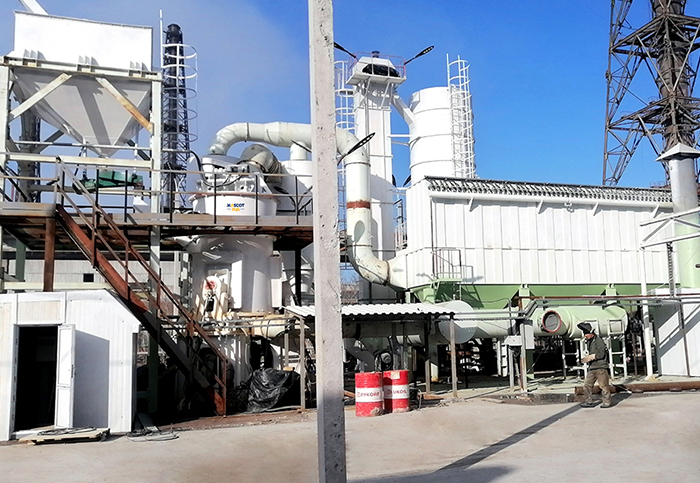
The production line of the vertical roller mill is a cost-effective and energy-efficient solution for processing powder, which is widely used in many industries, such as metallurgy, building materials, industrial solid waste treatment, thermal power plants, cement plants, and environmental protection fields. The primary purpose of this project is to finely grind raw materials through a vertical roller mill to meet the requirements of different industries for particle size, purity, and output of powder products.

The gypsum grinding production line is an efficient, stable, and environmentally friendly production solution, which is widely used in construction, decoration, the chemical industry, and other fields. In addition, the grinding process is particularly critical, which directly affects the quality and particle size of the final product. With the continuous development of science and technology, the technical level and production efficiency of gypsum grinding production lines will be further improved, providing strong support for the development of the gypsum processing industry.
Green and Intelligent Mining Machinery
Manufacturing and Export Base
Based on high quality and perfect after-sales service, our products have been
exported to more than 120 countries and regions.
Copyright © 2023 Zhengzhou Mascot Environmental Technology Co., Ltd Record number: Yu ICP No. 13021523-4





 WhatsApp