 27
27
 25
25
 25
25
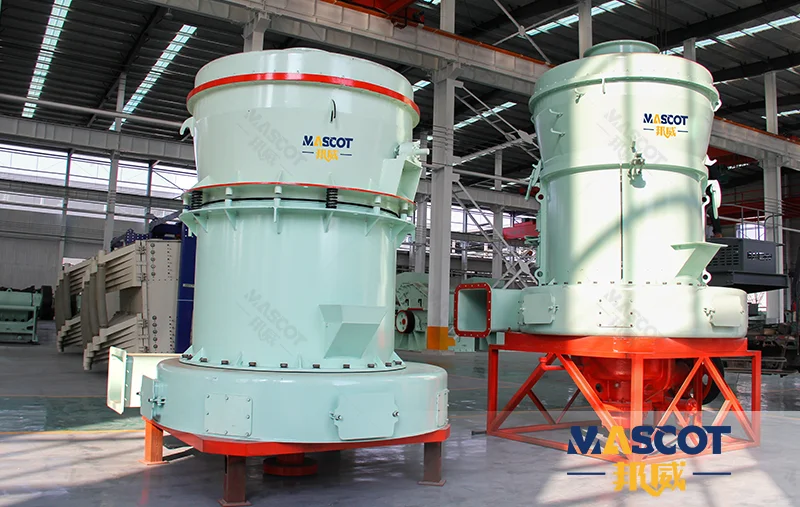
The classifier is the one component on a YGM High Pressure Grinding Mill that decides which mesh you sell, and it is also the smallest motor on the line. On a matched YGM75 set the classifier drive is 2.2 kW next to an 18.5 kW main mill and a 15 kW blower; on a YGM190 set it is 22 kW next to a 250 kW main mill. Between 4.0% and 6.2% of the grinding circuit's drive power sits in the component that sets the product. That asymmetry is the reason a mill can be mechanically perfect and still ship the wrong powder: the speed of the classifier, not the force of the rollers, is what fixes the cut. This guide covers what the setting actually changes, the order in which to make the change, and what to record so the setting stays where you put it.
The published equipment table for a YGM production line lists the three grinding-circuit drives side by side, which is the clearest way to see the relationship. The table below reproduces that published specification and adds one derived column.
| Model | Line Capacity (t/h) | Main Mill (kW) | Blower (kW) | Classifier (kW) | Classifier Share of the Three Drives (computed) |
|---|---|---|---|---|---|
| YGM75 | 1-3 | 18.5 | 15 | 2.2 | 6.2% |
| YGM95 | 2-5.6 | 45 | 45 | 5.5 | 5.8% |
| YGM130 | 5.8-9.5 | 90 | 90 | 7.5 | 4.0% |
| YGM160 | 8-16 | 132 | 132 | 15 | 5.4% |
| YGM190 | 18-36 | 250 | 250 | 22 | 4.2% |
How to read this table: the capacity and the three drive ratings are the published values for the matched YGM production line sets. The last column is a computed index — classifier drive divided by the sum of the main mill, blower and classifier drives — and it is not a specification, an efficiency figure or a target. It answers one question: how much of the grinding circuit's installed power sits in the machine that sets the finished mesh? Across the five models the answer is 4.0 to 6.2%, which is why a plant that tunes only on power and ignores the classifier can run an efficient mill that produces the wrong product.
Two consequences follow for anyone setting the machine up. First, the classifier drive is small enough that changing its speed costs almost nothing in electricity, which is what makes stepless fineness adjustment practical. Second, the main mill and the blower together are 30 to 40 times the classifier drive, so a change in the classifier setting will not damage the economics of the line — but a mistake in the classifier setting will waste the output of both larger motors, because powder that does not meet the cut goes back through the grinding zone and is ground again.
A YGM mill is air-swept: the blower generates high-volume airflow that lifts the ground powder out of the grinding zone and carries it to the classifier, where on-spec particles pass through and oversized particles recirculate internally for another pass under the rollers. The classifier is an impeller or turbine rotor, and its rotational speed sets the cut point of that separation.
This is the mechanism behind the series' published working window of 80 to 425 mesh. The same machine produces a coarse construction filler or a fine coating filler without any mechanical change, because the only thing that moves is the rotor speed and the airflow rate that works with it. On a single YGM mill the documented adjustment covers a change from 100 mesh to 325 mesh as a control-panel operation with no parts replaced.
The window is a property of the classifier that is fitted, not of the mill body, which matters when a project needs to go finer than the standard band. Where a coating or masterbatch grade is required, the mill is configured with a turbo classifier and a VFD drive and the documented result is a D97 cut at 800-1250 mesh with pass rates above 98%, with the particle size distribution held to a variance under 2% in continuous operation. The same principle runs in the other direction for contamination-sensitive products: a quartz line is fitted with a ceramic-lined classifier so that the powder path introduces no iron pickup.

Six steps, and the order is the part that is usually got wrong.
Step 1: State the target as a number. "Fine powder" cannot be tuned to. Write the specification as a mesh figure with its micron equivalent and a pass rate — 325 mesh (0.044 mm) at a stated D97, for example — so that the sample report at the end of the change can be judged against something. Specifications written only as a mesh number and nothing else lose the two facts that decide whether the powder is saleable: the micron value and the tail of the distribution.
Step 2: Confirm the feed before touching the classifier. Output and fineness both follow feed stability on this mill: material is fed into the grinding chamber at a steady rate by the feeding device, and an unsteady feed shows up as an unsteady product. Tuning a classifier over a fluctuating feed produces a setting that was right for one hour of the shift.
Step 3: Change the classifier setting alone. Move the rotor speed toward the target cut and leave every other control where it is. Moving speed, airflow and feed rate in the same fifteen minutes makes the resulting sample unreadable, because none of the three can be given credit for the result.

Step 4: Verify with a sample, not with the panel. The panel reports the setting; only a particle size measurement reports the product. Take the sample after the mill has been running at the new setting under a stable load, and record the pass rate at the target mesh rather than an impression of fineness.
Step 5: Record the setting alongside the mill's numbers. Log the classifier setting together with the main motor current and the feed rate. This is the entry that makes a future drift diagnosable: if fineness moves while the power draw does not, the cause is in the mill; if both move, the cause is upstream.
Step 6: Only then adjust the airflow. Rotor speed and airflow rate are adjusted as a pair — the documented coarse-to-fine change from 80 mesh to 425 mesh is made by adjusting both — but they are adjusted sequentially, never simultaneously. Treat airflow as the fine correction after the speed has taken the cut to the right neighbourhood.
Three problems look like classifier problems and are not, and each has a different answer.
An unsteady feed. If the product moves in and out of specification on its own, the classifier is holding a setting while the material bed under the rollers is changing. The correction is at the feeding end — a metered, even supply — not at the rotor.
Worn blades and wear parts. Classifier blades wear, and a worn blade set changes the effective cut even at an unchanged speed. Weekly inspection of blade wear is part of the operator's routine on this series, alongside greasing the roller bearing points. Keeping one set of blades, rollers and rings on site is the standard recommendation, and the practice that prevents a forced stop is to order the replacement when the set in service reaches 60-70% of its expected life rather than when it fails.
A cut outside the fitted classifier's range. If the market asks for a powder finer than the standard window, the answer is a different classifier configuration — the turbo classifier and VFD package described above — and not a speed setting pushed to its limit.
Damp feed belongs in the same list. A YGM mill can be supplied with a hot-air inlet where the feedstock carries seasonal moisture, and without it the powder path can cake and the classifier's job becomes impossible regardless of its speed. The moisture clause belongs in the project design, not in the operator's workaround.

This is the question that decides how a plant plans its production, and it has a precise answer on this series.
The single-machine guidance is that fineness cannot be changed while the mill is running: the change is made by adjusting the classifier speed through the frequency converter, and it requires a brief shutdown. The adjustment itself takes under ten minutes, no physical parts are replaced, and the documented time to move production from an 80 mesh setting to a 425 mesh setting is under 30 minutes end to end. A mesh change is therefore a short planned stop, not a re-fit.
Where a plant switches grades often enough that the stop itself is the constraint, the alternative offered is a dual-classifier configuration, which shortens the turnaround between batches. Where the mill is specified with a VFD-driven classifier, the adjustment is made at the control panel, so the practical difference between configurations is a scheduling question rather than a technical one. Confirm which configuration your quotation covers at the order stage — the answer determines how the plant writes its grade changes into the production plan — and note that the ability to change a cut while the mill is running is a design characteristic that differs between mill families, as the comparison of the YGM and the MTW trapezium mill sets out.

Setting the classifier starts from what the market buys, and the same mill serves several markets. The table below collects the published working cuts for the material groups this series is applied to.
| Material | Typical Working Cut | What the Classifier Setting Delivers |
|---|---|---|
| Limestone, calcite, gypsum (fillers, additives) | 80-200 mesh | Coarse to medium powder in the heart of the standard window, where the mill runs at its highest tonnage |
| Dolomite, iron ore (refractory, pre-grinding) | 80-200 mesh (0.18-0.075 mm) | A single speed change covers the whole band with no mechanical modification |
| Cement clinker, slag, fly ash (blended cement) | 80-325 mesh | Grade switching between a 150 mesh additive and a 200 mesh blending powder takes minutes |
| Quartz (glass and ceramic batch) | 80-325 mesh | Ceramic-lined classifier and powder path keep iron pickup at zero |
| Barite (oil-drilling weighting agent) | 200-325 mesh, API | A classifier tuned to API specifications holds a 200 mesh pass rate above 97% while preserving specific gravity above 4.2 |
| Coating-grade calcite (turbo classifier) | 800-1250 mesh (D97) | Turbo classifier with VFD control: D97 pass rates above 98% with variance under 2% |
How to read this table: the working cuts are the published application ranges for each material group on the YGM series, and the third column describes what the classifier delivers at that cut. Ranges are the published specification for the material group rather than a test result on your own stone; the definitive setting is confirmed against a sample of your material in the project design.
The clearest demonstration of what a classifier setting can do comes from a plant where the target was set by the customer's end product rather than by a mill datasheet.
A manufacturer of industrial fillers and extenders supplying paint and plastics producers in the Middle East and North Africa needed 800 mesh and 1250 mesh calcite powder with strict whiteness retention — high-purity white calcite at Mohs 3.0 and a 20 mm feed. The line supplied was a YGM85 equipped with a multi-stage turbo classifier and a secondary bag filter, with ceramic-lined piping to keep metal out of the powder path. The mill produces 1.8 t/h of 1250 mesh calcite at 94.5% ISO brightness, and the turbo classifier achieved D97 pass rates above 98% — a result the customer measured against the ball mill the line replaced, which had struggled with oversize particles at fine settings. High-volume production and a tight fine cut are not in conflict here; they are the same setting.
The second case runs the other way, on a specification rather than a brightness figure. A barite line serving the drilling sector was configured with an upgraded classifier so that the mill achieved D97 75 µm (200 mesh) with a pass rate above 99%, meeting the particle-size requirements of API 13A Section 7 for drilling-grade barite. The precision rotor speed control is what holds that D97 consistent from one production batch to the next — which is the point of caring about classifier speed in the first place: the specification is a promise across many shipments, not a single sample.
Both results come from a setting, not from a machine upgrade, and both depend on the classifier working inside a complete circuit. Where a line is being specified rather than a single mill, the YGM limestone production line case lists what a matched set contains — crusher, YGM high pressure grinding mill, bucket elevator, vibrating feeder, classifier, cyclone collector and dust collector — which is the list any two quotations being compared should contain.

A classifier setting is only as stable as the components around it. Three habits keep it stable, and all three come out of the series' own operating documentation.
Inspect the blades on a fixed cycle. The operator's routine is daily checks of the main bearing oil level, belt tension and dust collector filter bags, and a weekly check of classifier blade wear together with greasing the roller bearing points. No specialised tooling is required, and a laminated daily checklist is supplied with each machine.
Keep a set on the shelf. Rollers, rings, classifier blades and bearings for the YGM models are held in year-round stock, with express air freight typically 5-7 days to a major port and sea freight 25-35 days. Ordering when the installed set reaches 60-70% of expected life is what turns a wear change into a scheduled stop.
Watch the setting, not just the product. Where an IoT monitoring package is fitted, it tracks main motor current, bearing temperatures, classifier RPM and system vibration in real time — which turns the classifier from a setting into a monitored variable.
One log entry per change is enough to make all of this useful, and it takes a minute to write. The table below is the structure that makes a future fineness question answerable.
| Log Entry | Why It Matters |
|---|---|
| Date, shift and material | Establishes which product the setting belongs to; the same number means different cuts on different materials |
| Target specification (mesh, micron value, pass rate) | Makes the sample result verifiable instead of a matter of opinion |
| Classifier setting as displayed (RPM or Hz) | The number that has to be reproduced when the grade returns; without it the setting is rediscovered every time |
| Feed rate setpoint and main motor current | Records the load the setting was proven at, so a later shift can reproduce the conditions rather than only the number |
| Sample result and who took it | Separates a specification change from a measurement change |
| Blade and wear-part condition at the time | Explains a drift at constant speed, which is the signature of wear rather than of setting |
Q1: How do I know which classifier setting gives my target mesh?
A: You do not read it from a chart — you set it and verify it. Move the rotor speed toward the target cut, hold the feed steady, take a sample once the mill is running at the new setting, and record the setting together with the pass rate at the target mesh. That record is what makes the next change a fifteen-minute job instead of an experiment.
Q2: Can fineness be changed while the mill is running?
A: On a single YGM mill the documented procedure is a brief shutdown to adjust the classifier speed through the frequency converter; the adjustment takes under ten minutes and no parts are replaced. Where grades change frequently, a dual-classifier configuration is available to shorten the turnaround. Confirm which configuration your quotation covers before you plan the production calendar.
Q3: What fineness range does the series cover?
A: The standard published window is 80-425 mesh. Where a finer cut is required, the mill is configured with a turbo classifier and VFD control; the documented result on that configuration is a D97 cut at 800-1250 mesh with pass rates above 98% and distribution variance under 2%.
Q4: Why does my product change even though the classifier setting has not moved?
A: Two usual causes. Classifier blades and grinding wear parts change the effective cut as they wear, which is why blade wear is a weekly check, and an unsteady feed changes the material bed in the grinding zone. Log the setting with the main motor current: fineness drift at constant power points to wear, and fineness drift with a moving power reading points upstream.
Q5: Can one mill really serve several grades?
A: Yes, and that is the commercial argument for the air classifier. The same machine produces a coarse filler and a fine coating grade by changing classifier speed and airflow with no mechanical modification, which is why plants running a mixed product range quote fewer variants off a single mill.
Q6: What are the service terms and how fast are classifier parts?
A: A 12-month warranty covers the whole machine and a further 12-month warranty covers core components including rollers, rings and classifiers, with 24/7 online consultation and engineers available for on-site installation and commissioning. Classifier blades are kept in year-round stock; express air freight typically runs 5-7 days to a major port.
Setting the classifier on a YGM mill is a five-minute adjustment with a fifteen-minute discipline around it. The speed of the rotor, working with the airflow rate, sets the cut point of the separation that decides which mesh leaves the plant, and it does so across an 80-425 mesh window on a drive that is only 4.0-6.2% of the grinding circuit's installed power. Make the change one variable at a time, keep the feed steady, verify with a sample rather than with the panel, and log the setting with the mill's power draw — then a grade change is a short planned stop and the next one is a repeat rather than a rediscovery.
Where the required cut sits outside the standard window, the answer is a configuration: a turbo classifier with VFD control for coating and masterbatch grades, documented at D97 800-1250 mesh with pass rates above 98%, or a ceramic-lined classifier where iron pickup must stay at zero. Where it sits inside the window, the answer is the routine: blades inspected weekly, a spare set on the shelf, and one line in the log. The YGM High Pressure Grinding Mill covers five models from 1.2 to 36 t/h with fineness set by the classifier rather than by the machine, and the mesh and capacity framework behind it is set out in the guide to limestone mesh and capacity on the YGM series. For products finer than the trapezium window, the HGM Series Micro-powder Grinding Mill takes over at the ultra-fine end. Send your target mesh, the material and the tonnage you need at that cut, and the model and classifier configuration can be specified against your specification rather than against a range.

About of Mascot
Zhengzhou Mascot Industry is a high-tech mining equipment company integrating R&D, manufacturing, sales, and after-sales service. Focusing on crushing, grinding, and mineral processing equipment, we provide professional solutions to our customers. We are ISO9001:2015 certified, and our products include mobile crushing plants, crawler crushing plant, construction waste crushing plants, jaw crushers, sand making machines, cone crushers, fine crushers, grinding mills, ball mills, etc., all with reliable performance to meet diverse project needs.
• Professional pre-sales support: Free project design and comprehensive solutions to help you accurately select the right equipment;
• Comprehensive on-site service: Providing installation guidance and worker training to ensure smooth equipment commissioning;
• Reliable after-sales guarantee: A complete after-sales system, timely response to technical inquiries and equipment maintenance, ensuring long-term stable operation.
To protect your rights, please contact us through the following official channels for professional service:
WhatsApp: 0086-16650273865
Email: mascot@mascotenv.com
We are committed to providing high-quality equipment and full-cycle services to deliver comprehensive intelligent solutions for the global mining industry!

The gypsum grinding production line is an efficient, stable, and environmentally friendly production solution, which is widely used in construction, decoration, the chemical industry, and other fields. In addition, the grinding process is particularly critical, which directly affects the quality and particle size of the final product. With the continuous development of science and technology, the technical level and production efficiency of gypsum grinding production lines will be further improved, providing strong support for the development of the gypsum processing industry.

The ball mill production line is a comprehensive production line that integrates material crushing, grinding, grading, and collection. This production line is mainly used to process various materials, including sand and gravel, cement, new building materials, silicates, refractory materials, fertilizers, ferrous metal beneficiation, non-ferrous metals, glass ceramics, etc.

The Raymond mill production line is a highly efficient system designed for grinding operations, with a focus on energy efficiency, durability, and productivity. It caters to the needs of users by offering fine powder products in non-metallic ores, coal powder, and slag processing, aiding enterprises in achieving sustainable growth.
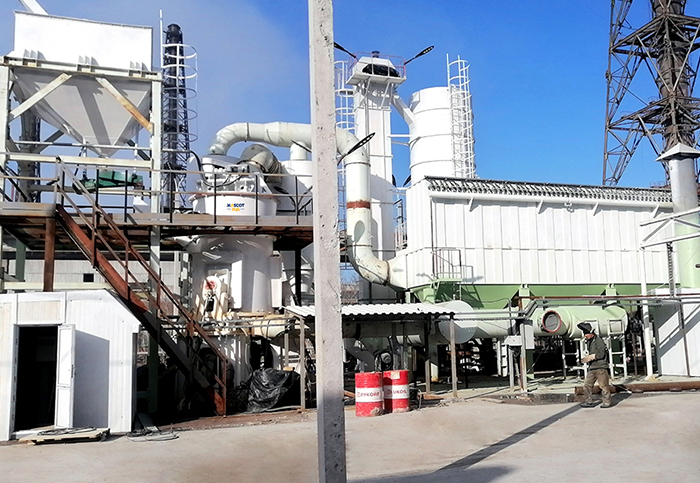
The production line of the vertical roller mill is a cost-effective and energy-efficient solution for processing powder, which is widely used in many industries, such as metallurgy, building materials, industrial solid waste treatment, thermal power plants, cement plants, and environmental protection fields. The primary purpose of this project is to finely grind raw materials through a vertical roller mill to meet the requirements of different industries for particle size, purity, and output of powder products.

YGMX Enhanced High-Pressure Mill is a new type of high-performance grinding equipment, and the biggest improvement of this milling equipment lies in the increase of the high-pressure spring system in the grinding roller part. Compared with the traditional high-pressure roller mill, it has a wider scope of application and excellent performance to meet the production needs of a variety of powder fineness. It is widely used in non-metallic minerals, chemicals, building materials, metallurgy, environmental protection, etc. Multiple areas.
Green and Intelligent Mining Machinery
Manufacturing and Export Base
Based on high quality and perfect after-sales service, our products have been
exported to more than 120 countries and regions.
Copyright © 2023 Zhengzhou Mascot Environmental Technology Co., Ltd Record number: Yu ICP No. 13021523-4





 WhatsApp