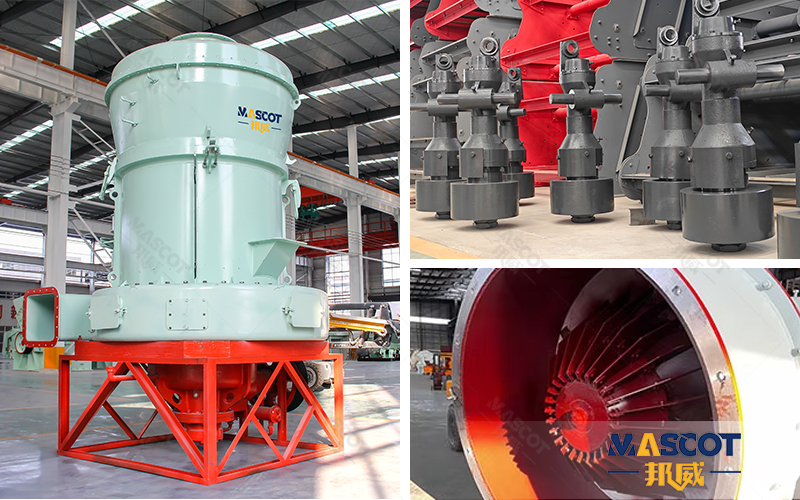
Limestone is the one material for which both of these machines are routinely quoted, and the comparison usually collapses into an argument about roller geometry. That is the wrong place to start. For limestone the machine follows the product: a plant selling 150 mesh cement additive is not in the same decision as a plant selling 325 mesh absorbent powder to a power station, even when both are grinding stone from the same quarry. This article sets the MTW Trapezium Grinding Mill and the Vertical Roller Mill side by side on the three limestone products, then on the capacity line where the choice actually exists, and closes with the inputs a quotation needs.
Limestone is calcium carbonate at Mohs 3, which is why every mill builder lists it as a reference material. That hardness figure is also why the mineral rarely decides anything: both machines grind it comfortably, and both are sold on limestone references. What separates the products is the grade and the test behind it.
The first product is cement and construction limestone: raw meal component and cement additive, board and plaster filler, published at 80-200 mesh. The second is power-plant desulfurization absorbent, published at 200-325 mesh, where the buyer cares about the fineness of the absorbent because it sets how much limestone the plant consumes per tonne of SO2 removed. The third is coating, plastic and rubber filler, also 200-325 mesh, where the top cut and the brightness matter more than the tonnage.
Set those three bands against the two published ranges — MTW at 80-400 mesh (0.038-0.2 mm) and the vertical mill at 70-325 mesh (212-45 micron) — and the first conclusion is unglamorous: for the great majority of limestone grades, fineness does not choose the machine. Both cover the band. The choice is made by tonnage, by feed moisture and by the top cut, and the next three sections take those in order. Below roughly 80 mesh neither machine is the economical answer; a high-pressure mill covers that band with a smaller frame, as set out in the YGM limestone mesh and capacity guide.

The table below is the published specification of each series, row for row, without interpretation. The interpretation follows underneath, because two of these rows are read wrongly more often than the rest. A category-level comparison of the two technologies is set out in MTW mill vs vertical roller mill: key differences; this article stays on the limestone decision.
| Published Item | MTW Trapezium Grinding Mill | Vertical Roller Mill (SRM) |
|---|---|---|
| Models in the series | 4 — MTW110 to MTW215 | 5 — SRM1300 to SRM2200 |
| Capacity | 3-50 t/h | 10-135 t/h |
| Published fineness | 80-400 mesh (0.038-0.2 mm) | 70-325 mesh (212-45 micron) |
| Maximum feed size | 30-45 mm, rising with the model | 38 mm, identical across all five models |
| Feed moisture | Up to 6%; no drying function in the mill | 4-15% in, ≤1% out, hot gas up to 350 °C |
| Grinding element | Trapezium rollers rolling against a grinding ring | Hydraulically loaded rollers on a rotating grinding table |
| How the cut is set | Powder classifier speed, adjusted while the mill runs | Dynamic classifier speed, adjusted while the mill runs |
| Power as published | Three columns: main mill, classifier, blower | One column: motor power, 185-1000 kW across the series |
| Wear parts | Grinding rollers and grinding ring | Roller sleeves and table liners, modular segments |
| Where it is the answer | 3-50 t/h of 80-400 mesh powder on dry feed | 10-135 t/h where drying and grinding happen in one pass |
How to read this table: the two fineness ranges overlap between 80 and 325 mesh, so for most limestone grades that row is a tie and can be set aside. The power row is the one that matters and the one that is misread: the MTW table publishes the mill, the classifier and the blower as three separate columns, which means its air circuit is already inside the number, while the SRM table publishes a single motor figure. A buyer who compares the first power column of one table with the only power column of the other is comparing a mill with a mill plus its air system, and the result will favour the vertical mill every time for reasons that have nothing to do with efficiency. The moisture row is the second trap, and it is covered in section 5.
Capacity is where the two ladders meet, and the meeting is narrow. MTW runs from 3 to 50 t/h in four frames; the SRM series runs from 10 to 135 t/h in five. Below 10 t/h only the MTW is in the conversation. Above 50 t/h only the vertical mill is. Between 10 and 50 t/h both can be quoted against the same duty, and that band is where every genuine limestone comparison happens.
The ladders themselves explain why the band is wide rather than a single number.
| Model | Series | Capacity (t/h) | Max. Feed (mm) | Published Fineness |
|---|---|---|---|---|
| MTW110 | MTW | 3-10 | ≤ 30 | 80-400 mesh |
| MTW138 | MTW | 6-20 | ≤ 35 | 80-400 mesh |
| MTW175 | MTW | 10-35 | ≤ 40 | 80-400 mesh |
| MTW215 | MTW | 20-50 | ≤ 45 | 80-400 mesh |
| SRM1300 | SRM | 10-35 | ≤ 38 | 70-325 mesh |
| SRM1500 | SRM | 13-48 | ≤ 38 | 70-325 mesh |
| SRM1700 | SRM | 18-68 | ≤ 38 | 70-325 mesh |
| SRM1900 | SRM | 23-85 | ≤ 38 | 70-325 mesh |
| SRM2200 | SRM | 36-135 | ≤ 38 | 70-325 mesh |
How to read this table: the capacity columns are ranges because output falls as the target grade gets finer — the top of every range belongs to the coarsest setting the machine will run, not to the grade in your enquiry. A 20 t/h duty at 325 mesh sits inside both the MTW175 range and the SRM1300 range, but it does not sit at the same place in each: it is near the middle of the MTW175 band and nearer the top of the SRM1300 band. Read the two ranges that way and the shortlist becomes two models, which is the point at which price, layout and power should be compared. The MTW series' own capacity behaviour is broken down in the MTW capacity guide, and the model-by-model choice for a 325 mesh limestone order is worked through in which MTW mill for 325-mesh limestone.
Take the 20 t/h at 325 mesh duty and put the two candidates on paper: an MTW175 from the MTW ladder and an SRM1300 from the vertical ladder. On the published sheets the vertical mill's single motor figure is lower than the MTW's three-column total, and that comparison is meaningless as it stands.
The reason is scope, not efficiency. The MTW number is split into mill, classifier and blower because those are three separate drives on the machine; add them and the air circuit that lifts and classifies the powder is inside the total. The SRM number is one motor column, and a vertical mill's gas circuit — which on this series also carries the hot air used for drying — is not inside that cell. Comparing the two columns is comparing a mill with a mill plus its air system, and the answer is decided by which auxiliaries each table chose to publish.
What a buyer can do instead is narrow the field on capability and then make the power comparison on a defined basis. Capability is settled by the ladder: at 20 t/h both models are inside their published range at 325 mesh. Power is settled by asking one question of both suppliers — kilowatt-hours per tonne of 325 mesh powder from this limestone, with the boundary stated — and requiring that the boundary includes the mill, the classifier or separator, the fan or hot-gas circuit, feeding and the dust collector. Only then do the two numbers describe the same plant.
There is a second, quieter difference in the same section. The vertical mill's gas circuit is doing transport and classification as well as drying, so on a dry feed it is still a live part of the power bill; the MTW's blower is doing the same work with a shorter duct run and no hot-gas generator. That does not make either machine cheaper per tonne, but it explains why nameplate arithmetic and a real energy audit rarely agree on a limestone duty.

Every other difference between these machines is a difference inside the mill. Moisture is the one that changes the flowsheet.
The MTW takes feed up to 6% moisture directly. Above that, the material has to be blended, drained in the stockpile or pre-dried, because damp limestone builds up in the grinding chamber and the output falls away before anything else fails. A pre-dryer is a capital item, a fuel bill and a maintenance point, and it is usually discovered late in a project because the moisture figure arrives with the quarry report rather than with the enquiry.
The vertical mill states the same constraint as a feature: 4-15% feed moisture to ≤1% final moisture, hot gas entering at up to 350 °C and leaving at 70-95 °C. On a site with kiln or boiler waste heat, that turns a waste stream into a drying source and removes the dryer from the flowsheet entirely.
The practical rule for limestone is short. Crushed stone from a covered stockpile in a dry climate is a 6%-and-under feed, and this row costs nothing. Washed stone, an open stockpile through a monsoon, or a plant that receives slurry or filter cake is a different project, and the dryer should be priced before the mill is priced. If the moisture is seasonal rather than permanent, price the dryer against the weeks it will actually run.
Both machines change grade while running, which is the feature that makes a multi-product limestone plant possible on one unit. On the MTW the control is the powder classifier; on the SRM it is the dynamic classifier on top of the grinding table. In both cases a change from cement additive to desulfurization grade is an operating adjustment rather than a shutdown, and in both cases the change takes effect after the circuit has re-stabilised — not instantly at the bagging point.
The top cut is where the two datasheets genuinely part company. The MTW publishes 80-400 mesh; the vertical mill publishes 70-325 mesh. For a filler contract written at 400 mesh, that single row ends the comparison. For the 200-325 mesh grades that make up most limestone tonnage, it does not.
The bottom of the range differs in the other direction: 70 mesh against 80 mesh. That is a narrow advantage for the vertical mill on very coarse powder, and it is worth little in practice because at that coarseness a high-pressure mill is the cheaper machine, as the YGM guide sets out.
One caution applies to both: a published mesh range is a capability, not a guarantee on your stone. Desulfurization buyers test fineness and reactivity together, and a filler buyer tests the top cut on a sieve, so the pass rate that matters is the one measured on your sample, at your cut, on the machine you are buying. Send the sample with the enquiry rather than after the order.
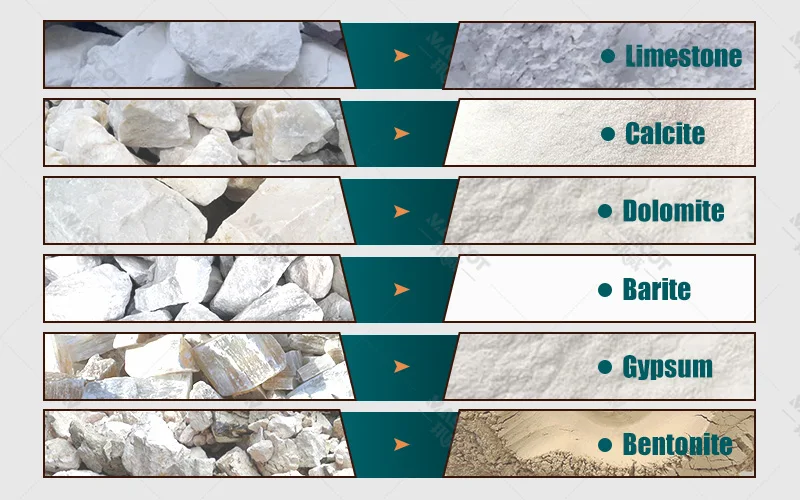
Most limestone projects can be routed by one row of the table below. The exceptions are the projects that sit exactly on the 10 t/h and 50 t/h lines, and those deserve a quotation from both sides rather than a rule.
| Your Situation | The Machine to Look At | Why |
|---|---|---|
| 3-10 t/h, one or two grades | MTW | Below the 10 t/h floor of the vertical mill series, so there is no choice to make |
| 10-50 t/h at 200-325 mesh, dry feed | MTW | The band both machines cover; the MTW line carries no hot-gas circuit and fewer auxiliary systems to erect and maintain |
| 10-50 t/h, feed consistently above 6% moisture, no dryer on site | Vertical roller mill | Drying happens in the same pass, so the dryer, its fuel bill and its transfer points leave the flowsheet |
| 50-135 t/h | Vertical roller mill | The MTW ladder stops at 50 t/h on its largest frame |
| Product must hold 400 mesh | MTW | The vertical mill table stops at 325 mesh, so the cut is outside its published range |
| Site has waste heat and needs 40 t/h or more | Vertical roller mill | Waste heat is only an advantage on the machine that can use it for drying |
| Several grades between 80 and 325 mesh, changed weekly, under 50 t/h | MTW | One classifier-controlled machine covers the mix without a second unit |
Q1: Can a vertical roller mill make 325 mesh limestone powder?
A: Yes. 325 mesh sits at the top of its published 70-325 mesh range. The question is not capability but whether a 20 t/h duty justifies the larger integrated circuit; at that tonnage an MTW frame covers the same cut with a simpler line, and the decision comes back to moisture and to the power comparison made on a defined boundary.
Q2: Which machine uses less power per tonne?
A: The published sheets cannot answer that, because the MTW table splits power into mill, classifier and blower while the SRM table publishes one motor figure. Ask both suppliers for kWh per tonne at your mesh, on your limestone, with the air circuit, feeding and dust collection inside the boundary. Any answer that quotes motor power alone is a nameplate comparison, not an energy figure.
Q3: Our limestone arrives at 9% moisture. Does that rule out the MTW?
A: Not permanently, but it changes the project. The MTW feed limit is 6%, so the material would need blending, stockpile drainage or a pre-dryer ahead of the mill. If the moisture is seasonal, compare the dryer's annual fuel and maintenance against the vertical mill's larger frame; if it is permanent, the vertical mill's in-pass drying is usually the shorter flowsheet.
Q4: Can we start at 15 t/h and grow to 60 t/h on the same machine?
A: Not on one MTW. The series tops out at 50 t/h, so growth past that means either a second MTW unit or a move to the vertical mill ladder. If the growth is likely within a few years, size the building, the transformer and the feed system for the larger case now, even if the first mill is the smaller one.

About of Mascot
Zhengzhou Mascot Industry is a high-tech mining equipment company integrating R&D, manufacturing, sales, and after-sales service. Focusing on crushing, grinding, and mineral processing equipment, we provide professional solutions to our customers. We are ISO9001:2015 certified, and our products include mobile crushing plants, crawler crushing plant, construction waste crushing plants, jaw crushers, sand making machines, cone crushers, fine crushers, grinding mills, ball mills, etc., all with reliable performance to meet diverse project needs.
• Professional pre-sales support: Free project design and comprehensive solutions to help you accurately select the right equipment;
• Comprehensive on-site service: Providing installation guidance and worker training to ensure smooth equipment commissioning;
• Reliable after-sales guarantee: A complete after-sales system, timely response to technical inquiries and equipment maintenance, ensuring long-term stable operation.
To protect your rights, please contact us through the following official channels for professional service:
WhatsApp: 0086-16650273865
Email: mascot@mascotenv.com
We are committed to providing high-quality equipment and full-cycle services to deliver comprehensive intelligent solutions for the global mining industry!

The gypsum grinding production line is an efficient, stable, and environmentally friendly production solution, which is widely used in construction, decoration, the chemical industry, and other fields. In addition, the grinding process is particularly critical, which directly affects the quality and particle size of the final product. With the continuous development of science and technology, the technical level and production efficiency of gypsum grinding production lines will be further improved, providing strong support for the development of the gypsum processing industry.

YGMX Enhanced High-Pressure Mill is a new type of high-performance grinding equipment, and the biggest improvement of this milling equipment lies in the increase of the high-pressure spring system in the grinding roller part. Compared with the traditional high-pressure roller mill, it has a wider scope of application and excellent performance to meet the production needs of a variety of powder fineness. It is widely used in non-metallic minerals, chemicals, building materials, metallurgy, environmental protection, etc. Multiple areas.
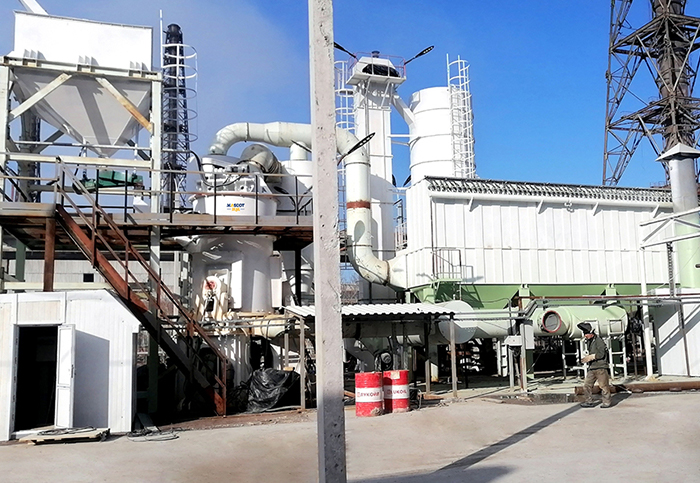
The production line of the vertical roller mill is a cost-effective and energy-efficient solution for processing powder, which is widely used in many industries, such as metallurgy, building materials, industrial solid waste treatment, thermal power plants, cement plants, and environmental protection fields. The primary purpose of this project is to finely grind raw materials through a vertical roller mill to meet the requirements of different industries for particle size, purity, and output of powder products.

The high-pressure grinding mill production line is a project specially designed for efficient grinding operations. It is widely used in metallurgy, building materials, the chemical industry, highways, water conservancy hydropower, and other industries. It is a suspended roller mill that uses springs to increase pressure. It can achieve efficient grinding processing of various non-metallic raw materials. It has high efficiency, stability, and environmental protection characteristics.

The ball mill production line is a comprehensive production line that integrates material crushing, grinding, grading, and collection. This production line is mainly used to process various materials, including sand and gravel, cement, new building materials, silicates, refractory materials, fertilizers, ferrous metal beneficiation, non-ferrous metals, glass ceramics, etc.
Green and Intelligent Mining Machinery
Manufacturing and Export Base
Based on high quality and perfect after-sales service, our products have been
exported to more than 120 countries and regions.
Copyright © 2023 Zhengzhou Mascot Environmental Technology Co., Ltd Record number: Yu ICP No. 13021523-4





 WhatsApp
