 27
 27
 23

Three units decide almost every grinding quotation, and they are routinely used as if they were interchangeable. They are not. Mesh is a sieve count, micron is a particle size, and Blaine is a surface area per kilogram — and only the first two can be converted into each other at all. This cheat sheet sets out what each unit measures, where the conversions hold and where they break, and what to write on an enquiry so that the powder you receive is the powder you specified. The milling side of the same question — how a machine holds a cut — is illustrated throughout with the HGM Series Micro-powder Grinding Mill, whose published range runs from 150 to 3000 mesh.
Before the numbers, the questions. Each unit answers something different, and a specification that uses the wrong one cannot be met by any machine.
Mesh answers: which sieve does this powder pass through? It is a count of openings per linear inch of that sieve, so it describes a test rather than the material.
Micron (a thousandth of a millimetre) answers: how large are the particles? A micron figure only becomes a specification when it names the point on the distribution it refers to — D50, D97 or a top cut.
Blaine answers: how much surface does a kilogram of this powder present? It is measured by air permeability and expressed in square metres per kilogram. It is the standard fineness language of cement and slag, and it is not a size at all.
The practical consequence is simple. Two powders sold as "325 mesh" can behave differently in a customer's process, because the sieve number fixes the coarse end and says nothing about the distribution beneath it. And a cement or slag buyer who asks for a mesh number is asking a question the material is not normally bought on — those products are sold on Blaine and on residue.

The mesh number is the number of openings per inch in the screen the powder was tested against. That is why the scale runs backwards from the way most people expect: a higher mesh number means a smaller opening. 200 mesh is coarser than 325 mesh, and 325 mesh is coarser than 1250 mesh.
Two cautions follow, and both cost buyers money when they are ignored.
The first is that mesh systems are not universal. American, British and ISO sieve series do not use identical openings for the same number, so a "325 mesh" specification without a standard behind it is an incomplete specification. Where the tolerance matters, quote the micron figure instead and treat the mesh number as a label.
The second is that the sieve fixes only the coarse end. A powder that passes 325 mesh may contain almost nothing below 20 micron or a great deal of it, and those two powders will not behave the same way in a paint, a plastic compound or a drilling fluid. That is the gap the next unit closes.
Micron figures are quoted as a D value, and the letter is where most confusion starts. D97 means 97% of the particles pass that size — in practice, the top cut, the number that decides whether an oversize particle will show up as a defect. D50 is the median, the size at which half the powder is coarser and half is finer, and it describes the body of the distribution rather than its edge.
Two powders can share a D50 and differ completely at D97, which is why a coating or paper buyer specifies the top cut and a filler buyer may specify both. Neither figure tells you the shape of the particles or how much surface they present — and that is not a technicality. It is the reason two deliveries at the same D97 can be accepted by one customer and rejected by the next.
For a buyer, the discipline is short: state the D value, the micron figure, and the test method. "D97 of 10 micron" is a specification. "1250 mesh" is a shorthand that usually implies the same thing but does not prove it, and the difference between an implied and a stated cut is where rejections live. The way a mill actually holds that cut — and why the classifier rather than the grinding parts sets it — is set out in the explanation of how D97 is held on the HGM mill.
Blaine is specific surface area measured by air permeability, in square metres per kilogram, and it exists because of what cement and slag are asked to do. Both react with water, and a reaction happens at the surface: the more surface a kilogram of powder presents, the faster and more completely it reacts. Strength development in concrete is therefore tied to surface area in a way that a sieve number cannot express.
The published figures show the two languages side by side. Cement fineness is quoted at 280-450 m²/kg, or alternatively as a 45 micron residue of 1-10%; the standard comparison basis for clinker grinding power is an ordinary Portland cement at 350 m²/kg. Slag powder is quoted by grade: S95 sits at 400-500 m²/kg, with about 400-450 m²/kg the common commercial target.
What Blaine cannot do is convert. There is no factor that turns m²/kg into micron, because the two measure different properties: a powder of flat or porous particles presents more surface at the same size than one of compact grains. This is why a slag station quoting "400 m²/kg" and a filler plant quoting "1250 mesh (10 micron)" are not making comparable statements, even when the powders look similar in a sample bag. Two powders at the same Blaine can also differ in residue, which is why the cement trade quotes both — the point argued in the comparison of Blaine and residue as fineness metrics.

Mesh and micron can be converted, with a caveat that belongs in the table rather than in a footnote: the equivalents below are the approximate figures used in published product tables, and the exact opening depends on the sieve standard behind the number. For commercial work the pairs are accurate enough to plan a line; for an acceptance test, quote the micron figure.
| Mesh band | Approximate Micron | Position in the Range | Typical Products |
|---|---|---|---|
| 150-325 mesh | about 106-44 micron | Coarsest band | FGD limestone, glass and ceramic, construction filler |
| 325-600 mesh | about 44-21 micron | General filling grade | Putty, mortar, profile, general plastic, rubber, ceramic batch |
| 600-1000 mesh | about 21-13 micron | Standard industrial band; 800 mesh is the flagship spec | Rubber masterbatch, paper coating |
| 1000-2500 mesh | about 13-5 micron | Ultra-fine and premium; 1250 mesh is the flagship spec | Paint, PVC, paper coating |
| 2500-3000 mesh | about 5-4 micron | Finest band | Premium coatings, polymer masterbatch, paper coating |
How to read this table: the bands and their micron equivalents are the published ranges used across this product literature, and the third column is the commercial position each band occupies rather than a property of the powder. Four single points are worth memorising because they are the ones buyers ask for most: 200 mesh is about 75 micron, 325 mesh about 45 micron, 400 mesh about 38 micron and 1250 mesh about 10 micron. Where a project sits exactly on one of those steps — a 400 mesh specification replacing a 325 mesh one, for instance — the difference in what the mill has to do is larger than the numbers suggest, and the trade-offs are set out in the comparison of 325 mesh and 400 mesh. The same logic applies at the coarser steps, where a dry ball mill circuit is usually the machine being specified: 200, 325 and 400 mesh on a dry ball mill covers what changes between them.
The unit a buyer writes decides which machine is quoted and which guarantee is offered. The table below maps the product being sold to the unit the customer will actually test it on.
| What You Sell | Specify This | Add This | Because |
|---|---|---|---|
| Cement | Blaine, 280-450 m²/kg | 45 micron residue, 1-10% | Two powders at the same Blaine can differ in residue, and the residue is what shows up as an unreacted grain |
| Slag powder (S95) | 400-500 m²/kg, with about 400-450 the common target | Residue on 45 micron, kept low | The grade is defined on surface area, so Blaine is the specification and residue is the guard rail |
| Mineral filler or coating grade | D97 in micron | The mesh label and the sieve standard behind it | D97 is the top cut your customer tests; the mesh number alone does not prove it |
| Paper coating or paint grade | D97, with 1250 mesh read as about 10 micron | Brightness or whiteness target | Colour is a separate specification that grinding cannot create |
| Coarse filler or FGD limestone | Mesh, with the sieve standard named | The micron equivalent | At coarse cuts the sieve standard decides the actual opening |
How to read this table: the first column is what goes on the market, and the second is what the mill has to be held to. Where the two differ — a filler sold as mesh but tested as D97 — the enquiry should carry both figures, because a supplier who is given only the marketing term will size the machine on an assumption. The published figures in the second column are the ones used across cement and slag specifications in this product literature.
On a modern mill, mesh and micron are the same dial. The cut is set by the classifier — the air separator that decides which particles are fine enough to leave the grinding chamber — and in the micro-powder class that classifier runs at variable speed. Turning it down moves the machine through every coarser grade in its range; turning it up tightens the top cut. The grinding rollers and rings do not change. That is why one machine can quote both 800 mesh and 2500 mesh, and why a supplier who talks about the grinding parts when asked about fineness is answering a different question.
Blaine behaves differently on the same dial. Raising the classifier speed does increase surface area, but the response is measured in m²/kg rather than in micron, and it is bought with tonnage: the finer the powder, the lower the output at the same installed power. That is the mechanism behind the capacity trade-off that slag producers meet when they move from S95 towards S105, and the same trade-off that makes the power line in a cement project depend on the fineness target rather than on the mill alone — the arithmetic of that line is set out in the vertical roller mill ROI model for cement plants.
Two settings therefore do the work on any of these machines: classifier speed, which sets the cut, and airflow, which carries the powder to it. How the two interact when a buyer changes grade or feed material is described in tuning a mill for fineness and output. A buyer who understands that pairing can read a specification sheet in either unit and know what the machine will actually have to do.

Q1: Can Blaine be converted to mesh or micron?
A: No. Blaine measures specific surface area per kilogram by air permeability, while mesh and micron describe a size, and there is no conversion factor between the two properties. A powder of flat or porous particles presents more surface at the same size than one of compact grains, so the same micron cut can sit at different Blaine values. Cement and slag are specified in Blaine because reactivity happens at the surface; mineral fillers are specified in micron because the size is what the application sees.
Q2: Is 325 mesh the same as 45 micron?
A: In practice, yes — the published tables treat them as equivalent, and 325 mesh is the step most often quoted alongside 45 micron. Strictly, the mesh number describes a sieve opening while the micron figure describes a particle size, and different sieve standards do not use identical openings for the same number. Where the tolerance matters, write the micron figure and treat the mesh number as the label.
Q3: Why do two powders at the same D97 behave differently?
A: Because D97 fixes only the top cut. Particle shape, the amount of material below the cut and the surface area per kilogram can all differ between two powders that share a D97, and those are what change dispersion, gloss, packing and reactivity. A specification that names D97 alone leaves all three open, which is why a second figure — D50, residue or Blaine — is normal on a serious enquiry.
Q4: Which unit should go on the purchase order?
A: The one the customer will test. For mineral fillers and coating grades that is D97 in micron, with the mesh label added for clarity; for cement and slag powder it is Blaine in m²/kg with a residue limit on 45 micron. Adding the test method and the sieve standard costs one line and removes the most common cause of a rejected delivery.

About of Mascot
Zhengzhou Mascot Industry is a high-tech mining equipment company integrating R&D, manufacturing, sales, and after-sales service. Focusing on crushing, grinding, and mineral processing equipment, we provide professional solutions to our customers. We are ISO9001:2015 certified, and our products include mobile crushing plants, crawler crushing plant, construction waste crushing plants, jaw crushers, sand making machines, cone crushers, fine crushers, grinding mills, ball mills, etc., all with reliable performance to meet diverse project needs.
• Professional pre-sales support: Free project design and comprehensive solutions to help you accurately select the right equipment;
• Comprehensive on-site service: Providing installation guidance and worker training to ensure smooth equipment commissioning;
• Reliable after-sales guarantee: A complete after-sales system, timely response to technical inquiries and equipment maintenance, ensuring long-term stable operation.
To protect your rights, please contact us through the following official channels for professional service:
WhatsApp: 0086-16650273865
Email: mascot@mascotenv.com
We are committed to providing high-quality equipment and full-cycle services to deliver comprehensive intelligent solutions for the global mining industry!

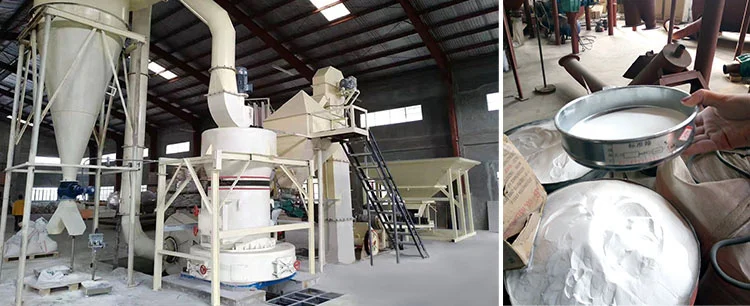
This production line utilizes a three-ring medium-speed micro-grinding mill as the central equipment, complemented by other auxiliary equipment like hammer crushers, bucket elevators, and storage silos to establish a comprehensive grinding operation system. It has demonstrated strong potential for application and market competitiveness in industries such as construction, chemical industry, and new materials.

The gypsum grinding production line is an efficient, stable, and environmentally friendly production solution, which is widely used in construction, decoration, the chemical industry, and other fields. In addition, the grinding process is particularly critical, which directly affects the quality and particle size of the final product. With the continuous development of science and technology, the technical level and production efficiency of gypsum grinding production lines will be further improved, providing strong support for the development of the gypsum processing industry.

The Raymond mill production line is a highly efficient system designed for grinding operations, with a focus on energy efficiency, durability, and productivity. It caters to the needs of users by offering fine powder products in non-metallic ores, coal powder, and slag processing, aiding enterprises in achieving sustainable growth.

The ball mill production line is a comprehensive production line that integrates material crushing, grinding, grading, and collection. This production line is mainly used to process various materials, including sand and gravel, cement, new building materials, silicates, refractory materials, fertilizers, ferrous metal beneficiation, non-ferrous metals, glass ceramics, etc.

YGMX Enhanced High-Pressure Mill is a new type of high-performance grinding equipment, and the biggest improvement of this milling equipment lies in the increase of the high-pressure spring system in the grinding roller part. Compared with the traditional high-pressure roller mill, it has a wider scope of application and excellent performance to meet the production needs of a variety of powder fineness. It is widely used in non-metallic minerals, chemicals, building materials, metallurgy, environmental protection, etc. Multiple areas.
Green and Intelligent Mining Machinery
Manufacturing and Export Base
Based on high quality and perfect after-sales service, our products have been
exported to more than 120 countries and regions.
Copyright © 2023 Zhengzhou Mascot Environmental Technology Co., Ltd Record number: Yu ICP No. 13021523-4





 WhatsApp
