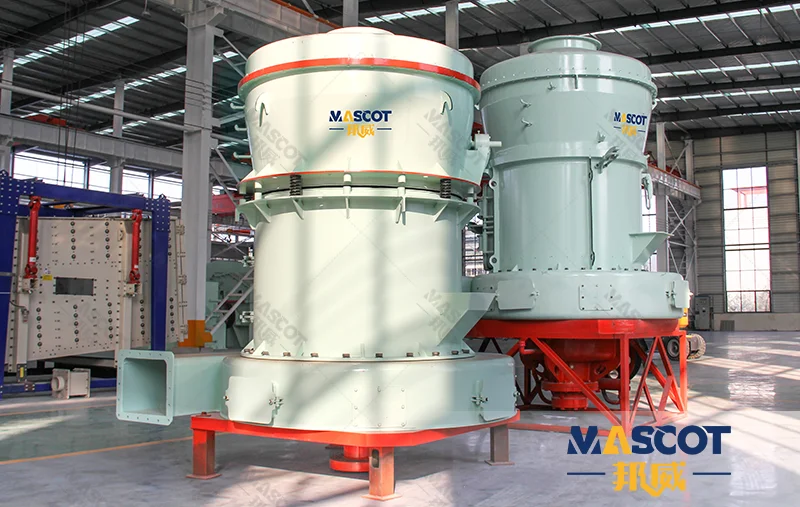
Barite is bought on two numbers before anything else: the mesh the powder is ground to, and the tons per hour the line delivers. A drilling-grade buyer adds a third clause — the specific gravity has to survive the grind — while paint, rubber and chemical buyers add a consistency clause in its place. This guide covers the YGM High Pressure Grinding Mill mesh window on barite, the capacity each model delivers, and where the running cost actually sits.
Barite runs at Mohs 3-5 with a specific gravity of 4.2-4.5: medium-hard, and unusually heavy for a mineral that has to be reduced to powder. The barite application note for this series puts its working limit at Mohs 7.0, which is comfortably above the band barite occupies, and the high-pressure roller assembly holds over 3,500 kg of grinding force per assembly — the published figure that makes a single pass to 80-325 mesh realistic.

The machine is a vertical suspension roller mill, described in the series' own literature as the primary equipment for medium-high hardness minerals such as calcite, barite, talc and quartz. Three published traits decide what that means in a barite plant.
The grinding force is adjustable and stays adjustable. The high-pressure spring loads the rollers against the ring, and because the load can be re-tensioned as the roller and ring wear, the grinding force that made the output figure during commissioning is still available later in the campaign. On a heavy mineral this is the difference between a mill that holds its tonnage and one that quietly loses it.
The mill is air-swept and closed-loop. Material is fed evenly into the grinding chamber, where the rollers press it against the ring; airflow then lifts the powder to the classifier, which passes on-spec particles and returns oversized ones for another pass. Nothing leaves the circuit until it meets the cut, which is why a mesh contract can be held shift after shift rather than sampled and hoped for.
The published working band covers both barite markets. In the series' material-group table, barite is listed in the construction and chemical group at Mohs 3-5 and 80-325 mesh — the same band that serves drilling mud on one side and paint and rubber fillers on the other.
Which mill class a barite plant should buy is a separate argument, and it is usually settled by mesh band and tonnage rather than by the mineral. The published comparison of the YGM high pressure mill and the MTW trapezium mill sets out where each one belongs, and it is worth reading before the sizing conversation rather than after it.

Barite powder is specified twice over: once by particle size and once by what the powder has to do. The table below collects the published applications of this series against the mesh each one is bought at.
| Barite Product | Working Mesh | The Specification That Decides It | Where It Is Sold |
|---|---|---|---|
| Oil and gas drilling grade | 200-325 mesh | A 200 mesh pass rate of 97% or higher, with specific gravity held at 4.2 or above for the drilling mud specification | Drilling mud weighting agent for oil and gas wells |
| Paint and coating grade | 325 mesh, high whiteness | Fineness held with bright, uniform colour for the coating formulation | Paints, coatings and polymer fillers |
| Rubber and plastics filler | 325 mesh | A functional filler duty: consistent particle size at volume tonnage | Rubber compounds and plastic masterbatch |
| Chemical grade | 80-325 mesh | Coarser cuts accepted where downstream chemistry, not particle size, sets the value | Chemical and industrial processing |
How to read this table: the mesh bands and the 200 mesh pass figure come from the published specification for this series and its barite application notes; the third column describes what each market actually buys on. The drilling-grade line is highlighted because it is the one duty where fineness alone is not enough — the specific gravity clause has to hold at the same time as the particle size.
Two practical consequences follow. The first is that a single machine can serve both ends of the range: the classifier that delivers 200 mesh for drilling mud also delivers 325 mesh for paint grade, and the change is a classifier setting rather than a parts change. The procedure and the stopping time involved are set out in the guide to how to set classifier speed on a YGM mill, where the documented mesh change from 80 to 425 covers the whole window.
The second is that grinding grade is not the only variable a barite plant carries. On the Houston line described later in this article the mill was protected by a magnetic separator ahead of the grinding chamber, which is a plant-level decision made for the same reason the mesh is: heavy mineral feeds arrive with tramp metal, and the mill is the expensive place to find out.

Capacity on a roller mill is a range rather than a number, because the same machine produces less tonnage as the target powder gets finer. The table below is the published specification for the series, and the two columns to read first are the ones that bracket what any barite project can ask for: the maximum feed size and the capacity band.
| Model | Rollers | Roller Size (mm) | Ring Inner Dia. (mm) | Max. Feed Size (mm) | Output Size (mm) | Capacity (t/h) | Power (kW) |
|---|---|---|---|---|---|---|---|
| YGM65 | 3 | 210×150 | 650×150 | ≤ 15 | 0.613-0.033 | 0.4-1.8 | 15 |
| YGM75 | 3 | 260×150 | 780×150 | ≤ 15 | 0.613-0.033 | 1-3 | 18.5 |
| YGM85 | 3 | 270×150 | 830×150 | ≤ 20 | 0.613-0.033 | 1.2-4 | 22 |
| YGM95 | 4 | 310×190 | 950×190 | ≤ 25 | 0.613-0.033 | 2.1-5.6 | 45 |
| YGM130 | 5 | 410×230 | 1280×230 | ≤ 30 | 0.613-0.033 | 2.5-9.5 | 90 |
| YGM160 | 6 | 450×300 | 1600×300 | ≤ 35 | 0.613-0.033 | 8-16 | 132 |
| YGM190 | 6 | 500×330 | 1900×330 | ≤ 40 | 0.613-0.033 | 18-36 | 250 |
How to read this table: every figure is the published specification for the series. The output-size column is identical across all seven models because fineness is set by the classifier rather than by the mill body, which is what allows a plant to buy a smaller machine and still serve a fine market. The YGM160 row is highlighted because it is the step where a barite line moves from a few tons an hour into double figures without moving to the largest frame.
Three published points make the table usable rather than decorative. Feed size rises with the model — a YGM65 or YGM75 accepts up to 15 mm while the YGM190 takes up to 40 mm — so the pre-crusher is sized alongside the mill and not after it. At 200 mesh the published barite output of the mid-to-large models is 5-9.5 t/h with a D90 pass rate above 98%, which is the number a drilling-grade project should be sized against. And the series as a whole spans 0.4 to 36 t/h, so a plant that needs more than the largest frame is served by running multiple YGM units in parallel rather than by a different machine class, with the layout designed as one set. What a matched set contains — crusher, mill, bucket elevator, vibrating feeder, classifier, cyclone collector and dust collector — is listed in the YGM production line case, and that list is the checklist two quotations on a barite line should be compared against.
Where the ladder ends and a different mill class begins is a sizing question rather than a quality one. Feeding a YGM outside its published band is what creates the disappointing first month; the frame-by-frame comparison of the same subject on a softer feed is in the guide to limestone mesh and capacity on the YGM series, and a plant that needs a finer cut than 425 mesh moves to the HGM Series Micro-powder Grinding Mill instead of pushing this one past its window.

The mesh a YGM mill delivers is not set by the grinding force alone, and it is not a property of the frame you buy. It is held by the classification loop that runs on top of the grinding chamber, and that loop has five published stages.
1. Crushing and feeding. Barite lumps are reduced by a jaw crusher to a feed size that suits the chosen model — the published case in this article ran a 25 mm feed — then fed evenly and continuously into the grinding chamber by the feeding device at a stable speed.
2. Grinding. Driven by the main motor, the high-pressure rollers and the grinding ring squeeze, impact and grind the barite repeatedly into fine particles.
3. Classification. High-speed airflow works with the built-in powder classifier to separate qualified particles from coarse ones precisely.
4. Collection. Qualified barite powder is carried by airflow into the dust collector and collected as finished product.
5. Recirculation. Oversized particles fall back to the grinding area automatically for regrinding until they reach the required fineness.
Because step five returns anything that misses the cut, the mill's output size is a function of classifier setting and airflow rather than of the operator's judgement on the day. Two things follow for a barite plant. The first is that the specification is reproducible: a documented 200 mesh contract is a setting that can be returned to, not a result that has to be re-earned. The second is that the classifier is the component to know, because it is the smallest drive on the line and the one that decides which product leaves the gate.
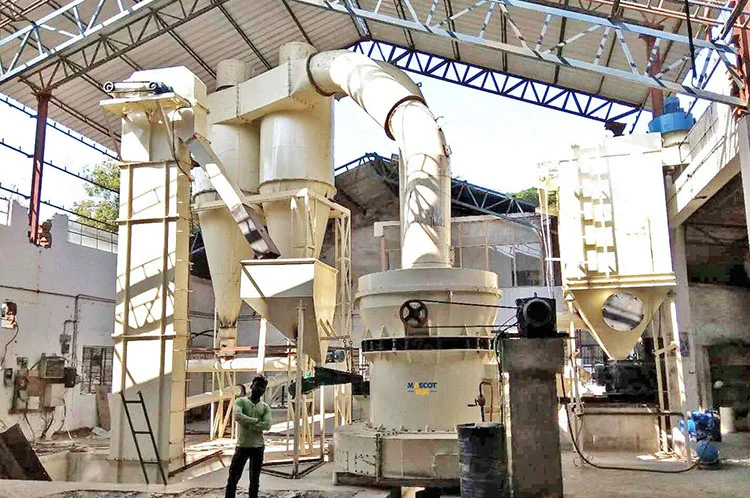
On barite the recurring cost is concentrated in two components and one utility. The grinding rollers and the grinding ring are the parts that convert motor power into powder, and power is the largest continuous expense of the line. Both are published, and both are worth writing into the project file before the order rather than discovering them from the first invoice.
The roller and ring on this series are supplied in high-strength wear-resistant alloy; on barite the published roller life is 3,000-3,500 operating hours, stated for the HRC 58-62 high-chrome alloy set. Power consumption at a 200 mesh target is published at roughly 18-22 kWh per ton of finished barite powder. Read together, those two figures are the cost per ton of a barite line, and they are also the two figures a competitor's quotation should have to match.
| Cost Item | Published Figure for Barite | What Moves It |
|---|---|---|
| Grinding roller and ring | 3,000-3,500 operating hours of roller life on a high-chrome alloy set (HRC 58-62) | Feed hardness and target fineness; grinding force is re-tensioned as the set wears so tonnage is not lost first |
| Power per ton of powder | Approximately 18-22 kWh per ton at a 200 mesh target | The mesh you sell: coarser cuts use less energy per ton than fine ones on the same machine |
| Classifier blades and bearings | Held as standard stock items across the model range | Wear rate, plus whether spares sit on the shelf or have to be ordered after a failure |
| Mill protection items | Magnetic separation ahead of the grinding chamber, as specified on the Houston line | Whether the feed arrives with tramp metal from the quarry or the crushing stage |
How to read this table: the roller life and power-per-ton figures are published values for barite on this series, with the power figure being the one recorded on the Houston line, and the third column explains what changes them rather than promising a fixed number. Roller life in particular is stated for the material class: a barite feed that is harder than the published 3-5 Mohs band, or a target finer than 325 mesh, should be expected to shorten it.
The commercial habit that protects this budget is simple and cheap. Rollers, rings, classifier blades and bearings are held in year-round inventory, and the standing recommendation is to order the replacement set when the one in service reaches 60-70% of its expected life — which converts a wear change from an outage into a planned stop. On the machine itself, the wear parts are covered by the same terms as the rest of the mill: a 12-month warranty on the whole machine and a further 12-month warranty on core components including rollers, rings and classifiers, with engineers available for on-site installation, commissioning and operator training.
The clearest demonstration of how the mesh and the specification work together comes from a drilling fluids supplier serving the oil and gas sector along the US Gulf Coast. Their raw material was barite lump at Mohs 3.5 and a specific gravity of 4.3, with a feed size of 25 mm or below. The requirement was the one the whole drilling market is written against: 200 mesh barite powder meeting the API specification, a 200 mesh pass rate of 97% or higher and a specific gravity of 4.2 or above, at 5 t/h.
The published solution was a complete YGM high pressure grinding system with high-chrome alloy wear parts, a magnetic separator to protect the mill, and a multi-stage air classification system tuned to the drilling specification rather than to a generic fineness band. The classification package is the part worth noting: an API contract is a pass-rate promise at a fixed mesh, and it is held by the classifier rather than by the rollers.
The reported result was 5 t/h of 200 mesh barite at a 97.5% pass rate with specific gravity at 4.25 — that is, the grinding route produced the particle size the contract asked for while the feed's own gravity carried through the product. On the wear side, the high-chrome rollers ran more than 3,500 operating hours before replacement, and the line consumed approximately 18-22 kWh per ton of finished powder at the 200 mesh target.
Two readings of that case are worth keeping. The first is that the fineness and the specific gravity requirements were satisfied by the same installation, because the second clause is a property of the feed and the circuit rather than of a separate processing step. The second is that the plant-level items — magnetic separation and an API-tuned multi-stage classifier — are what turned a mill purchase into a supply line, which is the pattern any drilling-grade project should expect.
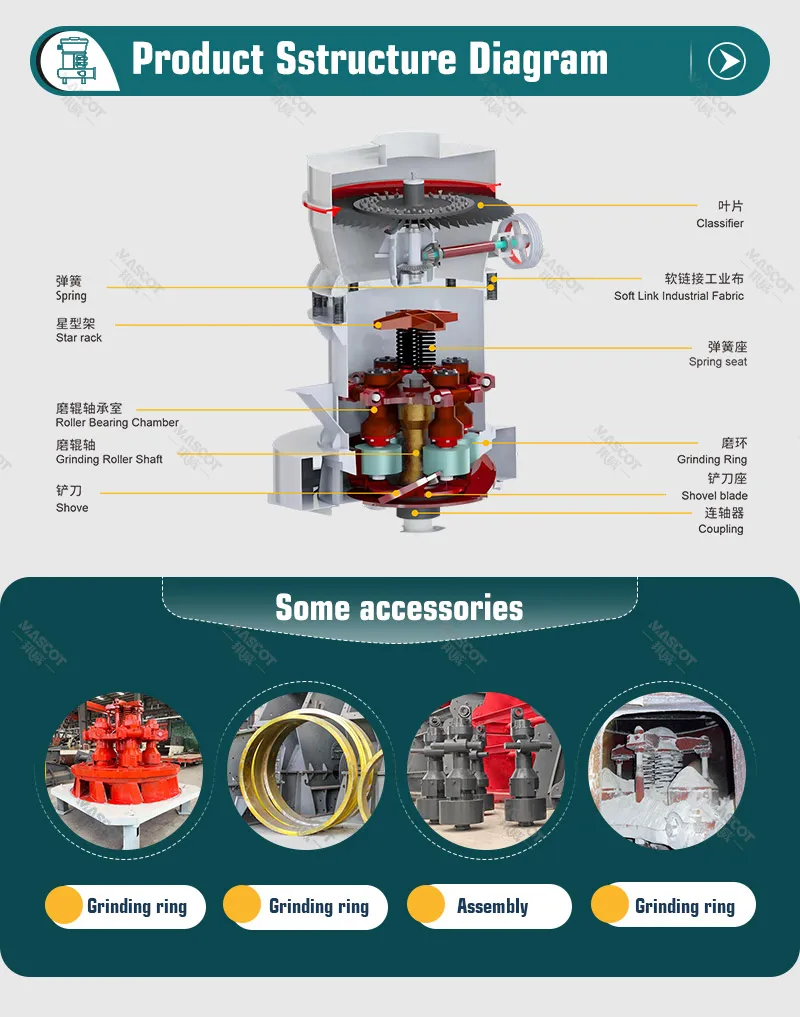
A model recommendation is a short conversation if the plant arrives with the right six inputs, because each one removes a guess from the sizing calculation. Barite is a predictable material, which means most of the disappointing barite lines in the market were specified with less information than a test report would have taken to read.
| Input | Why It Decides the Model |
|---|---|
| Target mesh with its pass rate | "200 mesh" and "200 mesh at 97% passing" are two different machines; the pass rate is what selects the classifier configuration |
| The specific gravity your market requires | Drilling grade is bought against a gravity figure as well as a size, so it belongs in the enquiry rather than in the follow-up |
| Tonnes per hour of finished powder | Sets the frame, and above 36 t/h it decides how many units run in parallel rather than which single model is chosen |
| The feed size the crusher will deliver | The published feed limit rises from 15 mm on the smallest models to 40 mm on the YGM190, so the crusher and the mill are sized together |
| A sample of the actual barite | Hardness, moisture and tramp metal content are properties of your quarry, not of the mineral name |
| Whether the feed carries metal or the plant will add a magnet | Mill protection is specified at the design stage on drilling-grade lines, not after the first roller set fails early |
Q1: What mesh does drilling-grade barite actually need?
A: The published drilling specification is a 200 mesh pass rate of 97% or higher with a specific gravity of 4.2 or above, and the series' classifier covers 200-325 mesh. The pass rate is the part of the specification that does the work: it is measured on the product, held by the classifier setting, and it is what separates a shipment that meets the API requirement from one that merely looks fine.
Q2: Can one machine produce both drilling grade and paint grade?
A: Yes. Drilling grade and paint grade differ in mesh and in brightness rather than in machine type, and the same classifier delivers 200 mesh for one market and 325 mesh for the other. Because the change is a classifier setting, the practical question is a scheduling one — how often the plant changes grade, and whether that change is planned into the production calendar.
Q3: How many tons per hour can I get at 200 mesh?
A: The published barite figure for the mid-to-large models is 5-9.5 t/h at 200 mesh with a D90 pass rate above 98%, and the series as a whole spans 0.4 to 36 t/h. Projects above 36 t/h are served by running multiple YGM units in parallel as one matched set.
Q4: How long do rollers and rings last on barite?
A: The published roller life on barite is 3,000-3,500 operating hours for the HRC 58-62 high-chrome alloy set, and on the Houston drilling-grade line the rollers ran more than 3,500 hours before replacement. Ordering the replacement set at 60-70% of expected life is what keeps the change a scheduled stop rather than an interruption.

About of Mascot
Zhengzhou Mascot Industry is a high-tech mining equipment company integrating R&D, manufacturing, sales, and after-sales service. Focusing on crushing, grinding, and mineral processing equipment, we provide professional solutions to our customers. We are ISO9001:2015 certified, and our products include mobile crushing plants, crawler crushing plant, construction waste crushing plants, jaw crushers, sand making machines, cone crushers, fine crushers, grinding mills, ball mills, etc., all with reliable performance to meet diverse project needs.
• Professional pre-sales support: Free project design and comprehensive solutions to help you accurately select the right equipment;
• Comprehensive on-site service: Providing installation guidance and worker training to ensure smooth equipment commissioning;
• Reliable after-sales guarantee: A complete after-sales system, timely response to technical inquiries and equipment maintenance, ensuring long-term stable operation.
To protect your rights, please contact us through the following official channels for professional service:
WhatsApp: 0086-16650273865
Email: mascot@mascotenv.com
We are committed to providing high-quality equipment and full-cycle services to deliver comprehensive intelligent solutions for the global mining industry!

This production line utilizes a three-ring medium-speed micro-grinding mill as the central equipment, complemented by other auxiliary equipment like hammer crushers, bucket elevators, and storage silos to establish a comprehensive grinding operation system. It has demonstrated strong potential for application and market competitiveness in industries such as construction, chemical industry, and new materials.

The MTW series European grinding mill production line includes high-efficiency crushers, elevators, electromagnetic vibration feeders, milling machines, classifiers, and collectors. These pieces of equipment work together to achieve efficient crushing, grinding, and classification of various non-metallic ores, coal powder, slag, and other materials. It can meet the diverse needs of various industries for powder particle size, uniformity, shape, etc., and offer enterprises high-quality grinding products.

The high-pressure grinding mill production line is a project specially designed for efficient grinding operations. It is widely used in metallurgy, building materials, the chemical industry, highways, water conservancy hydropower, and other industries. It is a suspended roller mill that uses springs to increase pressure. It can achieve efficient grinding processing of various non-metallic raw materials. It has high efficiency, stability, and environmental protection characteristics.

The ball mill production line is a comprehensive production line that integrates material crushing, grinding, grading, and collection. This production line is mainly used to process various materials, including sand and gravel, cement, new building materials, silicates, refractory materials, fertilizers, ferrous metal beneficiation, non-ferrous metals, glass ceramics, etc.

The Raymond mill production line is a highly efficient system designed for grinding operations, with a focus on energy efficiency, durability, and productivity. It caters to the needs of users by offering fine powder products in non-metallic ores, coal powder, and slag processing, aiding enterprises in achieving sustainable growth.
Green and Intelligent Mining Machinery
Manufacturing and Export Base
Based on high quality and perfect after-sales service, our products have been
exported to more than 120 countries and regions.
Copyright © 2023 Zhengzhou Mascot Environmental Technology Co., Ltd Record number: Yu ICP No. 13021523-4





 WhatsApp