
Dolomite and talc are both soft minerals, and both are sold on fineness rather than on tonnage alone — which is exactly why they raise the same question for a plant engineer. Can a dry ball mill be the right machine for them, or does the job belong to the roller mill family? The honest answer is that it depends on the mineral, the target cut and the rest of the circuit, and it is worth settling before the mill is ordered rather than after. This article covers where the Dry Ball Mill earns its place on dolomite and talc, where the alternative machine class is usually the better fit, and the fineness and output settings that decide the result either way.
A dry ball mill produces powder without water, which is what a plant needs when the downstream process cannot accept moisture: dry-mix mortar and other building products, ceramic and refractory bodies, glass batch, or any product that has to leave the plant as free-flowing dry powder. The series is built for hard-wearing industrial minerals and ores, and its published applicable list already includes the carbonates and soft minerals that behave like dolomite — calcite, marble, limestone, gypsum and barite among them.
Dolomite and talc sit at different points on that spectrum. Dolomite is a carbonate of the same family as calcite and limestone, and it grinds much like them. Talc is softer, and it is platy — two properties that change the machine discussion rather than the fineness target. Both can be handled in a dry circuit; the question is which machine class holds the specification at the lowest cost per ton, and the answer for each mineral is set out below.

Dolomite — CaMg(CO3)2, the double carbonate of calcium and magnesium — is one of the minerals that responds well to mechanical dry grinding. Its powder serves building products, rubber (where it adds volume while improving hardness, abrasion resistance and ageing behaviour), agriculture as a calcium and magnesium source, and environmental applications where its adsorption and ion-exchange behaviour is used to treat harmful substances in wastewater.
The fineness bands the market actually buys are the same ones the industry uses for carbonate powders: fine powder from 20 to 400 mesh, ultra-fine powder from 400 to 1250 mesh, and micro powder from 1250 to 2500 mesh. Mapping a target onto that ladder decides the machine class, and it also decides the circuit. A dolomite line is not the mill alone: the published process route runs from jaw crushing through secondary crushing to a sand-making stage that reduces the feed to 0-5 mm, then to dry grinding, classification that returns oversize for regrinding, drying where the powder needs it, collection through dust filters, and finally silo and packing. When the grade is a filler or construction grade at 200-400 mesh, the mill's own output band covers it with room to spare. The material page sets out the full route at dolomite grinding and processing, with an operating reference in the YGMX grinding mill plant for dolomite processing.

Talc is a layered silicate, and that structure is what makes it valuable — lubricity, anti-stick behaviour, insulation — and also what makes it awkward to grind. Platy particles break along their layers rather than into compact grains, so a mill that keeps applying energy after the target size is reached does not simply make finer powder: it can smear the plates, change the surface and hurt the very properties the buyer is paying for. Talc grades are also usually sold finer: for plastics and rubber applications the industry reference band runs from 325 to 2500 mesh in a Mohs 1-5 mineral group that includes talc, calcium carbonate and wollastonite.
That combination is why talc is normally routed through a roller-type mill rather than a tumbling ball mill. The site's own talc route runs through the talc grinding and processing page to the Raymond Mill and MTW series, and where the target sits at the fine end of the band, the HGM Micro-Powder Grinding Mill covers the range up to 2500 mesh with classifier control rather than grinding time.
A dry ball mill is not the wrong machine for talc in every case. It is a reasonable choice where the plant needs a large-capacity, water-free circuit, where the specification is a moderate mesh with a wide tolerance, or where dolomite and talc are ground on the same line and the ball mill is there for the harder mineral. What it is not is a machine to buy for a tight top cut on a platy mineral without a grinding test first — the same rule the whole industry applies to soft, layered minerals.

Once the machine class is settled, fineness on a dry ball mill responds to six things. Each of them is a setting or a maintenance condition rather than a design change.
| The Setting | What It Changes | The Practical Tip |
|---|---|---|
| Ball size distribution | The balance between breaking the feed and grinding to the target cut | Match the largest balls to the feed top size and keep the smaller sizes for the product cut; ask the manufacturer to calculate the initial ball ratio rather than copying a charge from another plant |
| Total ball charge | Impact energy available in the cylinder | Operate at the published loading weight for the model; a low charge shows up as a coarse product at unchanged power draw |
| Feed rate and retention time | How long the material spends in the grinding zone | At a fixed charge, fineness responds to feed rate; run one step test, record the result, and change one variable at a time after that |
| Classifier cut and circulating load | How much oversize is returned instead of leaving as product | Let the classifier hold the cut: a closed circuit narrows the size distribution, while grinding the whole batch finer wastes energy and over-grinds the soft fraction |
| Feed moisture and mill airflow | Whether powder moves freely or coats the media and liners | Dry circuits and moisture do not mix: damp feed agglomerates, lowers efficiency and loads the dust filter, so keep the feed dry and the negative-pressure extraction working |
| Liner and lifter condition | How the charge is lifted and cascaded | Worn lifters reduce grinding efficiency; a fineness drop at constant power is the signal to inspect rather than to add balls |
The standard sizes below cover small and mid-scale dolomite and talc powder lines. Capacity is the rated envelope across the output band, so a finer target sits toward the lower figure.
| Model | Speed (r/min) | Ball Charge (t) | Max Feed (mm) | Output Size (mm) | Capacity (t/h) | Power (kW) |
|---|---|---|---|---|---|---|
| 900x1800 | 38 | 1.5 | ≤20 | 0.075-0.89 | 0.65-2 | 18.5 |
| 900x3000 | 38 | 2.7 | ≤20 | 0.075-0.89 | 1.1-3.5 | 22 |
| 1200x2400 | 35 | 4.6 | ≤25 | 0.075-0.6 | 1.6-5.8 | 37 |
| 1200x4500 | 35 | 5.5 | ≤25 | 0.074-0.4 | 1.6-5.8 | 55 |
| 1500x4500 | 27 | 11 | ≤25 | 0.074-0.4 | 3-6 | 110 |
The output size band of 0.074-0.4 mm on the larger shells corresponds to roughly 40-200 mesh, and the 0.075-0.89 mm band on the smaller shells covers coarser construction and filler grades. For output and liner practice on comparable soft minerals, the field guide for dry ball mill output and liners on feldspar and quartz covers the same shell sizes on a harder feed.

A model recommendation is calculated from three inputs, and a quotation that omits any of them is a guess: required capacity in t/h, the hardness and behaviour of your material, and the target final fineness. For dolomite and talc, two further details change the answer — the feed top size the crushing stage will deliver, and whether the specification is a top cut in microns or a mesh band. With those in hand, the shell size, the ball charge, the initial ball ratio and the classifier setting follow; and where the mineral is soft or platy, a grinding test on a sample is what confirms the achievable cut rather than assuming it.
Q1: Can a dry ball mill grind dolomite to filler grades?
Yes. Dolomite is a carbonate of the same family as the calcite, marble and limestone already on the dry mill's applicable materials list, and the published output band of 0.075-0.89 mm (roughly 20-200 mesh) covers the filler and construction grades. Ultra-fine (400-1250 mesh) and micro (1250-2500 mesh) dolomite grades sit beyond that band and move the discussion to the roller and micro-powder mill classes; the finer end of the 20-400 mesh market band is confirmed case by case against the material and the target cut.
Q2: Is a dry ball mill the right choice for talc?
Not as a default. Talc is soft and platy, so it over-grinds and can lose the surface properties the buyer pays for, and typical talc grades are sold in a 325-2500 mesh reference band. Talc is normally routed through the Raymond and MTW roller mills, or through the HGM micro-powder mill when the cut sits at the fine end. A dry ball mill is defensible where the plant needs a large dry circuit, a moderate mesh with a wide tolerance, or a mill shared with a harder mineral — but confirm with a grinding test first.
Q3: How do I hold a fineness specification day to day?
Work on four variables in order: the ball size distribution and charge, the feed rate, the classifier cut and circulating load, and the condition of the lifters. Record one step test as a baseline, then move one variable at a time. A fineness drop at constant power draw is a wear signal, not a reason to add balls.
Q4: What is the lead time and warranty?
Standard models are typically produced in 20-25 days and large customised mills such as the Φ3200 series in 35-50 days. A 12-month warranty covers the whole machine, with core-component coverage and 24/7 online consultation, engineer-led installation, commissioning and operator training.
Q5: Does Mascot supply the grinding media?
Yes — forged or cast steel balls, supplied with the optimal initial ball ratio calculated for your material and target fineness, together with the dust collection package required for a dry circuit.
Dolomite and talc look like the same grinding problem on a specification sheet and are different problems on the shop floor. Dolomite behaves like the other carbonate minerals and grinds well in a dry ball mill across the filler and construction bands. Talc is softer and platy, sold finer, and normally belongs to the roller or micro-powder mill class unless a large dry circuit or a shared mill makes the ball mill the practical answer. In both cases the fineness result is decided by the same six settings — ball size distribution, charge, feed rate, classifier cut, feed moisture and lifter condition — and the tonnage is decided by sizing the mill at the grade you actually sell rather than at the top of its published range.
The Dry Ball Mill series covers the standard sizes from 900x1800 to the Φ3200 shells, runs under negative pressure with a pulse bag filter capturing up to 99.9% of dust, and ships with steel balls selected to a calculated initial ball ratio and a written throughput guarantee tied to your material and target fineness. Send the mineral, the feed size, the target mesh and the tonnage, and Mascot will confirm which machine class holds it — on a sample of your own dolomite or talc rather than on an assumption.

About of Mascot
Zhengzhou Mascot Industry is a high-tech mining equipment company integrating R&D, manufacturing, sales, and after-sales service. Focusing on crushing, grinding, and mineral processing equipment, we provide professional solutions to our customers. We are ISO9001:2015 certified, and our products include mobile crushing plants, crawler crushing plant, construction waste crushing plants, jaw crushers, sand making machines, cone crushers, fine crushers, grinding mills, ball mills, etc., all with reliable performance to meet diverse project needs.
• Professional pre-sales support: Free project design and comprehensive solutions to help you accurately select the right equipment;
• Comprehensive on-site service: Providing installation guidance and worker training to ensure smooth equipment commissioning;
• Reliable after-sales guarantee: A complete after-sales system, timely response to technical inquiries and equipment maintenance, ensuring long-term stable operation.
To protect your rights, please contact us through the following official channels for professional service:
WhatsApp: 0086-16650273865
Email: mascot@mascotenv.com
We are committed to providing high-quality equipment and full-cycle services to deliver comprehensive intelligent solutions for the global mining industry!

The ball mill production line is a comprehensive production line that integrates material crushing, grinding, grading, and collection. This production line is mainly used to process various materials, including sand and gravel, cement, new building materials, silicates, refractory materials, fertilizers, ferrous metal beneficiation, non-ferrous metals, glass ceramics, etc.

The Raymond mill production line is a highly efficient system designed for grinding operations, with a focus on energy efficiency, durability, and productivity. It caters to the needs of users by offering fine powder products in non-metallic ores, coal powder, and slag processing, aiding enterprises in achieving sustainable growth.
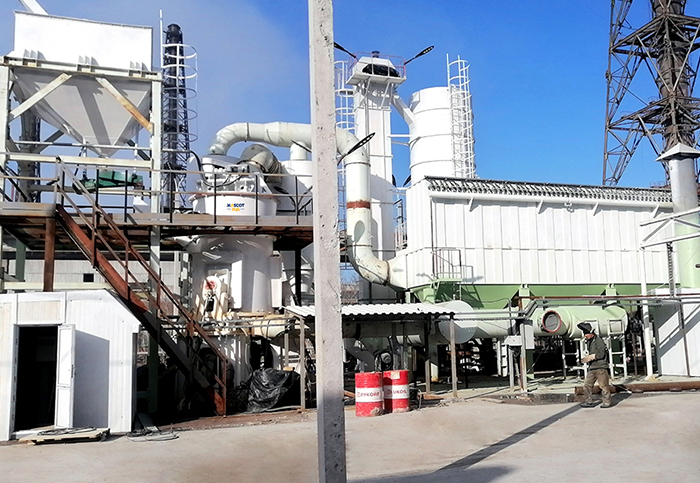
The production line of the vertical roller mill is a cost-effective and energy-efficient solution for processing powder, which is widely used in many industries, such as metallurgy, building materials, industrial solid waste treatment, thermal power plants, cement plants, and environmental protection fields. The primary purpose of this project is to finely grind raw materials through a vertical roller mill to meet the requirements of different industries for particle size, purity, and output of powder products.

This production line utilizes a three-ring medium-speed micro-grinding mill as the central equipment, complemented by other auxiliary equipment like hammer crushers, bucket elevators, and storage silos to establish a comprehensive grinding operation system. It has demonstrated strong potential for application and market competitiveness in industries such as construction, chemical industry, and new materials.

YGMX Enhanced High-Pressure Mill is a new type of high-performance grinding equipment, and the biggest improvement of this milling equipment lies in the increase of the high-pressure spring system in the grinding roller part. Compared with the traditional high-pressure roller mill, it has a wider scope of application and excellent performance to meet the production needs of a variety of powder fineness. It is widely used in non-metallic minerals, chemicals, building materials, metallurgy, environmental protection, etc. Multiple areas.
Green and Intelligent Mining Machinery
Manufacturing and Export Base
Based on high quality and perfect after-sales service, our products have been
exported to more than 120 countries and regions.
Copyright © 2023 Zhengzhou Mascot Environmental Technology Co., Ltd Record number: Yu ICP No. 13021523-4





 WhatsApp