 27
 27
 27

These two series are often quoted against each other, and most of the confusion comes from comparing the wrong numbers. They overlap across part of their fineness range, they publish their power in different ways, and the larger of the two is not the more capable one at a fine cut. This comparison sets the YGM High Pressure Grinding Mill and the HGM Series Micro-powder Grinding Mill side by side on the two things the title asks about — fineness and power — and then shows where each one stops being the economic answer.
The YGM series is a high-pressure suspension roller mill. Rollers are pressed against the grinding ring by a spring-loaded assembly that develops over 3,500 kg of grinding force per assembly, and the powder is carried out through an air separator. It is a coarse-to-mid machine: published output runs 80-425 mesh (about 180-33 micron), across seven models from the YGM65 to the YGM190.
The HGM series is a micro-powder mill. Multi-layer rollers work against the ring in the same basic geometry, but the classification is done by a variable-speed turbo classifier and the published range runs much finer: 150-3000 mesh (106-4 micron), across four models from the HGM80 to the HGM125.
Read those two ranges together and the structure of the decision appears. Between roughly 150 and 425 mesh both machines can be quoted, so that band is a genuine choice. Above 425 mesh only the HGM is in the conversation. At the coarse end, below about 150 mesh, only the YGM is. Everything else in this article is about how to choose inside the overlap and how to read the power figures once you are there.
| Published Parameter | YGM High Pressure Grinding Mill | HGM Micro-Powder Grinding Mill |
|---|---|---|
| Fineness range | 80-425 mesh (about 180-33 micron) | 150-3000 mesh (106-4 micron) |
| Models in the series | 7 — YGM65 to YGM190 | 4 — HGM80 to HGM125 |
| Capacity range | 0.4-36 t/h | 0.5-20.5 t/h |
| Main motor | 15-250 kW | 75-185 kW |
| Grinding element | Rollers loaded by high-pressure springs against the ring | Multi-layer rollers against the ring |
| How the cut is set | Air separator in the circuit | Variable-speed turbo classifier |
| Published wear parts | High-chrome alloy, HRC 58-62 | Alloy rollers and rings, 2-5 times standard steel; HRC 58-62 rated for Mohs 1-6.5 |
| Where it is the answer | Coarse to mid grades, high tonnage on one cut | Fine to ultra-fine grades, and multi-grade production on one machine |
How to read this table: every figure is the published parameter for the respective series, and the two capacity ranges are not comparable as stated — the YGM's 36 t/h belongs to a coarse cut on the largest frame, while the HGM's 20.5 t/h is the envelope across a range that reaches 3000 mesh. The last row is the decision, not marketing: the two series are aimed at different grades, and the overlap band is where the choice has to be argued on tonnage, power and product mix.

Inside the overlap band, fineness alone will not separate the machines — both will hold the cut. What separates them is what happens either side of it.
Above 425 mesh the question is settled by capability: the HGM is the series that reaches 3000 mesh, and within it the top cut is set by classifier speed rather than by changing grinding parts. The published rule in the finest band is worth repeating because it is counter-intuitive: HGM80, HGM100 and HGM100+ are rated to 3000 mesh, while the largest frame, HGM125, is rated to 2500 mesh. At the very fine end the selection runs on the top cut first and tonnage second — the opposite order from choosing at 325 mesh.
Below about 150 mesh the question is settled by economics rather than capability. A high-pressure roller mill is the simpler and cheaper way to make a coarse powder, and the micro-powder series' own literature says so directly: where a plant's product mix only ever needs 325-600 mesh, a Raymond-type mill is the cheaper machine, and the HGM is the right choice when the mix also includes 600-2500 mesh. That is a useful admission to keep in mind when two quotations differ by a wide margin at the same nominal fineness: they may not be quoting the same duty.
So the fineness question reduces to a single line from the sales sheet: what is the finest grade you will ever sell? If the answer is 325 mesh, the YGM family is the natural place to look. If it is 800 mesh and above, the HGM family is the only one that covers it, and the coarser grades come with it at no extra machine.

"Power" is where the comparison most often goes wrong, for a reason that has nothing to do with either machine: the two series publish different columns.
The YGM table lists a single motor figure per model, from 15 kW on the YGM65 to 250 kW on the YGM190. The HGM table lists the main grinder separately from the powder separator and the draft fan — 75 to 185 kW on the main grinder, with the classifier and fan alongside. A buyer who compares the first figure of one table with the first figure of the other is comparing a mill with a mill plus its air circuit, and the conclusion will be wrong in whichever direction the missing auxiliaries happen to fall.
The second trap is the ratio. Dividing motor power by capacity gives a number that looks like an efficiency, and it is not one unless both machines are quoted at the same fineness. On the published figures, the largest YGM frame carries 250 kW against a top capacity of 36 t/h, and the largest HGM frame carries 185 kW against a top capacity of 20.5 t/h — but the first capacity is a coarse-grinding figure and the second is spread across a band that reaches 3000 mesh, where real output sits at the lower end of the envelope. At a fine cut the HGM's power per tonne is therefore materially higher than the headline arithmetic suggests, and at a coarse cut the YGM's is lower. Neither number is wrong; they are answers to different questions.
What a buyer should do instead is ask for total installed power for the quoted circuit at the quoted fineness, and compare that against the tonnage at the same cut. Everything else is arithmetic on incomparable inputs.
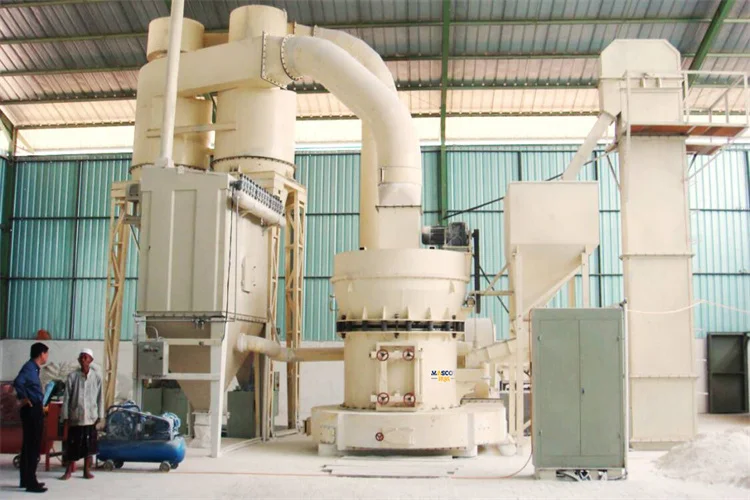
The model ladders explain where the money goes when a plant decides to sell a finer grade. Set the two series on one page and the pattern is visible: at the same tonnage, the micro-powder machine is always the larger frame.
| Model | Series | Capacity (t/h) | Main Motor (kW) | Max. Feed (mm) | Published Fineness |
|---|---|---|---|---|---|
| YGM65 | YGM | 0.4-1.8 | 15 | ≤ 15 | 80-425 mesh |
| YGM75 | YGM | 1-3 | 18.5 | ≤ 15 | 80-425 mesh |
| YGM85 | YGM | 1.2-4 | 22 | ≤ 20 | 80-425 mesh |
| YGM95 | YGM | 2.1-5.6 | 45 | ≤ 25 | 80-425 mesh |
| YGM130 | YGM | 2.5-9.5 | 90 | ≤ 30 | 80-425 mesh |
| YGM160 | YGM | 8-16 | 132 | ≤ 35 | 80-425 mesh |
| YGM190 | YGM | 18-36 | 250 | ≤ 40 | 80-425 mesh |
| HGM80 | HGM | 0.5-6 | 75 | ≤ 10 | 150-3000 mesh |
| HGM100 | HGM | 1.2-10.2 | 110 | ≤ 15 | 150-3000 mesh |
| HGM100+ | HGM | 1.2-11.5 | 132 | ≤ 15 | 150-3000 mesh |
| HGM125 | HGM | 2.5-20.5 | 185 | ≤ 20 | 150-2500 mesh |
How to read this table: the rows are in each series' own order, and the capacity columns are not aligned by fineness — that is the point. Compare a YGM130 at 2.5-9.5 t/h and 90 kW with an HGM100+ at 1.2-11.5 t/h and 132 kW: similar tonnage, a larger frame, because the HGM has to hold a cut the YGM does not reach. The feed-size column is the quieter consequence: the YGM accepts up to 40 mm on its largest frame, the HGM up to 20 mm, so a plant stepping up in fineness may also have to look at its crushing stage. The full capacity and mesh behaviour of the YGM ladder is set out in the YGM mesh and capacity guide.
There is a second, less obvious cost. On the micro-powder machines the material stays in the grinding chamber longer at a fine cut, so the wear parts do more work per tonne of product than they would at a coarse grade. Roller and ring life on the YGM on a barite duty is published at 3,000-3,500 operating hours; the HGM's alloy rollers and rings are published at 2-5 times the life of standard steel, rated for Mohs 1-6.5 minerals. Both figures are respectable, and neither is a promise at a different cut or a harder mineral.

Most of these decisions are not made by comparing machines at all. They are made by writing down the product mix and letting the mix eliminate one series. The table below is that exercise, stated in the language a plant actually uses.
| Your Product Mix | The Machine to Look At | Why |
|---|---|---|
| One or two grades, all at 80-325 mesh | YGM | Lowest installed power at coarse cuts, with seven frames covering 0.4-36 t/h |
| Grades between 325 and 600 mesh only | A Raymond-type mill, which is the cheaper machine at that band | The micro-powder series' own published note: choose the HGM only when the mix also includes 600-2500 mesh |
| Anything at 600 mesh or finer | HGM | It is the only series in this comparison that reaches those cuts, up to 3000 mesh |
| A mix straddling 325 mesh, several grades | HGM, one machine | The classifier covers 150-3000 mesh, and changeover between minerals takes 30-60 minutes |
| More than 36 t/h at a coarse cut | Two YGM units in parallel | The YGM ladder stops at 36 t/h on its largest frame |
| More than 20.5 t/h at a fine cut | Two HGM units in parallel | The HGM envelope stops at 20.5 t/h, and at a fine cut the real output sits below it |
How to read this table: each row is a mix, not a preference, and the third column is the published reason rather than a ranking. Two adjacent comparisons are worth reading once the choice narrows to a family: how the MTW trapezium mill and the HGM micro-powder mill divide the fine end between them, and how the YGM and MTW divide the coarse end. Between them the three articles cover the whole ladder, and no plant needs more than one of the three families.
A plant that moves from a high-pressure mill to a micro-powder mill is not only buying a finer cut. Three things change in how the line is run.
The control point moves. On the YGM the cut is adjusted through the air separator in the circuit. On the HGM the variable-speed turbo classifier is the control, and it is adjusted while the mill runs — which is what makes a multi-grade plant possible on one machine, and what makes operator training worth the time it takes.
The specification becomes a distribution. The HGM's published figures are a D97 pass rate above 98% with fineness stability of about ±2%, against the ±5% typical of conventional lines. That is a different kind of promise from a mesh range: it is a statement about the top cut holding, delivery after delivery, which is what a coating or masterbatch customer is actually testing.
The economics move from power to product value. Going finer costs power per tonne and buys a different market. The step from a bulk filler grade to a specified fine grade is where the margin sits, and the arithmetic of that move — cost per ton at the fine end against the bulk grades left behind — is worked through in the 325 to 1250 mesh cost model.

Five inputs decide which of the two series a quotation should be built on, and the first one alone eliminates one of them in most projects.
| Input | Why It Decides the Series |
|---|---|
| The finest grade you will ever sell, as mesh or D97 | It filters the series before any price is discussed: above 425 mesh the YGM is out, and below about 150 mesh the HGM is the more expensive way to do the job |
| Tonnes per hour at each grade, not just the headline | The two ladders are only comparable at the same cut, and the headline capacity of either series belongs to its coarsest setting |
| Total installed power, asked for in writing | The two tables publish different scopes — one motor figure against a main grinder plus classifier and fan |
| The feed size your crushing stage delivers | The YGM accepts up to 40 mm on its largest frame, the HGM up to 20 mm, so the crusher may need attention when you step up in fineness |
| The mineral and its hardness | The HGM's high-chrome parts are rated for Mohs 1-6.5; outside that band, wear rises sharply and the cost per ton with it |
Q1: Can an HGM replace a YGM at 325 mesh?
A: Physically yes — 325 mesh sits inside the HGM's published 150-3000 mesh range. Commercially it is usually the wrong trade, because at that cut the high-pressure mill does the same work with less installed power and a smaller frame. The HGM earns its place when the product mix also includes grades the YGM cannot reach.
Q2: Which series uses less power per tonne?
A: At the same fineness the high-pressure series is the lower-power option at coarse cuts, and the gap closes as the cut moves into the overlap band. Below about 325 mesh the comparison stops being meaningful, because the YGM does not go there. The honest comparison is total installed power at the same cut, which is why the two published tables — one motor figure against a main grinder plus classifier and fan — should not be compared column to column.
Q3: Why does the HGM need a bigger frame for the same tonnage?
A: Because it is holding a much finer cut. A YGM130 at 2.5-9.5 t/h carries a 90 kW motor; an HGM100+ at 1.2-11.5 t/h carries 132 kW. The extra frame buys the classifier range and the residence time needed to reach 3000 mesh, not extra tonnage. That is the cost of going fine, and it is the number a project should be modelled on rather than the headline capacity of either series.
Q4: Which one for a plant selling 200 mesh and 1250 mesh?
A: One HGM, not two machines. The 200 mesh grade sits inside its published range and the 1250 mesh grade is comfortably within the 150-3000 mesh envelope, with the cut set by classifier speed and changeover between minerals published at 30-60 minutes. Buying a coarse mill plus a fine mill for the same mineral is the arrangement the micro-powder series is designed to replace.

About of Mascot
Zhengzhou Mascot Industry is a high-tech mining equipment company integrating R&D, manufacturing, sales, and after-sales service. Focusing on crushing, grinding, and mineral processing equipment, we provide professional solutions to our customers. We are ISO9001:2015 certified, and our products include mobile crushing plants, crawler crushing plant, construction waste crushing plants, jaw crushers, sand making machines, cone crushers, fine crushers, grinding mills, ball mills, etc., all with reliable performance to meet diverse project needs.
• Professional pre-sales support: Free project design and comprehensive solutions to help you accurately select the right equipment;
• Comprehensive on-site service: Providing installation guidance and worker training to ensure smooth equipment commissioning;
• Reliable after-sales guarantee: A complete after-sales system, timely response to technical inquiries and equipment maintenance, ensuring long-term stable operation.
To protect your rights, please contact us through the following official channels for professional service:
WhatsApp: 0086-16650273865
Email: mascot@mascotenv.com
We are committed to providing high-quality equipment and full-cycle services to deliver comprehensive intelligent solutions for the global mining industry!

The Raymond mill production line is a highly efficient system designed for grinding operations, with a focus on energy efficiency, durability, and productivity. It caters to the needs of users by offering fine powder products in non-metallic ores, coal powder, and slag processing, aiding enterprises in achieving sustainable growth.
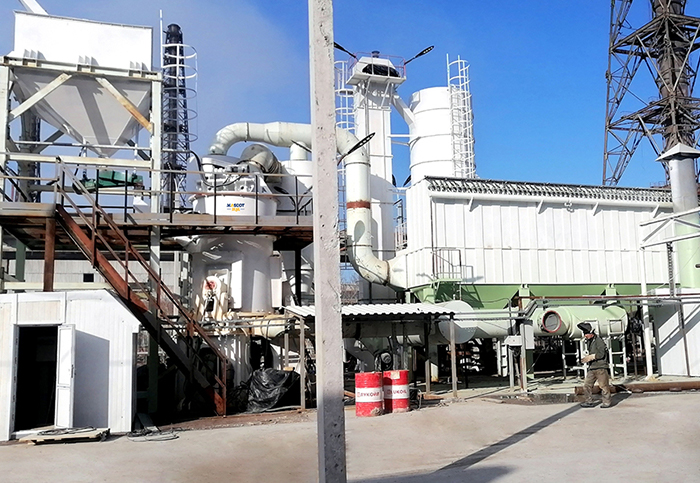
The production line of the vertical roller mill is a cost-effective and energy-efficient solution for processing powder, which is widely used in many industries, such as metallurgy, building materials, industrial solid waste treatment, thermal power plants, cement plants, and environmental protection fields. The primary purpose of this project is to finely grind raw materials through a vertical roller mill to meet the requirements of different industries for particle size, purity, and output of powder products.

The high-pressure grinding mill production line is a project specially designed for efficient grinding operations. It is widely used in metallurgy, building materials, the chemical industry, highways, water conservancy hydropower, and other industries. It is a suspended roller mill that uses springs to increase pressure. It can achieve efficient grinding processing of various non-metallic raw materials. It has high efficiency, stability, and environmental protection characteristics.

The gypsum grinding production line is an efficient, stable, and environmentally friendly production solution, which is widely used in construction, decoration, the chemical industry, and other fields. In addition, the grinding process is particularly critical, which directly affects the quality and particle size of the final product. With the continuous development of science and technology, the technical level and production efficiency of gypsum grinding production lines will be further improved, providing strong support for the development of the gypsum processing industry.

YGMX Enhanced High-Pressure Mill is a new type of high-performance grinding equipment, and the biggest improvement of this milling equipment lies in the increase of the high-pressure spring system in the grinding roller part. Compared with the traditional high-pressure roller mill, it has a wider scope of application and excellent performance to meet the production needs of a variety of powder fineness. It is widely used in non-metallic minerals, chemicals, building materials, metallurgy, environmental protection, etc. Multiple areas.
Green and Intelligent Mining Machinery
Manufacturing and Export Base
Based on high quality and perfect after-sales service, our products have been
exported to more than 120 countries and regions.
Copyright © 2023 Zhengzhou Mascot Environmental Technology Co., Ltd Record number: Yu ICP No. 13021523-4





 WhatsApp
